
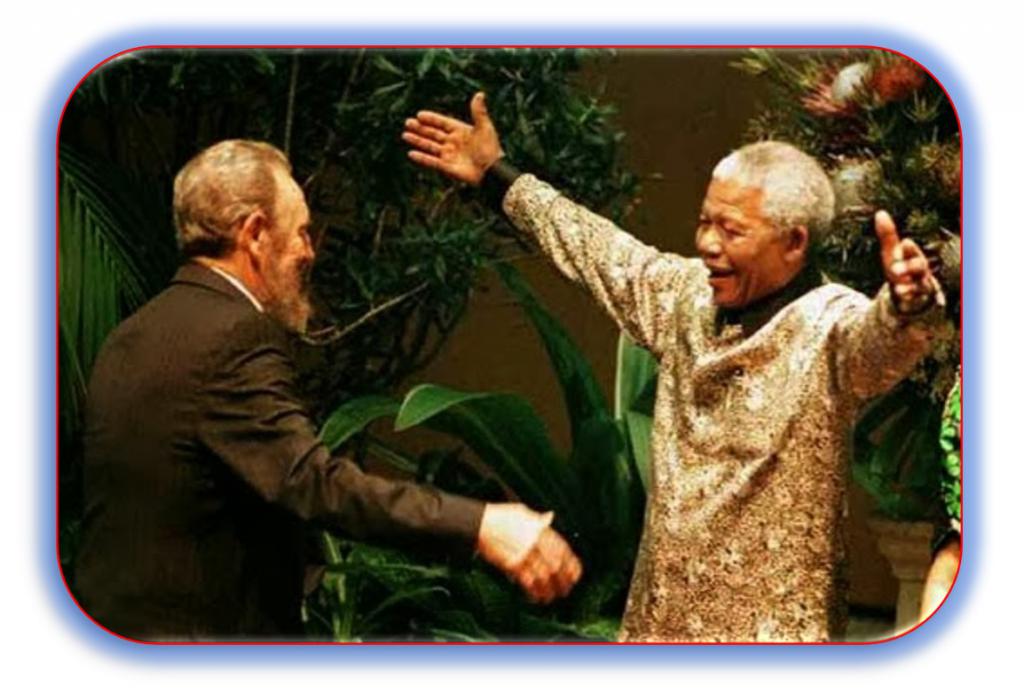
On the occasion of Africa Day.
Generally, influenced by the “news” that they impose on us every morning, when you think of that great continent that is Africa, you think in wars, poverty and epidemics.
We do not ask ourselves why it happens in a continent with so many natural resources. They have imposed an automatic response associated with corruption, which has nothing to do with the true traditions of African peoples, but with one of the bad practices implanted by the West since colonization and with the stripping of its resources by transnational companies.
Africa is also often the exotic tourist destination, the place to go before the extinction of its fauna, its imposing natural beauties and its monuments is completed.
When Cubans, as Caribbean we are, regardless of the color of our skin, we think of Africa, we think of our roots. About 1.5 million Africans came to Cuba to work as slaves. From those African warriors who refused to submit to the shackles and became “cimarrones” (wild slaves) in our mountains comes an important part of our rebellion.
How can we not recognize as our own the African influences in all our arts, in music and in religiosity.
Africa is at the bottom of our hearts, of our national identity. Above all, we have deep respect for Africa, we have to revere it.
You are not Cuban if you do not feel enormous pride for descendants of Africans such as Antonio Maceo, Mariana Grajales, Guillermón Moncada, or Nicolás Guillén and Bola de Nieve.
The first time I arrived in Africa was as an internationalist fighter and that experience made me grow as a person, although from a very modest position I felt faithful to the Che Guevara tradition. Then I returned more than once as a diplomat until I had the immense honor of being a Cuban ambassador to Nigeria.
Africa is one of those charming places where buying a fruit or any food in the traditional market represents a special pleasure for human contact. How much emotion does it feel when an African mother in the market notices your foreign accent and asks where you are from and you answer with pride from Cuba, but she keeps looking for that little Island in its elemental geography without being able to locate it, until You help and tell him the Island of Fidel Castro and he gives you a wide and friendly smile of assent.
As a diplomat I had the privilege of traveling to various countries in Africa to help organize state visits. Any colleague would understand how complex this task usually is, due to the protocol and security details that it entails. I would have to point except in Africa for a Cuban, where we always had to face a single question: what do you need comrades, what can I help you with?
How not to be moved to tears at the signs of friendship and mutual respect between Mandela and Fidel, just to mention one of the great icons of Africa and friends of Cuba.
How many beautiful stories of our relationships and leaders are to be written?
All humanity owes much to Africa, it is time to revere that continent and its noble people.
I share some facts and figures that make us feel proud to be Cuban and as such a little African:
- An estimated one and a half million Africans were sent to Cuba as slaves.
- The Cuban Revolution since its beginning felt committed to the African independence movements, more than 300,000 Cuban internationalist fighters were willing to shed their blood on the continent to make libertarian dreams come true.
- Monuments in countries like Angola, Namibia and South Africa perpetuate the memory of the fallen fighters.
- Bilateral cooperation between Africa and Cuba is one of the most beautiful pages in human history, started in 1963 with the Cuban medical contingent in Algeria.
- Cooperation in this area has not ceased since that date. Today Cuba has brigades of Health collaborators in 31 African countries.
- The medical cooperation marked a milestone for the brigade of 256 health professionals, members of the Henry Reeve contingent, who in Guinea, Liberia and Sierra Leone helped control the health emergency caused by the Ebola virus. Their work was recognized by the organization of the African Union, the United Nations and the World Health Organization.
- Cuba has cooperation in practically all of the African countries. Around 6,000 Cuban professionals provide their services in Africa in the sectors of Health, Education, Construction, Sports, Water Resources, Agriculture, among others.
- Around 9,000 young Africans pursue higher education in Cuba in the most varied careers.
- Cuba has graduated professionals and technicians from the 55 countries that make up the African Union, in figures that exceed more than 30,000.
- Many of them have played and continue to play important responsibilities in their countries today, including as Heads of Government and Ministers of various spheres.
- Our diplomatic relations are excellent. Havana is one of the world capitals with the most represented African embassies (28), Cuba is one of the best represented nations on the African continent with a total of 34 embassies.
-Every year senior African dignitaries officially visit Cuba and senior representatives of the Cuban government visit Africa as part of joint efforts to grow cooperation.
- Africa is a bulwark of solidarity with the Cuban Revolution. African states have massively supported the resolution approved by UNGA that every year demands an end to the criminal economic blockade against the Cuban people. Its dignitaries head the list of speakers in that forum, claiming with sovereign firmness its end.
- The same occurs in the meetings of Heads of State and Government of the African Union.
On May 25, Africa Day is celebrated, a date that commemorates the birth of the Organization for African Unity, today the African Union, an organization historically linked to promoting unity, peace and cooperation among African peoples and committed to achieving their well-being.
Congratulations and successes African brothers.
@HugoRRamosM - @embacubairlanda