
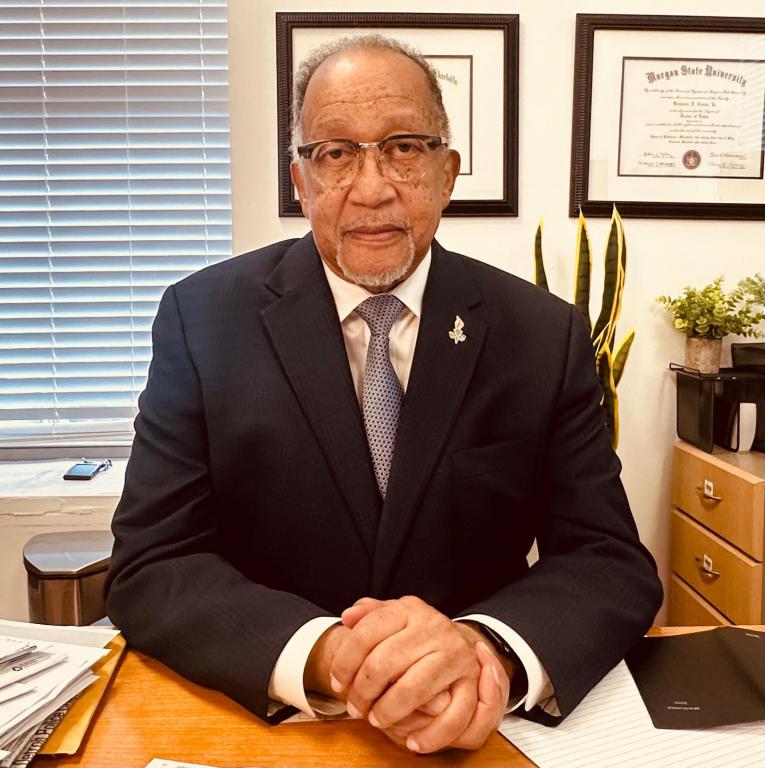
Reverend Benjamin Chavis Jr., president and chief executive officer of the National Negro Publishers Association (NNPA), stated that Cuba poses no threat to his country and called for the lifting of the blockade.
"In terms of international relations, in terms of international security, Cuba poses no threat to the United States of America. So why should the United States of America pose a threat to Cuba?" Chavis said in an exclusive interview with Prensa Latina in this capital.
During the conversation, in which he reflected on President Donald Trump's latest executive order, Dr Chavis stressed that ‘cutting off Cuba's access to oil is a violation of human rights, it is a violation of international law’.
‘I speak on behalf of the black press, on behalf of the 50 million African Americans living in the United States. We want to make sure that the Cuban people know that the American people stand in solidarity with them,’ he said.
This solidarity, he added, comes not only from the African American community but also from the ‘Latin American, Asian American, progressive white and all other communities.’
Dr Chavis insisted that the Cuban people deserve self-determination. ‘It is not right for the United States to dictate to Cuba or any other country (what they should do),’ he stressed.
We live in a world where we need more mutual respect, we live in a world where we need to care about others, said the president of the NNPA, which brings together more than 200 African-American newspapers.
We care about the Cuban people and want to ensure that we can work together to end the blockade, added the reverend, who has a long history of friendship with the island.
He therefore advocated for the United States and Cuba to resume the path of rapprochement and good relations.
‘President Barack Obama understood this,’ Chavis recalled, commenting that ‘we were all very happy’ when he visited Havana in March 2016. It was the first time in 88 years that a US president had set foot on Cuban soil. ‘It was a very important moment,’ he insisted.
‘We want to ask President Trump to reconsider, rethink and withdraw any measures that could harm the Cuban people,’ Chavis emphasised, confessing: ‘What I love and admire about the Cuban people is their self-determination, their capacity for resistance.’
At the same time, he argued that the Cuban people care about the rest of the world more than any other nation and, in this regard, he praised Cuba's international cooperation programmes, which ‘send more doctors to other parts of the world than any other country’.
He also declared himself an admirer of ‘Cuba, the atmosphere in Cuba, the music, the culture, the food,’ but ‘the most important thing is that the Cuban people have fought for many years for their freedom,’ he said.
‘And those of us in the United States who believe in freedom, justice and equality must support Cuba's right to self-determination and freedom,’ he concluded.
On 29 January, President Trump signed an executive order declaring a national emergency with respect to Cuba, which meant an unprecedented strengthening of the economic, commercial and financial blockade that successive US administrations have imposed on Cuba for more than six decades.
The order establishes a blockade on oil supplies to the Caribbean nation under the threat of coercive tariffs against any country that directly or indirectly sells fuel to it.
For ‘critics of the administration's policy, the tariffs — by threatening countries with punitive levies if they help Cuba obtain fuel — constitute an external blockade, an extraterritorial measure that will disproportionately harm Cuban citizens,’ Chavis said.
The measure, ‘which aims to cut off one of the Caribbean nation's vital resources and increase pressure on the Cuban people,’ represents, he said, an intensification of the longest-running Western blockade against a sovereign nation in modern history.
(Unofficial translation)
(Taken from Prensa Latina)