
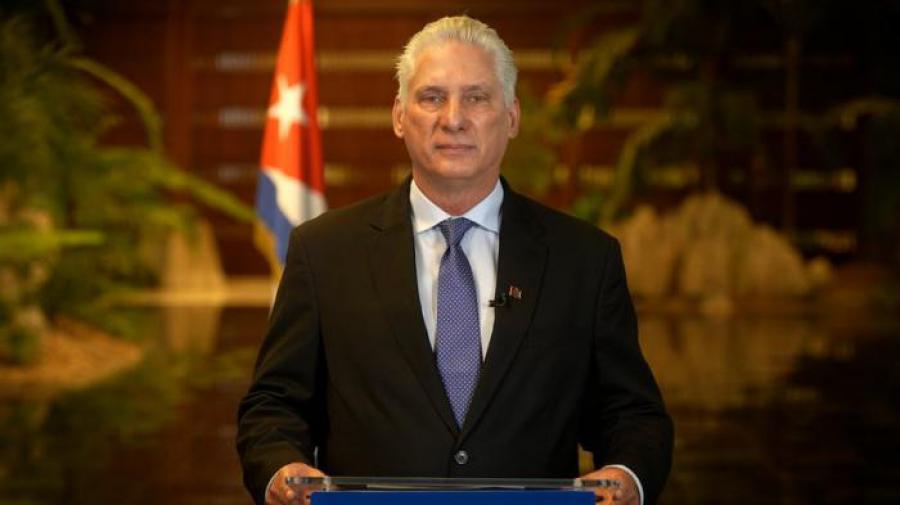
Cuba denounces the blockade and the energy siege at the FAO as obstacles to food security
Message from Cuban President Miguel Díaz-Canel Bermúdez to the World Food Forum, organized annually by the Food and Agriculture Organization of the United Nations (FAO).
Excellencies, Heads of State and Government;
Mr. QU Dongyu, Director-General of the FAO;
Representatives of international organizations and the United Nations system;
Distinguished delegates;
It is an honor for the people of Cuba and for me to participate once again in the World Food Forum—organized annually by the Food and Agriculture Organization of the United Nations (FAO)—a space that brings the international community together to reflect and take action on one of the most urgent challenges of our time: guaranteeing the human right to food.
We live in a world marked by profound uncertainties. Armed conflicts, the increasingly severe effects of climate change, recurring economic crises, geopolitical tensions, and growing inequalities disproportionately affect developing countries, where millions of people continue to suffer from hunger, food insecurity, and malnutrition.
In this global landscape, public policies aimed at transforming agrifood systems are not merely a technical priority; they constitute an ethical and political responsibility for all governments.
For Cuba, these challenges take on a particularly complex dimension. Our country faces the cumulative effects of more than six decades of an economic, commercial, and financial blockade—a policy that severely limits access to markets, technologies, financing, fuel, and essential inputs for development.
Compounding this is the energy siege imposed by the United States government, which today profoundly impacts our national economy and the daily lives of our people.
These circumstances directly affect agricultural production, food processing, refrigeration, transportation, distribution, and logistics. However, Cuba has turned every challenge into an opportunity to accelerate structural transformations that strengthen our resilience.
We are driving profound changes to transform our food systems, strengthen domestic food production, expand territorial development, foster innovation, and advance the energy transition of our local food systems.
Few nations face such complex challenges. And few demonstrate, as Cuba does, that it is possible to keep moving forward even under extraordinarily adverse conditions.
The support of the FAO has been fundamental to this effort; it has mobilized nearly 100 million dollars to address national challenges, providing resources, knowledge, assistance, and capacity-building to strengthen strategic sectors, boost local food systems, and increase resilience in the face of climate change.
We express our sincere gratitude for this steadfast, respectful, and solidary support.
We also acknowledge the FAO’s backing for our country’s inclusion in the Global Alliance against Hunger and Poverty—a platform that opens up opportunities to mobilize resources, share knowledge, and build partnerships.
Within the framework of this Alliance, Cuba is currently presenting two preliminary plans with high social value, designed to directly benefit our nation's most vulnerable sectors. Both aim to strengthen food security as a cornerstone of development through territorial, inclusive, and sustainable solutions that seek to protect families at greatest risk, expand access to nutritious food, and consolidate resilient local systems.
These initiatives reflect Cuba’s determination to move forward with responsibility, creativity, and social commitment, even amidst the most complex circumstances.
At this meeting, Cuba reaffirms its commitment to the "Hand-in-Hand" Initiative, which promotes investments based on advanced geospatial models, market analysis, and strategic partnerships to accelerate the transformation of agrifood systems. We also appreciate the opportunity to present, within the framework of this World Forum, two new projects linked to production chains of high strategic value for Cuba: coffee and honey.
These sectors represent opportunities for rural development, income generation, employment, environmental sustainability, and the strengthening of the livelihoods of thousands of Cuban families.
Cuban coffee and honey are products with distinct identity, tradition, and growth potential. Strengthening them helps revitalize rural areas, improve climate resilience, and expand export opportunities.