
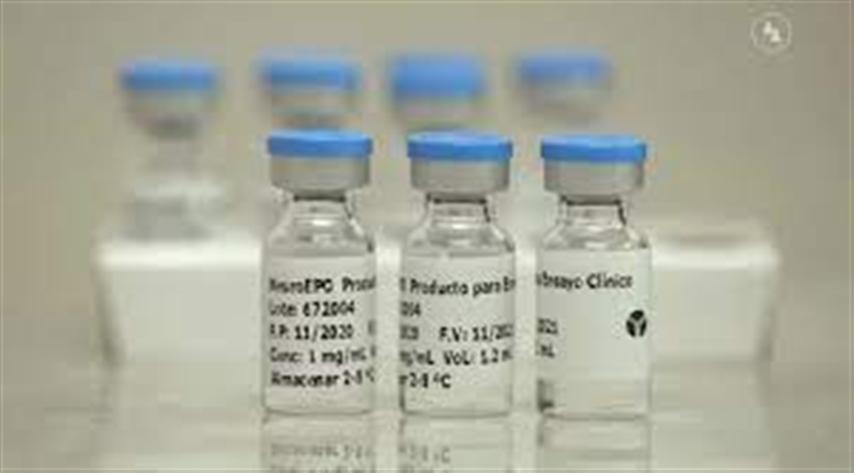
A phase III clinical trial to evaluate the efficacy and safety of the nasal administration of NeuroEPO in adult patients with spinocerebellar ataxias is successfully developed in Cuba.
Cuba is the country in the world with the highest prevalence of Ataxia type sca2, at a rate of 36.2 cases per 100,000 inhabitants, although its frequency in the province of Holguin is 183 cases per 100,000 individuals, Granma newspaper reported.
Internationally, the incidence of this type of ataxia is three to five cases per 100,000 people.
Doctor of Science Luis Velázquez, founder of the Center for Research and Rehabilitation of Hereditary Ataxias (Cirah) in Holguín and president of the Cuban Academy of Sciences, reported that the Phase III trial follows a Phase I/II one conducted between 2015 and 2016. The results of that study showed an improvement in cerebellar syndrome among treated patients and an improvement in their cognitive manifestations.
In addition, a high safety profile of NeuroEPO, a molecule developed by the Center for Molecular Immunology, which is being applied to different neurodegenerative diseases, was proven.
NeuroEPO in sca2 ataxia. From preclinical studies to clinical trials in humans, was the focus of a meeting this week between scientists and health experts and the President of Cuba, Miguel Díaz-Canel, and the Prime Minister, Manuel Marrero.
According to Dr. Velázquez, ataxia means loss of coordination of movements and about the SCA2 type, he explained that it is a severe hereditary multisystemic disease, with a progressive course until death, whose age of onset is around 30 years old, with a clinical course to disability of 10 years.
In Cuba, 75 new patients with the mutation are diagnosed each year, and 25 die.
The Caribbean country reports 2,400 people with the disease, and 10,000 asymptomatic relatives, belonging to 200 families.
Regarding the clinical manifestations, the specialist described, among others, the so-called ataxic gait in 100 percent of the patients, as well as language disorders.
The goal is to stimulate cellular and molecular mechanisms of neuroplasticity, improve impaired motor and cognitive functions, slow disease progression, increase patients' independence and improve their quality of life, and collaborate with the world.
Slowing of saccadic eye movements affects 91 percent, muscle atrophy 75 percent, peripheral neuropathy 85 percent, swallowing abnormalities 76 percent, sleep disturbances 90 percent and cognitive dysfunction 85 percent of patients.
Despite the barriers that limit ataxia therapies, Cuba is determined to develop them and make them available free of charge and universally to all citizens who suffer from ataxia or who are at genetic risk of being affected.