
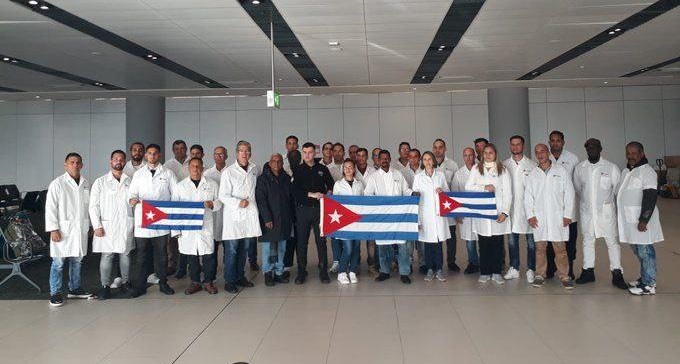
A revolution of humanitarian aid and sensitivity has brought with it the sad reality left in Türkiye and Syria, in the early hours of February 6, by an earthquake of magnitude 7.7 on the Richter scale. Medical forces from various parts of the world, coordinated by the World Health Organization, following the international request for help, have marched to offer health care and comfort.
On Tuesday, Turkish President Recep Tayyip Erdogan announced that more than 35,000 people have died in Türkiye, making this the worst disaster of its kind since the country's founding a hundred years ago, the AP reports.
Erdogan added that 105,505 people were injured in the earthquakes, centered in Kahramanmaras, as far as a Cuban medical brigade made up of members of the Henry Reeve International Contingent of Specialized Doctors in Disaster Situations and Serious Epidemics arrived, earlier this week, to provide assistance to the victims.
The reception of the professionals was attended by the Cuban ambassador in Ankara, Alejandro Díaz Palacios, who ratified the solidarity vocation of the Cuban Revolution, by sending a quick response after the incident, reported the Television Information System.
The group, made up of 32 health professionals, including 20 medical specialists and 11 graduates including nurses, epidemiologists and service personnel, was located at the Necip Fazil Sehir Hospital, in the city of Kahramanmaras.
There, officials from the Türkiye Ministry of Foreign Affairs, the Ministry of Health, the hospital and the Emergency and Disaster Management Authority welcomed them, and thanked them for their immediate support.
Cubaminrex highlights that they all have extensive work experience in carrying out internationalist and emergency missions in nations such as Pakistan, Guinea Conakry, Liberia (on the occasion of the Ebola outbreak in 2014, in West Africa); in Mexico, the United Arab Emirates, Andorra and Cuba, facing COVID-19.
(From Granma)