
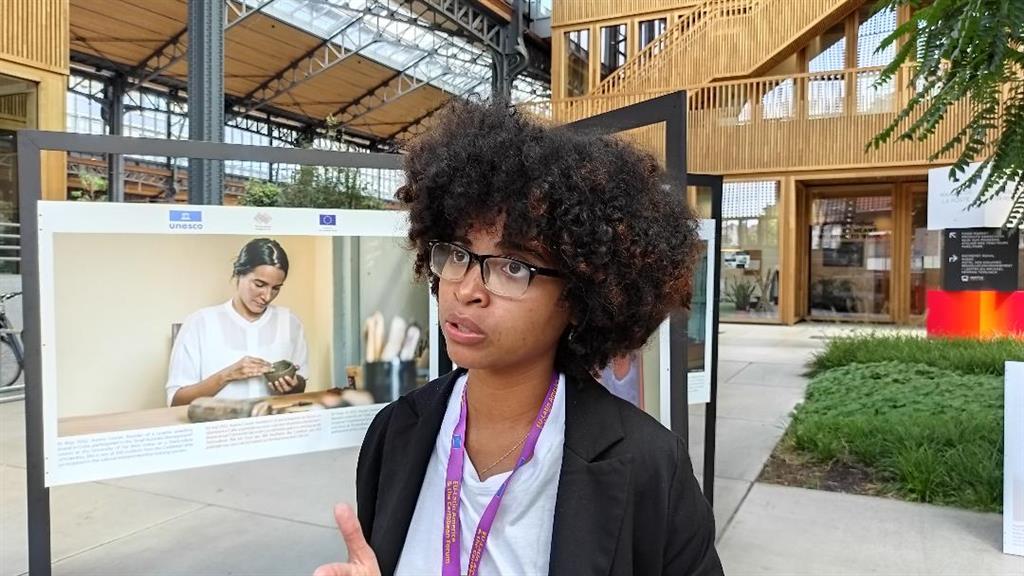
Cuban delegate Mirthia Brossard denounced here today at the European Union (EU)-Latin America and the Caribbean civil society forum the blockade imposed by the United States on her country and its impact on the youth.
Speaking at the event on "youth, civil society and local governments", which will be held until tomorrow at the Maison de la Poste, the island's representative described the economic, commercial and financial siege applied by Washington against the Caribbean nation for more than six decades as the cruelest of aggressions.
It affects us because it limits our personal and professional projects; definitely, young Cubans would live better without the blockade, said the leader of the Union of Young Communists amid applause.
Brossard shared with the participants the scenario of the intensification of that U.S. policy, with measures that even manifested themselves harshly in the midst of the Covid-19 pandemic.
In her brief words, the delegate from the island considered important the dialogue between young people from both sides of the Atlantic, so that their struggles and challenges are known.
We come from a region (Latin America and the Caribbean) that is unequal and a victim of colonization and new forms of aggression, through media and political campaigns and attempts to destabilize countries, she warned.
Regarding his participation in the forum, one of those that precedes the July 17-18 Summit in Brussels between the EU and the Community of Latin American and Caribbean States (CELAC), Brossard pointed out to Prensa Latina irregularities in the organization of the meeting.
We believe that it was organized from a Europeanist vision, trying to give lessons to Latin America on what civil society is and deciding who participates or not, but even so, Cuban youth managed to be present and convey our messages, she stressed.
According to the delegate of the largest of the Antilles, it is necessary to insist in the context of the III EU-Celac Summit that Latin America and the Caribbean is a zone of peace and that bi-regional relations should be materialized on the basis of mutual respect and equality.
Regarding his denunciation of the US blockade, Brossard explained the importance of calling attention in any possible space to the damage that this policy causes to an entire people, including young people.
We had to say here that this blockade violates our human rights and that it is very difficult to develop under the conditions it imposes, he said.