
The Migration, Foreigners, and Citizenship laws, which will take effect in November, implement the most profound update of the Cuban migration system in decades. Among their main new features are the removal of the limit on the length of stay in Cuba for residents abroad, the creation of migratory effective residence, new guarantees for economic participation, and a broader legal framework for citizenship and foreigners.
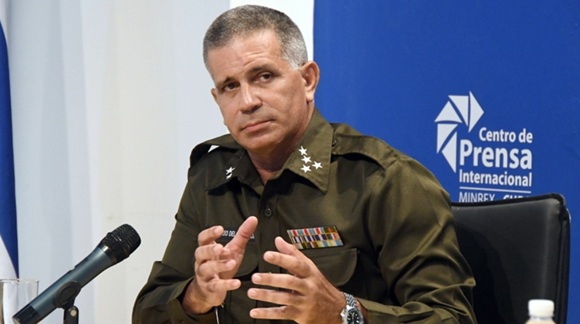
In an interview with Cubadebate, First Colonel Mario Méndez Mayedo, head of the Identification, Immigration, and Foreigners Directorate of the Ministry of the Interior, explains the scope of these provisions and answers the public’s main questions.
What changes for Cubans living abroad?
The new migration laws strengthen ties between Cuba and its citizens residing abroad.
What is the most important transformation introduced by the new Migration, Foreigners, and Citizenship laws?
–The new laws establish a system for migration management in Cuba, which comprehensively modernizes the current legislation and adapts it to the social, economic, and legal transformations the country has experienced in recent years. It is a comprehensive update that incorporates new regulations for Cuban citizens and foreigners, strengthens legal guarantees, and aligns migration policy with the Constitution of the Republic and the country’s current needs.
“One of the most significant changes benefits Cubans living abroad. Until now, when they traveled to Cuba, they had to comply with the authorized length of stay and, if they needed to remain longer, they had to request an extension from the immigration authorities. During the COVID-19 pandemic, that policy was relaxed: first, with a stay of up to 180 days and, later, with no time limit while the exceptional measures remained in place.
“Based on that experience, the new legislation establishes that Cuban citizens residing abroad may remain in Cuba for as long as they wish, without needing to request extensions or carry out procedures to prolong their stay. That is one of the most significant changes in the new migration system, which also incorporates migratory effective residence, new conditions for the economic participation of Cubans living abroad, and a broader regulation on citizenship and foreigners.”
Can a Cuban citizen live indefinitely outside the country without losing rights in Cuba?
–Yes. The migration rights recognized by the Constitution are not lost simply because a person resides in another country, except in cases expressly provided for by law. As for property rights, the legislation maintains what is established in Article 58 of the Constitution, which recognizes the right to use, enjoy, and freely dispose of one’s property, in accordance with the applicable legal provisions.
“Moreover, the new regulations eliminate the obligation to request stay extensions for residents abroad, thus strengthening their ties with the country.”
What rights will Cubans living abroad retain regarding property, inheritance, business, or investments in Cuba?
–They retain the rights recognized by the Cuban legal system, including those related to their assets, except for the limitations expressly established by law. One of the purposes of this update is to offer greater legal guarantees to those who maintain family, economic, or property ties with Cuba, and to create conditions that favor their participation in national economic development.
Do the requirements for entering or leaving the country change?
–The essential requirements remain the same and correspond to international migration practices. To enter and leave Cuba, it is still necessary to present a valid passport and, when applicable, the visa required by the destination country.
“As an exception, Cuban citizens may enter national territory with an expired passport, although they will have to obtain a new document before leaving the country again.”
Do the new laws modify the validity or cost of the Cuban passport?
–No, passport validity remains the same: 10 years for those over 16 and five years for minors under that age. That decision had already been adopted previously as part of migration policy. As for the cost, it is not regulated by law and may change depending on production costs, supplies, and the technologies used to produce it.
Why must Cuban citizens with another citizenship enter the country using a Cuban passport?
–That requirement responds to the constitutional principle of effective citizenship. The Constitution establishes that Cuban citizens, even if they hold another citizenship, are governed by their status as Cuban citizens while they are on national territory. Therefore, they must identify themselves before Cuban authorities with the documentation corresponding to that status.
Migratory effective residence: the system’s main new feature
One of the concepts in this new legal framework that has generated the most questions is migratory effective residence, which appears for the first time in Cuban legislation and will be used to determine the migration status of Cuban citizens and foreign residents.
Many people do not fully understand what the concept of “migratory effective residence” means. What does it mean exactly?
–Migratory effective residence is the status that recognizes that a person maintains their main link with Cuba because they develop their life project here and remain in national territory for most of the time. In general terms, it is acquired when the Cuban citizen or foreign resident accumulates 180 days or more of stay in Cuba during the previous year.
“However, the law introduces a broader concept that is not limited solely to length of stay. Migratory effective residence may also be recognized for those who remain in the country for at least 120 days, provided they prove a real attachment to Cuba through family, work, economic, or property ties.
“With this, the legislation seeks to assess the person’s effective relationship with the country and not only the number of days they stay in it.”
“It is not only about length of stay, but about real ties with Cuba.”
How is that attachment proven?
–The law sets out several objective elements that can establish this stable relationship with Cuba. These include being married to or related to Cuban citizens or foreigners who hold migratory effective residence; carrying out paid work in the country; participating in investments, businesses, or other economic activities; or owning a home or legally residing in one.
“Likewise, maintaining active bank accounts in Cuba, complying with tax obligations, or owning other assets or interests that show a permanent relationship with national territory.
“Each application will be evaluated individually by the migration authority, in accordance with the requirements and documents provided for in the law’s regulations.”
What is the legal difference between a resident in national territory and a resident abroad?
–The new legislation simplifies the migration conditions for Cuban citizens. From now on, it recognizes two categories: resident in national territory and resident abroad. Migratory effective residence is the element that will make it possible to determine which of those two conditions each citizen falls under.
“In other words, it is not a third migration category, but rather the legal criterion used to establish residency status.”
What changes, then, compared with the previous legislation?
–For many years, migration legislation was based mainly on the periods of stay inside or outside the country. The new regulations keep length of stay as an important element, but introduce a broader view by also recognizing the family, economic, and social ties a person maintains with Cuba.
“Thus, residency is no longer measured exclusively by time and also takes effective attachment into account. That change is one of the main new features of the new system for migration management.”
The creation of migratory effective residence responds to the need to adapt the legislation to a reality not only in Cuba but worldwide, where more and more people build their lives across several countries, maintain family and property ties with their country of origin, or take part in economic projects without permanently residing in national territory.
According to First Colonel Mario Méndez Mayedo, the new legislation seeks to offer a legal response to these situations and strengthen the relationship between citizens and the country based on their real ties and not solely on the amount of time they spend in it.
Citizenship: the rules change
The new Migration, Foreigners, and Citizenship laws also update the legal regime for Cuban citizenship. Among the main new features in this area are the regulation of renunciation and recovery of citizenship, the development of the principle of effective citizenship, and new clarifications for children of Cubans born abroad.
The new rules recognize the possibility of holding another citizenship. Does Cuba officially recognize dual citizenship?
–The Constitution of the Republic establishes that acquiring another citizenship does not mean losing Cuban citizenship. The new law develops that constitutional principle. It does not expressly use the term “dual citizenship,” because today international law recognizes that a person may hold two or more citizenships. For that reason, the legislation refers to the possibility of retaining Cuban citizenship even if another citizenship is acquired.
What does the principle of effective citizenship imply?
–Effective citizenship means that, while a Cuban citizen is on national territory, they are governed solely by their status as a Cuban citizen, even if they hold another citizenship. In practice, this means they must identify themselves as Cuban before national authorities and cannot invoke another citizenship to carry out legal acts within the country. The law also establishes the legal consequences for those who fail to comply with this principle.
For the first time, renunciation of Cuban citizenship is regulated. How will the procedure work?
–Renunciation of citizenship is regulated for the first time in Cuban legislation. The request must be submitted from abroad through the corresponding Cuban consulate, and the applicant must prove that they hold another citizenship and meet the requirements established in the Citizenship Law.
“As a general rule, the decision is made by the Minister of the Interior. However, when citizenship was granted by decision of the President of the Republic, it will be the President who rules on the renunciation request.”
Can someone who lost Cuban citizenship recover it?
–Yes. The law allows Cuban citizenship to be recovered once, provided that the established requirements are met, including officially proving the loss of citizenship, showing that the causes that led to that decision have disappeared, and that at least five years have passed since its approval.
“Additionally, the applicant must submit the documentation required by the law, including a sworn declaration of commitment to the Constitution, proof of financial solvency, health status, criminal record, and conditions for reintegration and residence in Cuba.”
What changes under the new legal framework for children of Cubans born abroad?
–The new legislation maintains the right of children of Cuban citizens born outside national territory to apply for Cuban citizenship.
Do the new laws recognize political rights for Cubans living abroad?
–That issue is not part of migration legislation or the Citizenship Law. Political participation rights are regulated in the Electoral Law and are exercised according to the conditions established for electoral processes in the country.
Investment and business: new opportunities for Cubans abroad
One of the goals of the new laws is to strengthen the ties of Cubans living abroad with the nation, including their participation in national economic life. The new legislation creates a migration framework to facilitate that integration.
To that end, it introduces new migration conditions and provides a legal framework for those who decide to invest, start businesses, or develop business activities in Cuba in accordance with current regulations.
Can Cubans living abroad legally invest in Cuba under these new provisions?
–Yes. The new legislation recognizes that possibility and creates a specific migration status for Cuban citizens living abroad who participate in any of the authorized forms of the national economy. The aim is to provide a legal framework that facilitates that participation and strengthens economic ties with the country.
What does the “Investor and Business” migration status mean specifically?
–This status is aimed at Cuban citizens living abroad who carry out economic activities authorized by Cuban legislation. It includes those who participate in foreign investment projects, establish or join micro, small, and medium-sized enterprises (MSMEs), non-agricultural cooperatives, or other forms provided for in the legal system.
“More than creating a new right, this classification legally organizes the migration situation of those who participate in the national economy while living abroad.”
What legal guarantees will those who decide to invest in Cuba have?
–Cubans living abroad who develop investments or businesses will have the same legal guarantees recognized for foreign investors. In addition, while they remain in Cuba, they will enjoy the rights recognized by the legal system for Cuban citizens, which reinforces the legal security of their projects and investments in the country.
What role do these provisions play in Cuba’s economic transformation process?
–One of the purposes of the new laws is to create a legal environment that facilitates the participation of Cubans living abroad in national economic development. The legislation accompanies the economic transformations promoted by the country and seeks to provide greater legal security to those who maintain economic ties with Cuba or wish to establish new forms of participation.
Why a new law?
“It is the result of an updating process that began 15 years ago.”
The new Migration, Foreigners, and Citizenship laws did not arise from an isolated decision. They are the result of a process of analysis and updating of Cuban migration policy that began more than a decade ago and has accompanied the country’s economic, social, and constitutional changes in recent years.
Why did Cuba decide to comprehensively update the migration legal framework at this time?
–The updating of migration legislation responds to a process that began in 2010, based on studies of the behavior of Cuban migration and the need to adapt the rules to the country’s new realities.
“As part of that process, important changes to migration policy were approved in 2012 and 2015. Later, in 2019, the Constitution of the Republic incorporated for the first time the main migration rights of Cuban citizens, and in 2020 the updating of this legislation became part of the National Assembly’s legislative schedule.
“The new laws were approved in 2024, published this year, and will take effect in November. It is an update built gradually and in stages over 15 years, with the aim of modernizing the Cuban migration system and harmonizing it with the Constitution and the country’s economic and social transformations.”
What are the main goals of this update?
–One of its essential purposes is to continue reducing the differences between Cuban citizens residing in national territory and those living abroad, strengthening the ties of the latter with their country, their families, and Cuban society.
“The legislation also seeks to offer greater legal guarantees for the exercise of migration rights, protect the property rights of Cuban citizens, and encourage the participation of those living abroad in the national economy.
“It also creates conditions that facilitate the return of those who decide to establish their residence in Cuba again, provided they meet the requirements set out in the law.”
“One of its essential purposes is to continue eliminating the differences between Cubans residing in national territory and those living abroad.”
What changes regarding foreigners?
–The update is not limited to Cuban citizens. In matters of foreigners, the new laws expand the rights of resident and non-resident foreigners, introduce new migration classifications, and strengthen guarantees for those who maintain family, work, economic, or humanitarian ties with Cuba.
“Among the new features are the figures of provisional resident and humanitarian resident, as well as the expansion of the grounds for accessing permanent residence. The legislation also introduces a stronger protection approach toward migrants, including measures aimed at assisting people in vulnerable situations and victims of human trafficking and migrant smuggling.”
A different view
The first colonel Mario Méndez Mayedo explains that the new laws are based on the recognition that human mobility has changed in recent years and that Cuba needed a legal framework capable of responding to those transformations.
The goal is not only to update administrative procedures, but to build a migration system more consistent with the current national and international reality, with the Constitution, and with Cuba’s economic and social development policies.
Beyond legal changes, the new legal framework expresses a concept of migration, its causes, and the role Cuban citizens living abroad can play in the country’s development. The head of the Identification, Immigration, and Foreigners Directorate of the Ministry of the Interior stresses that the new laws adapt the migration system to that reality.
“The laws lay the foundations. The results will depend on how they are applied.”
Policy impact
From a political, economic, and social perspective, what impact could these rules have on the relationship between Cuba and its emigrants?
–We have worked to ensure that the Cuban migration process and the legislation that regulates it cease to be a setting for political definitions and increasingly respond to the causes that internationally explain migration movements.
“We start from the recognition that migration is a social, multi-causal phenomenon. In the case of Cuba, economic motivations today have a determining weight, although other factors also play a role, such as professional development prospects, entrepreneurial opportunities, and personal life projects.
“However, that analysis cannot be separated from an element that has shaped the Cuban migration reality for more than six decades: the use of migration by the United States government as an instrument of policy toward Cuba and the effects of the economic, commercial, and financial blockade on living conditions in the country.
“We want migration to stop being a tool of political confrontation. It must stop being part of another country’s internal campaigns, used to promote the division of Cuban families, or to obstruct ties between those who live inside and outside Cuba.
“Our purpose is to have a migration system that guarantees the rights of Cuban citizens and foreigners, is consistent with the most advanced standards of international law, and at the same time helps strengthen the ties between the Cuban community abroad and its country.
“We are aware that these laws alone will not solve all problems associated with migration, but they do lay the legal foundations to move in that direction. To the extent that they promote greater participation of Cubans living abroad in the country’s economy and social life, they can contribute to economic development and to strengthening relations between Cuba and its emigrants.”
“These laws do not by themselves solve all problems, but they do create the legal foundations to move in that direction.”
A global standard
What is the general concept underlying the new system for migration management in Cuba?
–The new system for migration management is based on the recognition that migration is a social, multi-causal, and dynamic process that requires a legal response consistent with the country’s current realities and international trends. Our aspiration is that Cuban migration increasingly respond to the causes that, in general, explain these processes in the world and cease to be used as an instrument of political confrontation.
“The new laws seek to strengthen the relationship of Cubans living abroad with their country, their families, and Cuban society; provide legal guarantees for the exercise of their rights; facilitate their participation in the national economy; and create conditions that favor the return of those who decide to reestablish their residence in Cuba.
“At the same time, they expand the protection of foreigners’ rights, introduce new migration categories, and develop procedures that allow these processes to be managed with greater legal certainty and in line with the principles of international law.
“We know that the success of this system will not depend solely on legal rules; it will also be linked to the country’s economic and social conditions and the international context in which Cuban migration develops. But we are convinced that these laws create a solid foundation for continuing to strengthen ties between Cuba and its emigrants and for managing migration from a more modern, more rights-based, and more context-appropriate perspective.”
Foreigners and guarantees
The new laws in the migration field do not only update rules related to Cuban citizens. They also introduce changes regarding foreigners, with new migration classifications, greater precision on foreign residency, and protection mechanisms for those who are in national territory.
What new migration categories does the legislation introduce for foreigners?
–The Foreigners Law establishes the regulations applicable to foreigners who are in Cuba, and the Migration Law incorporates, for foreigners, the migration statuses of resident and non-resident.
“Within those categories, new classifications are established, including provisional resident and humanitarian resident, designed to respond to different legal and personal situations.”
Who may apply for provisional residence?
–Provisional residence may be requested by foreigners who are in certain situations provided for by the legislation, including those applying for permanent residence in Cuba, those who meet the requirements to opt for permanent residence but do not intend to remain in the country under that status, or people who have renounced or lost Cuban citizenship while processing its recovery.
“This figure makes it possible to establish an intermediate migration status while the corresponding legal situation is being defined.”
Humanitarian residence: A category for situations requiring special protection
Who may access humanitarian residence under the new legislation?
–This classification is intended for people who require special protection. It includes those who are assisted in Cuba under the mechanisms of the Office of the United Nations High Commissioner for Refugees (UNHCR), are in a vulnerable situation, or need temporary protection for humanitarian reasons, subject to prior approval by the competent authority.
“With this figure, the legislation incorporates a specific response to situations that require differentiated attention.”
The laws also formalize the Migration Police. What functions will this body have?
–The Migration Police will have authority to act in cases of noncompliance with migration, foreigners, and citizenship legal provisions committed by foreigners in Cuba, with the exception of diplomatic, consular, and international organization personnel accredited in the country, in accordance with the applicable international agreements.
“Its functions include prevention, assistance to migrants, protection of their rights, social discipline, and public order. It will also contribute to the enforcement of decisions adopted by the courts and migration authorities within their respective powers.”
Guarantees against migration decisions
If someone considers a migration or citizenship decision unfair, what complaint mechanisms may they use?
–The legislation establishes mechanisms to review administrative decisions. That person may file a motion for reconsideration with the authority that made the decision. If dissatisfaction persists, they may file an appeal with the higher authority. Once the administrative process has been exhausted, they may then go to the courts through the established judicial procedures.
Do these laws modify the regulations previously applied to professionals who left official missions abroad, particularly in the health sector?
–No. Those provisions stem from decisions adopted under the current migration policy and are not part of the content of the new Migration, Foreigners, and Citizenship laws.
A migration system with new legal tools
What issues remain pending in migration and citizenship matters?
–At this time, there are no pending issues from a legislative standpoint. The new laws are the result of an updating process carried out in recent years and establish the legal foundations for a more modern migration system, with greater guarantees for Cuban citizens and foreigners.
“Their implementation will make it possible to continue strengthening ties with Cubans living abroad, organize migration processes, and have more appropriate tools to address the new realities of human mobility.”
10 key points of the new Migration, Foreigners, and Citizenship laws
- Cubans living abroad will be able to remain in Cuba for an unlimited period, without needing to request stay extensions.
- Migratory effective residence is created, a status that will take into account not only the length of stay in the country, but also family, work, economic, and property ties.
- The migration and property rights of Cuban citizens are maintained, in accordance with the Constitution and current legislation, except for the exceptions provided by law.
- The principle of effective citizenship is developed: those who hold another citizenship must identify themselves in Cuba as Cuban citizens while they remain in national territory.
- For the first time, renunciation and recovery of Cuban citizenship are regulated through procedures and requirements defined by law.
- The migration status “Investor and Business” is created for Cubans living abroad who participate in authorized forms of the national economy.
- Migration classifications for foreigners are expanded, with new figures such as provisional resident and humanitarian resident.
- Legal guarantees are strengthened by establishing administrative appeals and the possibility of going to court to challenge migration decisions.
- The new laws are the result of an updating process begun in 2010, which incorporated migration rights into the Constitution and now culminates in a new legal system.
- The stated goal of the new laws is to strengthen ties between Cuba and its emigrants, offer greater protection for the rights of Cuban citizens and foreigners, and adapt legislation to the current realities of human mobility internationally.