
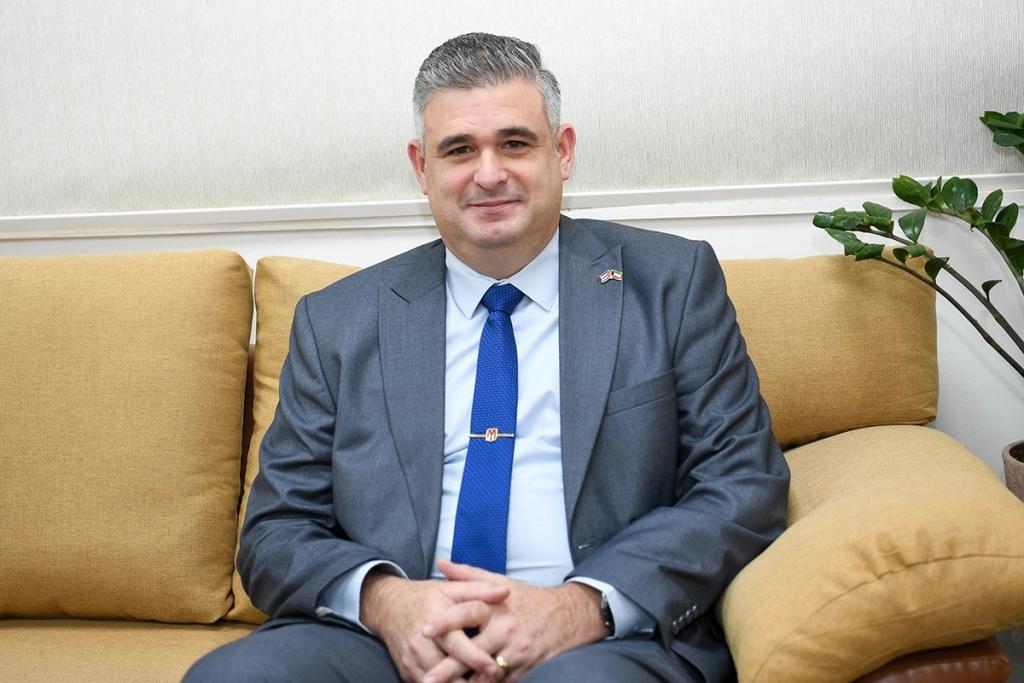
The Ambassador of the Republic of Cuba to the country, Dr. Alan Torres, affirmed that the first round of negotiations on the agreement to avoid double taxation between Kuwait and Cuba represents an important step on the path to strengthening bilateral economic relations, noting that the two sides are working constructively to advance the negotiations and complete them with the greatest possible efficiency.
Torres told Al-Qabas that it is too early to set a date for signing the agreement or for it to come into effect, explaining that this will be announced after the technical negotiations are successfully completed and the two governments agree on the final version.
He added that the agreement will provide greater certainty and legal stability for companies and investors operating between Kuwait and Cuba, and will be an important tool for creating the necessary conditions for achieving a tangible expansion in economic and trade relations between the two countries.
Torres said that Cuba is looking to attract sustainable, productive and mutually beneficial investments, especially investments that provide jobs, generate exports, transfer technology and contribute to the development of the Cuban economy.
He noted that his country has recently undertaken important reforms to make foreign investment more flexible and faster, pointing out that in July 2026 Decree No. 153 was introduced, which amended the executive regulations of the Foreign Investment Law, provided shorter and clearer procedures, simplified the required documents, and granted more flexibility in managing companies with foreign investments.
Regarding the sectors that would benefit most from the agreement, the Cuban ambassador said: The potential is available in several areas, but tourism, renewable energy, biotechnology, pharmaceutical industries, agriculture and services represent areas of particular priority.
He explained that Cuba has significant opportunities in developing hotels, tourist infrastructure, marinas and tourism-related real estate, in addition to medical, environmental, cultural and other forms of specialized tourism.
He added that energy, particularly renewable energy, represents a promising area for cooperation, given the need to develop sustainable energy sources and enhance infrastructure efficiency.
He pointed out that biotechnology and the pharmaceutical industries represent one of the most prominent strengths of Cuba, which has developed internationally recognized capabilities in the fields of vaccines, pharmaceutical products and medical services.
Torres stressed that agriculture and food production are an important priority, especially in light of Kuwait’s growing interest in food security, pointing to opportunities in agricultural production, food processing, livestock, irrigation, agricultural technology, storage, logistics and distribution.
He said his country welcomes direct Kuwaiti investments, as well as partnerships with Cuban entities and companies.
He added: “Our message to Kuwaiti companies is that Cuba is looking for serious, long-term partners, and we are interested in investors who bring capital, technology, managerial expertise, markets, and production capabilities.”
Torres welcomed the idea of establishing a Kuwaiti-Cuban Business Council or a permanent economic forum between the two countries, considering that this proposal could contribute to identifying concrete projects, linking companies, following up on investment proposals, and addressing practical obstacles.
He said that governmental relations between Kuwait and Cuba are important, but modern economic diplomacy also requires direct and continuous communication between the business communities of the two countries.
He added: “I think we should proceed step by step; first, sign the agreement, then boost the interest of Kuwaiti investors, and then we can study the establishment of this mechanism.”