
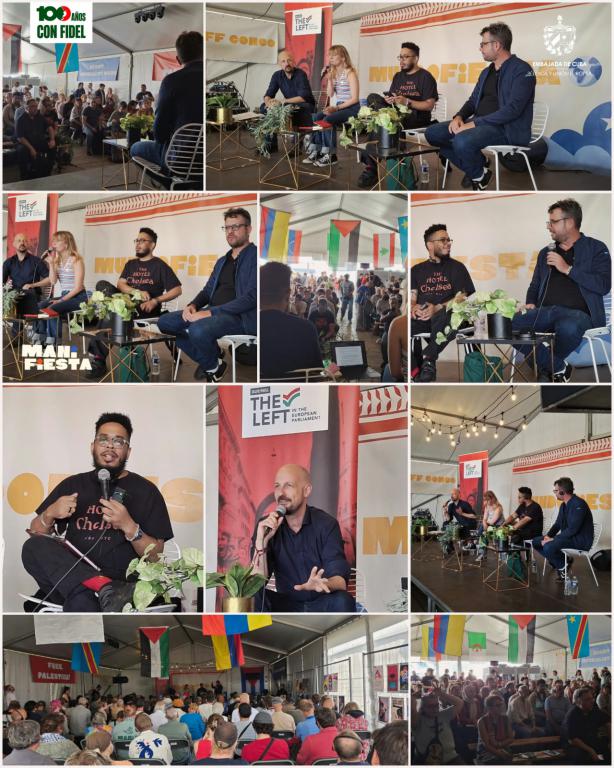
Ostende, 12 de septiembre.- El legado político e histórico de Fidel Castro, su vigencia para las nuevas generaciones y su influencia más allá de las fronteras de Cuba centraron el panel “Los 100 años de Fidel: Revolución, resistencia y futuro”, celebrado durante la primera jornada del festival Manifiesta.
El encuentro reunió al eurodiputado Marc Botenga, el activista y cofundador de The People’s Forum, Manolo de los Santos, y el diputado e historiador cubano Elier Ramírez, quienes abordaron desde diferentes perspectivas el pensamiento, la trayectoria y el legado de Fidel, así como su significado para Cuba y para los movimientos progresistas del mundo.
A cien años de su nacimiento, el panel planteó una reflexión sobre la vigencia de las ideas de Fidel y sobre las razones por las que su figura continúa generando debate e interés entre nuevas generaciones.
El diputado e historiador cubano Elier Ramírez analizó la trayectoria de Fidel desde la historia y el pensamiento político. Su intervención puso el acento en sus ideas, su visión humanista e internacionalista y el legado que dejó para las generaciones que continúan defendiendo la soberanía y la justicia social.
Por su parte, Manolo de los Santos abordó una de las cuestiones centrales del encuentro: ¿por qué Fidel trascendió las fronteras de Cuba y se convirtió en un referente para movimientos de liberación y transformación social en América Latina, África y Estados Unidos? Su intervención permitió situar la figura de Fidel en una dimensión internacional y reflexionar sobre la vigencia de su legado político.
El eurodiputado Marc Botenga compartió su perspectiva sobre Fidel y la pertinencia de su pensamiento en el contexto actual. Destacó la inspiración que representa para quienes defienden la solidaridad, la soberanía de los pueblos y la construcción de un mundo más justo.
El debate puso de relieve que, a un siglo de su nacimiento, Fidel continúa siendo una figura de referencia y objeto de reflexión política e histórica. Sus ideas, su trayectoria internacionalista y su defensa de la soberanía cubana siguen formando parte de los debates sobre el presente y el futuro de Cuba y sobre los desafíos de las fuerzas progresistas a nivel internacional.
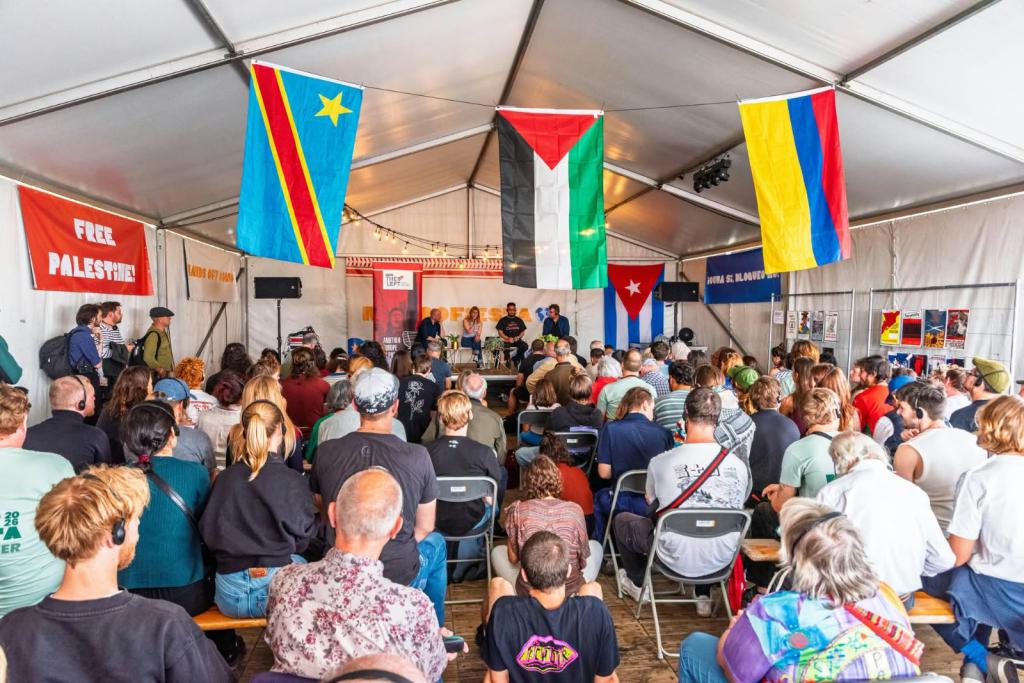
El encuentro celebrado en Manifiesta se convirtió así en un espacio de intercambio entre Europa, Cuba y otros movimientos sociales internacionales para analizar un legado que, lejos de quedar limitado a la historia, continúa generando preguntas y debates sobre revolución, resistencia, soberanía y futuro.
_____________________________________________
On Fidel’s Centenary: A Debate on Revolution, Resistance and the Future
Ostend, September 12.- The political and historical legacy of Fidel Castro, its relevance for younger generations, and his influence beyond Cuba’s borders were at the heart of the panel “100 Years of Fidel: Revolution, Resistance and the Future”, held during the first day of the Manifiesta festival.
The event brought together MEP Marc Botenga, activist and co-founder of The People’s Forum, Manolo de los Santos, and Cuban MP and historian Elier Ramírez, who approached Fidel’s thought, trajectory and legacy from different perspectives, as well as their significance for Cuba and for progressive movements around the world.
One hundred years after his birth, the panel offered an opportunity to reflect on the continuing relevance of Fidel’s ideas and on the reasons why his figure continues to generate debate and interest among younger generations.
Cuban MP and historian Elier Ramírez examined Fidel’s trajectory from the perspective of history and political thought. His remarks focused on his ideas, his humanist and internationalist vision, and the legacy he left to generations that continue to defend sovereignty and social justice.
For his part, Manolo de los Santos addressed one of the central questions of the event: why did Fidel transcend Cuba’s borders and become a reference point for liberation and social transformation movements in Latin America, Africa and the United States? His remarks placed Fidel’s figure within an international context and encouraged reflection on the continuing relevance of his political legacy.
MEP Marc Botenga shared his perspective on Fidel and the relevance of his thinking in the current context. He highlighted the inspiration Fidel represents for those who defend solidarity, the sovereignty of peoples, and the construction of a fairer world.
The debate underscored that, a century after his birth, Fidel continues to be a point of reference and an object of political and historical reflection. His ideas, his internationalist trajectory and his defense of Cuban sovereignty remain part of debates about Cuba’s present and future, as well as about the challenges facing progressive forces at the international level.
The gathering held at Manifiesta thus became a space for exchange between Europe, Cuba and other international social movements to examine a legacy that, far from being confined to history, continues to raise questions and debates about revolution, resistance, sovereignty and the future.
(EmbaCuba Bélgica)