
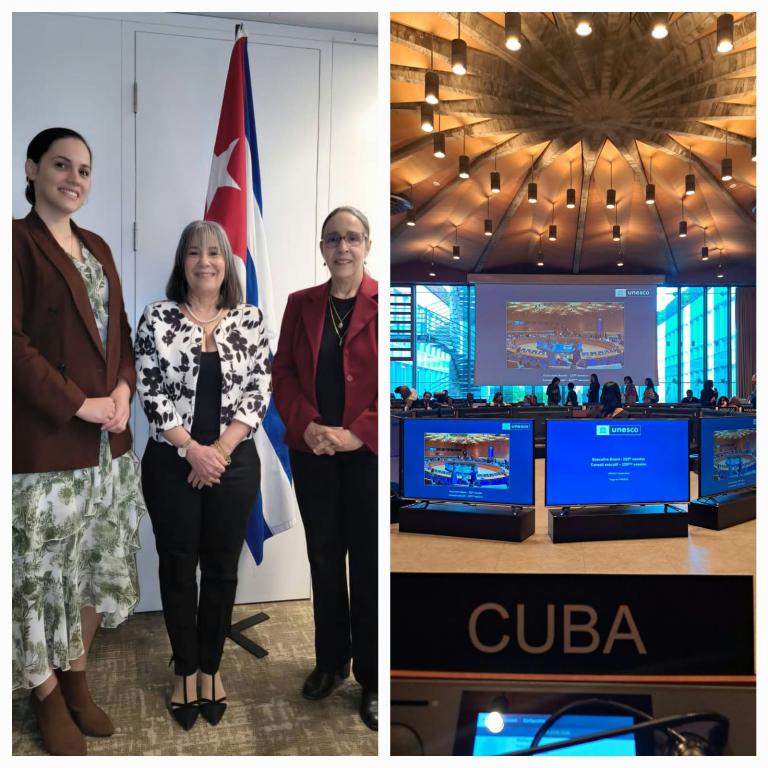
Paris, 5 October 2026. — The proceedings of the 225th session of the UNESCO Executive Board began today, 5 October, at UNESCO Headquarters in Paris. The session will take place from 5 to 20 October 2026.
The session of the Executive Board is taking place against a backdrop of significant challenges to multilateralism and international cooperation, as UNESCO advances a process of institutional reform and transformation within the framework of the UNESCO 80 Roadmap.
During this session, the Executive Board will consider issues of particular relevance to the future of the Organization, including the implementation of its programme and budget, the financial situation, the implementation of its mandates, and various aspects related to its structure and functioning. The programme of work also includes discussions within the Programme and External Relations Commission, the Finance and Administrative Commission, and the Committee on Conventions and Recommendations, among other subsidiary bodies.
Cuba’s participation in this session takes place under particularly challenging circumstances for the country. The intensification of the economic, commercial and financial blockade imposed by the Government of the United States, including its impact on access to energy resources, continues to have serious economic and humanitarian consequences for the Cuban population. UNESCO itself has acknowledged the effects of external restrictions on access to fuel and their repercussions on essential services, including education in Cuba.
The Cuban delegation to the 225th session of the Executive Board is composed of:
• H.E. Ms. Mirta Granda Averhoff, Representative of Cuba to the UNESCO Executive Board and President of the Cuban National Commission for UNESCO.
• H.E. Ms. María del Carmen Herrera Caseiro, Ambassador and Permanent Delegate of Cuba to UNESCO.
• Ms. Laura Alvarez Delgado, Third Secretary of the Permanent Delegation of Cuba to UNESCO.
Through its participation in this new session of the Executive Board, Cuba reaffirms its commitment to continuing to contribute actively to the work of UNESCO and to the defence of a multilateral system capable of responding to current challenges and ensuring that education, science, culture and knowledge continue to serve all peoples.