
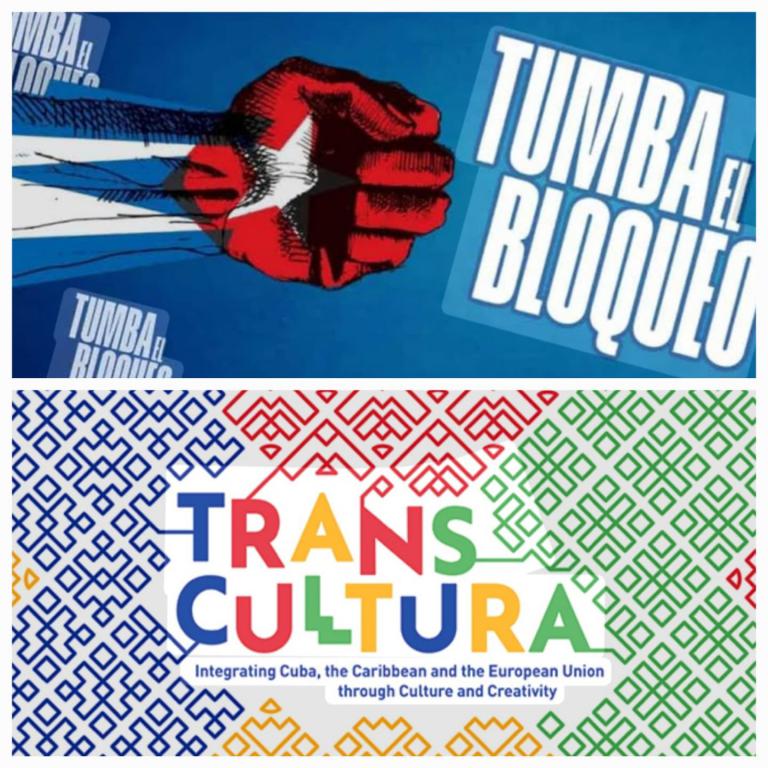
Paris, October 15 – During the 222nd session of the UNESCO Executive Council, the President of the Cuban National Commission for UNESCO, Dulce María Buergo Rodríguez, denounced that the economic, commercial, and financial blockade imposed by the United States against Cuba represented one of the main obstacles to the implementation of the Transcultura Program from the country.
The program’s final evaluation explicitly documents how restrictions stemming from the blockade and Cuba’s inclusion on the unilateral U.S. list of alleged state sponsors of terrorism affected procurement, financial operations, access to digital technologies, and program logistics. These measures forced purchases to be made through third countries at costs above the international average and hindered maritime transport to Cuban ports, as many shipping companies refused to operate on the Island for fear of U.S. sanctions.
Similarly, technological platforms commonly used by the United Nations system, such as Microsoft, are not available in Cuba, which limited communication, management, and virtual training processes. The use of virtual private networks (VPNs) entailed higher costs and technical demands in a context already marked by connectivity limitations.
The Cuban representative emphasized that these difficulties were aggravated during the COVID-19 pandemic, a period in which the cultural and creative sector was particularly affected in the Caribbean. Nevertheless, she highlighted the resilience capacity and mitigation strategies adopted by the UNESCO Regional Office in Havana and Cuban institutions, which allowed for the optimization of resources and ensured the quality and relevance of the program’s actions.
The evaluation also acknowledges that Cuba was both a beneficiary country and a key partner and highlights the commitment of national institutions such as the Ministry of Culture, the Office of the Historian of the City of Havana, the University of the Arts, the International School of Film and Television of San Antonio de los Baños, and the Design Institute, whose experience and support were decisive for the program’s success.
Despite the obstacles imposed by the blockade, Transcultura achieved tangible and sustainable results, demonstrating that cultural cooperation can flourish even in adverse contexts. The Permanent Delegation of Cuba to UNESCO reiterated that the lifting of these unilateral coercive measures is essential to ensure full, effective, and non-discriminatory international cooperation.