
Between 8 and 12 August 1972, the Conference of Foreign Ministers of the Non-Aligned Movement was held in the Cooperative Republic of Guyana.
This was the first time that a meeting of the movement had been held in Latin America and the Caribbean. The meeting was preparatory to the Fourth Summit of the Non-Aligned Movement, which was to be held in Algeria in 1973.
The meeting was attended by delegations from 59 member countries, 12 observers and 8 guests. The conference was particularly important because it approved the admission of the Provisional Revolutionary Government of the Republic of South Vietnam as a full member and recognised the Royal Government of National Unity of Cambodia as the sole and legitimate representative of the Cambodian people. it also approved the right to independence for Puerto Rico, Zimbabwe and the so-called Spanish Sahara, and took a firm position in support of the struggles against imperialism, colonialism, neocolonialism, Zionism and apartheid.
The Cuban delegation was headed by Dr Raúl Roa García, Minister of Foreign Affairs of Cuba.
In 1963, Commanders Fidel Castro, Ernesto ‘Che’ Guevara and Manuel Piñeiro Losada ‘Barba Roja’ gave Comrade Clinton Lloyd Adlum and me the task of taking two ships with fuel and food aid to the government headed by Premier Dr. Cheddi Jagan of British Guiana,
who, as Che told me, ‘we Cubans must never forget, was the only head of state in Latin America who supported Cuba in the face of the aggression at Playa Girón in 1961 and during the Missile Crisis in October 1962.’
This was the first time that Cuba had helped a government in Latin America and the Caribbean.
Cuba's action helped defeat the longest strike known at that time, an 80-day general strike organised and financed by the United States government
through the CIA and American trade unions, with the direct participation of President John F. Kennedy, who thought that Dr Jagan was going to be a second Fidel Castro, which was unacceptable to the United States.
During my stay of almost two years in British Guiana, I met and became friends with lawyer LFS Burnham, who was the leader of the opposition, which at that time was supported by the Americans and the British and opposed Dr Jagan, which allowed him to be imposed by the imperialists in the government.
But Burnham, who wanted to be prime minister, played along with this game to come to power, but he was not a right-wing man. He established relations with the USSR and China, recovered national resources, and adopted a progressive foreign policy, collaborating with Cuba in the international arena.
In this context, I had been included in the delegation because of my personal relations with Prime Minister Burnham, who received me very warmly and, at the dinner offered to the invited delegations, sat me next to him at the main table, where I was the only one who was not a minister.
Dr. Roa instructed me to convey Prime Minister Fidel Castro's interest in establishing diplomatic relations with the Republic of Guyana, which was the name adopted by the country after its independence.
I conveyed our interest to the Prime Minister, and he asked me to give him a day to consult with his Foreign Secretary and foreign policy advisers.
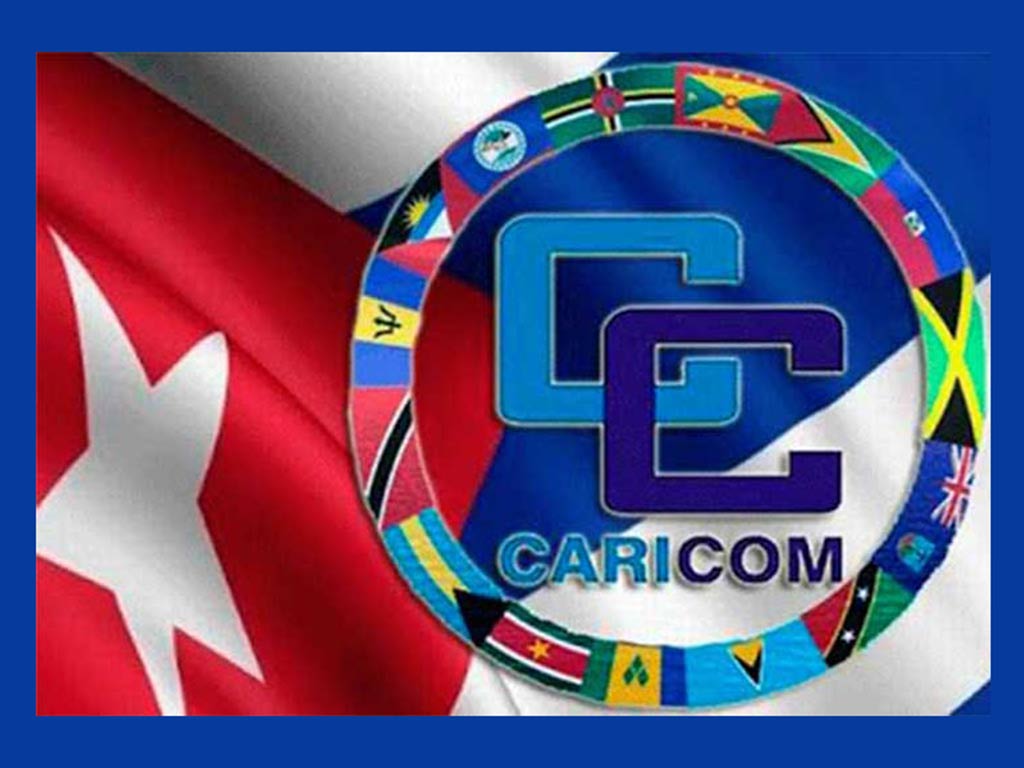
The next day, he sent for me and told me, in the presence of Foreign Secretary Sir Shridrath Ramphal, that he had a better idea than Fidel's. He proposed that Cuba establish diplomatic relations simultaneously with the four independent countries of the Caribbean Community (CARICOM): Barbados, Guyana, Jamaica, and Trinidad and Tobago. He would take it upon himself to talk to and persuade the other heads of state, as this would be better for them, since together they could better resist US pressure, and also for Cuba. However, if the others did not agree, Guyana alone would establish relations with Cuba.
In December 1972, the four independent countries of CARICOM simultaneously established relations with Cuba, which was the death blow to the US policy of isolating Cuba in Latin America and the Caribbean.
The following year, Fidel made an official visit to Guyana, from where he flew to Port of Spain in Trinidad and Tobago, where he met with Errol Barrow, Prime Minister of Barbados, Forbes Burnham, Prime Minister of Guyana, Michael Manley, Prime Minister of Jamaica, and Dr Eric Williams, Prime Minister of Trinidad and Tobago.
From there, Commander Fidel Castro flew to Algiers for the Fourth Summit of the Non-Aligned Movement, and Prime Ministers Michael Manley and Forbes Burnham travelled with him on the Cuban delegation's plane. This was the first time Fidel had participated in a summit of the Non-Aligned Movement. It was a major conference, where Fidel launched the idea of ‘a strategic alliance between the non-aligned movement and the socialist community.’
(Osvaldo Cárdenas Junquera, President of the Association of Cuban Residents in Jamaica ‘Antonio Maceo’)