
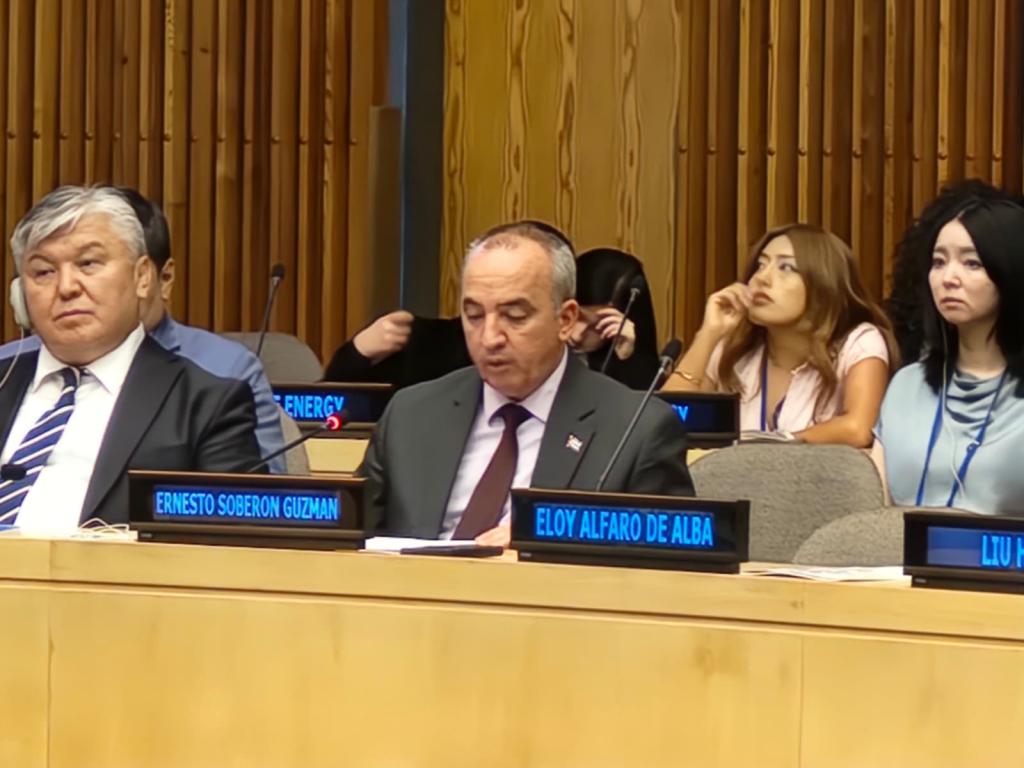
New York, 10 July 2026. - The Permanent Representative of Cuba to the UN, Ambassador Ernesto Soberón Guzmán, reaffirmed his country’s commitment to a fair and inclusive energy transition based on the strengthening of multilateralism and international cooperation. The ambassador addressed this Friday’s parallel event “Accelerating Energy System Innovation and Transition for equity and resilience in support of global sustainable development” held in the framework of the Economic and Social Council of the United Nations (ECOSOC).
During his remarks, the ambassador emphasized that access to affordable, reliable, sustainable, and modern energy is an essential prerequisite for making progress in implementing the 2030 Agenda for Sustainable Development. He noted that energy transcends its economic dimension and is essential for eradicating poverty, strengthening food security, driving industrialization, ensuring quality health and education services, and promoting resilient and sustainable communities.
The Cuban representative emphasized that the global energy transition must be based on equity, respect for each State’s sovereign right to define its own development strategies, and the principle of common but differentiated responsibilities. He also stressed that developing countries require predictable, new, and additional financing; access to technologies on affordable terms; capacity building; and an international economic environment that supports their efforts to achieve the Sustainable Development Goals.
In that context, he denounced the fact that unilateral coercive measures continue to undermine the energy security and development prospects of numerous countries. He reiterated that the economic, commercial, and financial blockade imposed by the United States government against Cuba—which has intensified in recent months through a veritable energy blockade designed to prevent the country’s access to fuel—imposes high economic and social costs, hinders the national energy transition, and limits the country’s efforts to fulfill the commitments it has undertaken under the 2030 Agenda. He emphasized that these actions are incompatible with the purposes and principles of the United Nations Charter and contradict the international commitment to leave no one behind.
Ambassador Soberón reaffirmed that, despite these restrictions, Cuba remains determined to move forward with the diversification of its energy mix by expanding renewable sources, strengthening resilience, and promoting international cooperation. He also maintained that innovation, technology, and partnerships will only produce sustainable results if they are accompanied by equity, solidarity, and full respect for international law.
At the conclusion of his remarks, he reiterated Cuba’s commitment to implementing the 2030 Agenda, strengthening multilateralism, and building a more representative, democratic, and inclusive system of global governance that responds to the legitimate development aspirations of the countries of the Global South and contributes to the establishment of a more just and sustainable international order.
Permanent Mission of Cuba to the United Nations.