
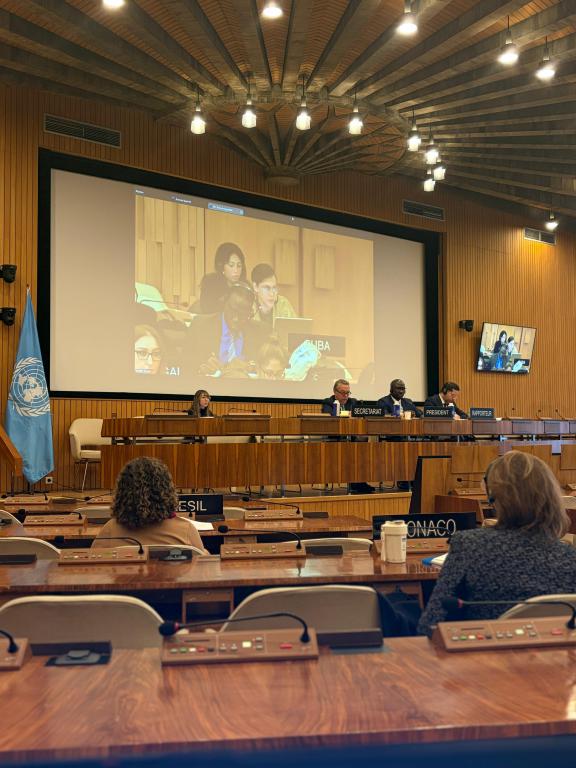
Paris, February 24, 2026. — Cuba participated in the first meeting of the Open-Ended Working Group (OEWG) on the reform of the International Convention against Doping in Sport, held at UNESCO headquarters, where it denounced the impact of the intensification of the economic, commercial and financial blockade imposed by the United States government and the criminal energy siege on the island on its ability to fully participate in these multilateral spaces.
During the session, the Third Secretary of the Permanent Delegation of Cuba to UNESCO, Laura Álvarez Delgado, reaffirmed the country's commitment to the implementation of the Convention and to strengthening national actions in the fight against doping in sport. She also highlighted the importance of the Working Group as a space for dialogue among States Parties to advance towards consensus and follow up on decisions adopted by the Conference of Parties.
The Cuban delegation underscored the need for the ongoing reform process to contribute to a more effective, transparent and participatory Convention, in line with UNESCO's norms and practices, while also ensuring equitable geographical representation that reflects the diversity of national realities.
In this context, Cuba expressed its support for the proposal to establish an Intergovernmental Committee of the Convention, with a view to strengthening its governance and improving the implementation of the instrument.
Nevertheless, the Cuban representative denounced the adverse effects of the blockade in the sports and anti-doping field, pointing out that the unilateral coercive measures, aggravated since January 29 by provisions restricting the country's access to energy resources, directly impact athlete training, the acquisition of necessary supplies for anti-doping controls, and participation in international events.
Attention was also drawn to the limitations imposed on Cuba's access to international cooperation spaces due to these restrictions, including specific difficulties in participating in virtual meetings. In that regard, it was noted that Cuban experts could not intervene on this occasion because they were unable to access the digital platform used, as a result of restrictions derived from the blockade.
The Cuban delegation requested that this concern be duly reflected in the meeting's report and urged the Secretariat to take the necessary measures to ensure inclusive and equitable participation for all States Parties.
The first meeting of the Open-Ended Working Group on the reform of the International Convention against Doping in Sport brought together representatives of States Parties to examine possible improvements to the functioning of the instrument and strengthen its implementation globally, in work that will continue until 2027.
Below is the full text of the intervention:
Excellencies,
Cuba welcomes the convening of the open-ended working group and reaffirms our commitment and political will to comply with the International Convention against Doping in Sport, an area in which we continue to strengthen national actions.
We trust that its work will contribute to dialogue among States Parties and to building consensus among all relevant actors. We consider it useful to have an informal space for exchange during the biennium to follow up on the decisions adopted by the Conference of Parties (COP).
We take note of the mandate and proposed work schedule, to which we have no major objections. We would only underline the importance of transparency in the group's work, particularly considering that not all experts will have the possibility to participate in person, and in some cases, not even virtually.
We believe the ongoing reform process should aim for a more effective, transparent and participatory Convention, in line with UNESCO's norms and practices, while ensuring equitable geographical representation that reflects the diversity of our national realities.
In this sense, we support the proposal to establish an Intergovernmental Committee of the Convention that contributes to more efficient, inclusive and transparent governance and strengthens its implementation.
We denounce the systematic negative impact of the intensification of the economic, commercial and financial blockade imposed by the United States, further aggravated since January 29 by the oil embargo derived from the executive order issued by the President of the United States, which sanctions third countries that export fuel to Cuba. No sector of Cuban society escapes the suffering caused by this cruel and illegal policy. This situation creates significant challenges for meeting athlete training schedules, securing supplies for doping controls, and ensuring athletes' participation in international events, among other examples.
We reiterate the obstacles Cuba faces in accessing certain cooperation spaces due to the blockade. In this regard, we request the Secretariat to ensure that the digital platforms used for calls, required questionnaires, and virtual meetings guarantee inclusive access for all States Parties.
For example, our experts in Havana could not participate on this occasion due to the use of the Zoom platform, which cannot be accessed from Cuban servers as a result of the United States blockade against my country.
We respectfully request that this specific concern be reflected in the meeting's report and that the Secretariat take the necessary measures to ensure the possibility of inclusive participation for all States Parties.