
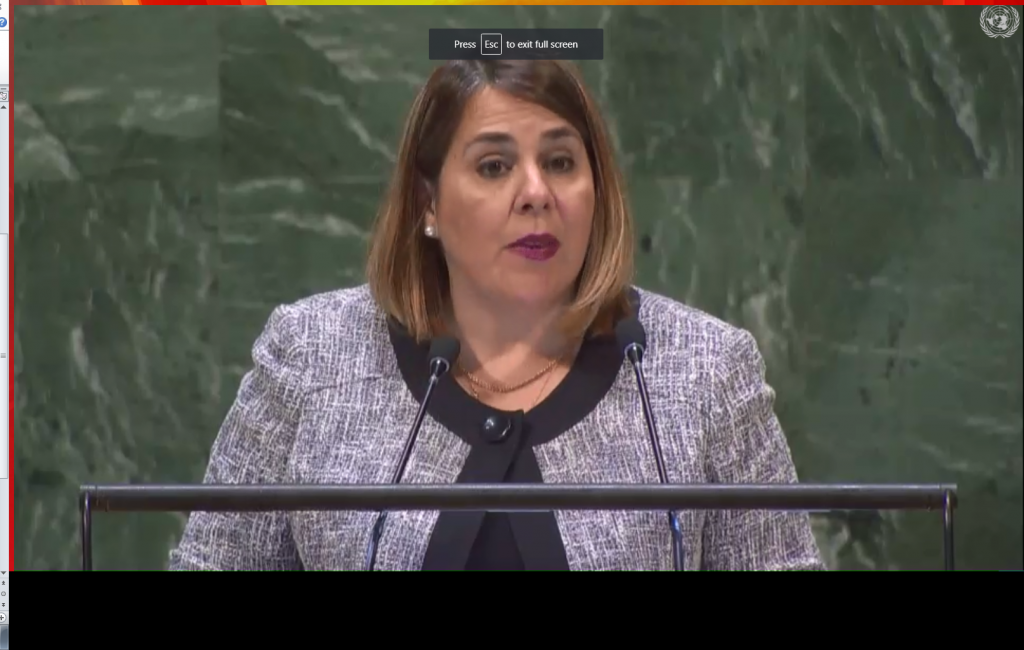
New York, October 29, 2018.In her statement on the United Nations agenda item 77, dedicated to the Report of the International Criminal Court, the Deputy Permanent Representative of Cuba to the organization, Ambassador Ana Silvia Rodríguez Camejo, expressed the strong commitment of the island to the fight against impunity for crimes affecting the international community and how global events that have taken place in recent years clearly demonstrate the need for an autonomous international jurisdictional institution leading such struggle.
The Caribbean representative explained that this results from the definition of the crime of aggression, which must be established in a generic manner and encompassing all types of aggression in international relations among States and which are not limited to the use of armed force, but also affect the sovereignty, territorial integrity or political independence of States. Cuba, she argued, has been the victim of different types of aggression for almost 60 years, which have caused thousands of deaths and injuries, family suffering and innumerable material, economic and financial losses. However, the definition of the crime of "aggression" established at the Kampala Conference is far from considering some of the aforementioned elements, resulting from the harassment and aggressiveness that the Cuban people have withstood.
The diplomat reflected on the broad powers granted to the Security Council in virtue of Article 16 of the Rome Statute in relation to the work of the International Criminal Court, which in her view detracts from its status as an independent institution, by violating the principle of independence of the jurisdictional bodies and the transparency and impartiality in the administration of justice. This, she added, is confirmed by the referrals to the Court by the Security Council, through which developing countries are attacked in the name of a supposed "fight against impunity."
Rodríguez Abascal reiterated Cuba's position towards the establishment of an impartial, non-selective, effective, and fair international criminal jurisdiction, complementary to national justice systems, truly independent and, therefore, exempt from subordinations to political interests that could distort its essence. She added that the Court cannot ignore International Treaties and the principles of International Law and should observe the principle of law regarding the consent of the State to be bound by a treaty, set forth in Article 11 of the Vienna Convention on the Law of Treaties of May 23, 1969.
Cuba has expressed on several occasions its concern about the precedent set by the Court’s decisions to initiate legal proceedings against nationals of States not Party to the Rome Statute, who have not even accepted its competence, in accordance with Article 12 thereof.
Permanent Mission of Cuba to the United Nations