
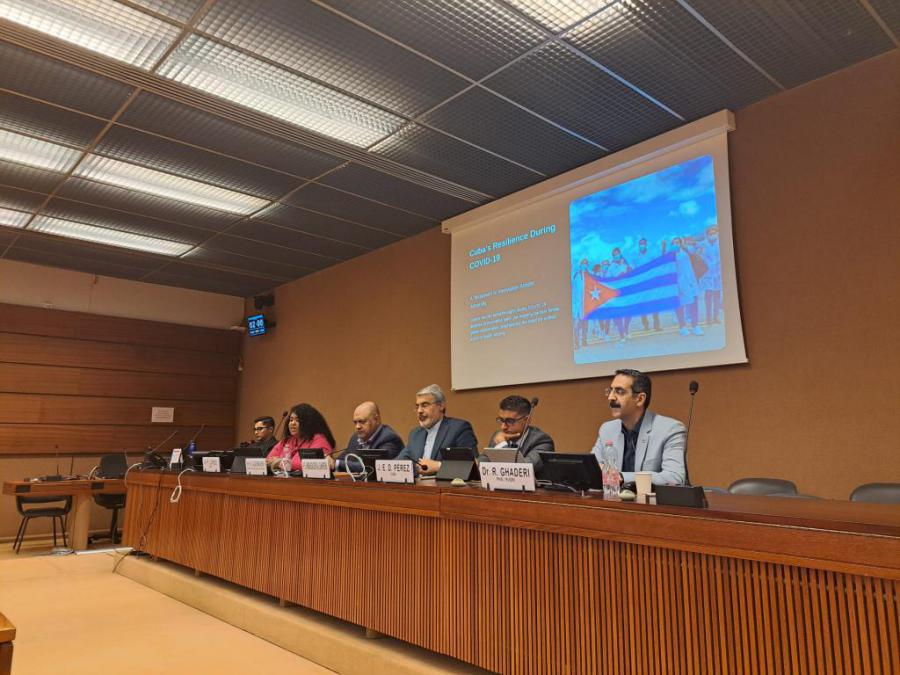
Geneva. 21 August 2024. - The day before, the Islamic Republic of Iran and the Republic of Cuba organised a side event as part of the fourth session of the working group on strengthening the Biological Weapons Convention (BWC).
Entitled ‘Cooperation and Developments in Life Sciences and Technologies: Benefits and Obstacles’, the meeting highlighted the strong collaboration between the two nations in the field of biotechnology and the mutual challenges related to Article X of the Convention.
Cuba presented its remarkable advances in biotechnology, such as the development of three vaccines and two candidates against COVID-19 and the drug Heberprot-P, which has revolutionised the treatment of diabetic foot ulcers. These results testify to the island's strong commitment to scientific innovation and public health, despite the constraints imposed by external factors.
During the session, the Cuban delegation highlighted the obstacles facing the country as a result of the economic, commercial and financial blockade imposed by the US government, particularly in the fields of biotechnology and health. The Cuban representatives stressed that the blockade limits Cuba's access to essential inputs and cutting-edge technologies and directly violates Article X of the Biological Weapons Convention, which states that: ‘The States Parties to this Convention undertake to facilitate, and have the right to participate in, the fullest possible exchange of equipment, materials and scientific and technological information for the peaceful use of bacteriological (biological) agents and toxins’.
Permanent Mission of Cuba in Geneva