
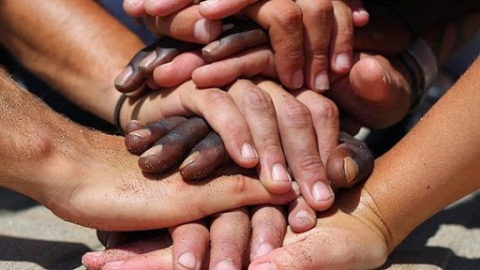
Don Fernando Ortiz, considered the third discoverer of Cuba for his contributions to Cuban social sciences and culture, as well as for his concept of Cubanness, explained as early as 1940 that “The image of the criollo ajiaco symbolizes well the formation of the Cuban people. (...) That is Cuba, the island, the pot set on the fire of the tropics (...). A singular casserole from our land, like our ajiaco, which must be made of clay and very open. Then, a burning flame fire and a slow ember fire, to divide the cooking in two (…). And there go the substances of the most diverse genres and origins ”.
As a result of such a peculiar process of formation of nationality and identity, the Greater Antilles is honored to have Indo-American, European, African and Asian blood. The vast majority of its population is mestizo, as are its customs and traditions, popular religiosity, manifestations of art, traditional popular culture and idiosyncrasies. Such miscegenation determines that it is a uni-ethnic, inclusive and mestizo country; which constitutes a strength as a nation.
The new Constitution of the Republic of 2019, ratified and strengthened the recognition and protection of the right to equality, as well as the prohibition of discrimination. In its text, the Magna Carta provides that all people are equal before the law, receive the same protection and treatment from the authorities and enjoy the same rights, freedoms and opportunities, without any discrimination, which is proscribed and is sanctioned by the law.
In Cuba there is no institutionalized or structural racial discrimination. Nor is it a generalized or frequent phenomenon in the country. The apology of hatred, the promotion of intolerance and supremacist ideas on the basis of national, religious or ethnic origin, and xenophobia, are alien to the political, social and economic life of an island marked by cultural and racial miscegenation.
There is also no discrimination in access to the main positions of the Cuban State and Government. People of black or mestizo skin represent 41% of the members of the National Assembly of People's Power, including its President; while the 2012 population census, which used self-definition as a method, showed that 35.9% of the Cuban population was considered non-white, that is, black (9.3%) or mulatto (26.6%). %).
In Cuba, the Vice President of the Republic, the President of the Supreme People's Court, the Attorney General of the Republic, the Minister of Justice, the President-Minister of the Central Bank of Cuba, the rector of the University of Havana, among other personalities nationals, they are black or mestizo.
However, despite how much progress we have made in the guarantees for the exercise of the right to equality and non-discrimination, racial prejudices persist in the conduct and expressions of some people, derived from historical, social and cultural factors.
In November 2019, the National Program against Racism and Racial Discrimination was created to combat and permanently eliminate the vestiges of racism, racial prejudice and racial discrimination that still exist. This program has been conceived as a Government Program and a Government Commission has been created, headed by the President of the Republic, among whose objectives are to identify the causes that promote the practices of racial discrimination; and to promote organized public debate on racial issues within political, mass and social organizations, as well as their presence in the media.
(CubaMinrex - Permanent Mission of Cuba to the United Nations)