
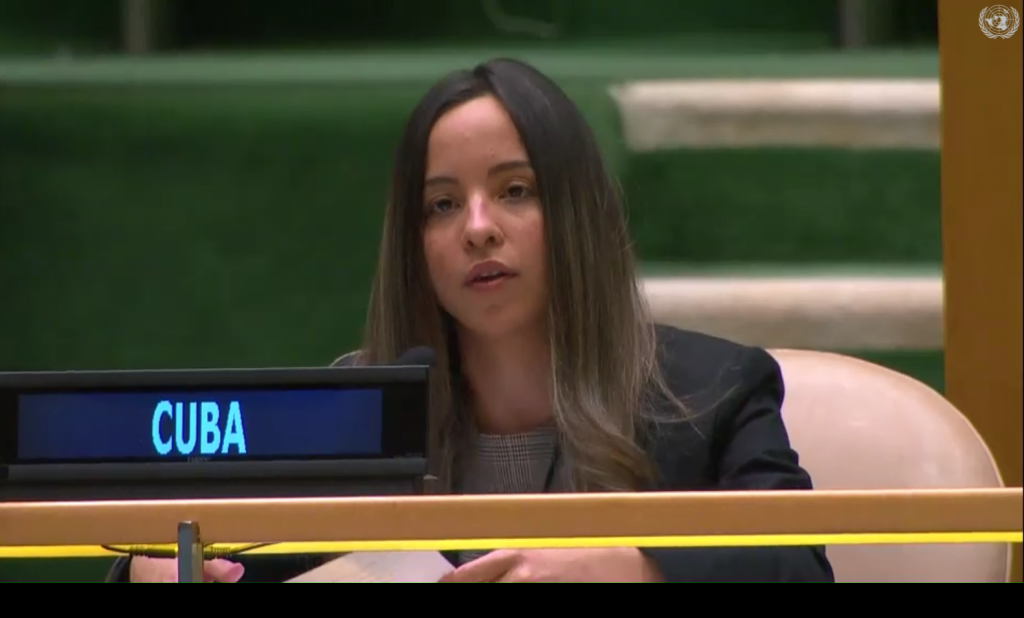
New York, 26 April 2021.The program for the treatment of children affected by the Chernobyl catastrophe is another example of Cuba´s humanitarian and internationalist policy, which is based on the principle of sharing what they have, not giving what they have to spare, expressed today Rosa Amelia Guerra Tamayo, Third Secretary of the Permanent Mission of Cuba to the United Nations, at the special commemorative meeting of the General Assembly in observance of the thirty-fifth anniversary of the Chernobyl nuclear disaster.
Guerra Tamayo stated that Chernobyl is a name linked to the tragedy of lives that were lost or changed forever; and is also linked to international cooperation, one of the purposes of the United Nations Charter, in this case aimed at providing humanitarian assistance to those affected by the nuclear disaster.
The Cuban official recalled that her country organized a comprehensive health program, massive and free of charge, for the care of children affected by the Chernobyl accident. Out of more than 25,000 people treated in Cuba between 1990 and 2011, 21,340 were children, many of whom had had their hopes dashed, had been denied treatment in other parts of the world, or had come from boarding schools for children without family support, she pointed out.
The Cuban representative noted that the program was sustained, even in the worst years of our economy, in the 1990s, and despite the onslaught of the criminal economic, commercial and financial blockade imposed by the United States.
Permanent Mission of Cuba to the United Nations