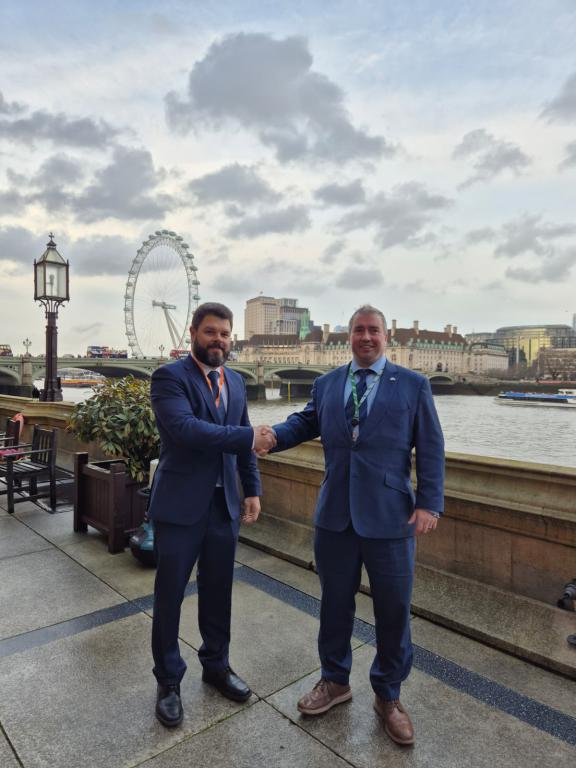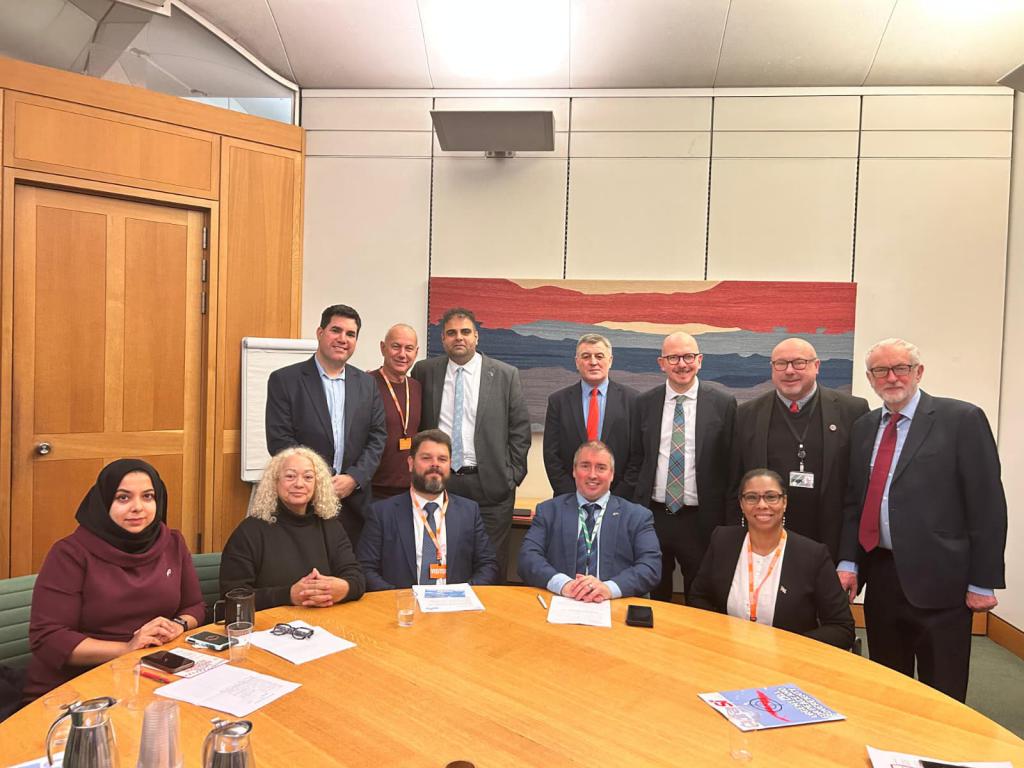
London.— On Tuesday, a truth that transcends borders and political times resounded in the Palace of Westminster. It was not just another formal speech; it was, in the words of its protagonist, a "mission of love". Dr Fidel Antonio Castro Smirnov, a prominent scientist and grandson of Commander-in-Chief Fidel Castro Ruz, raised his voice before the All-Party Parliamentary Group (APPG) on Cuba to make it clear that Fidel Castro's legacy "is not a debate about the past", but rather "a debate about the future".
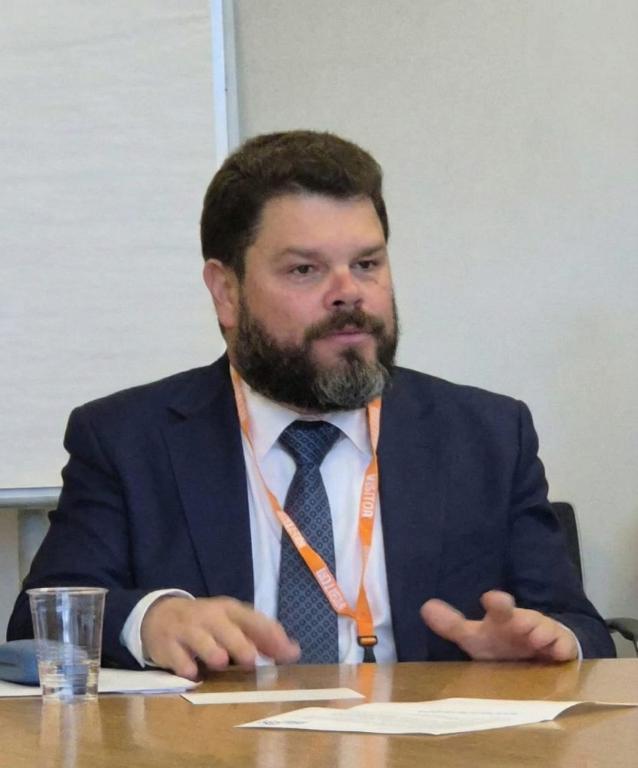
Invited to the United Kingdom by the Campaign for Solidarity with Cuba (CSC), Fidel Antonio's agenda transcends parliamentary diplomacy, as he also fulfils a rigorous scientific and academic exchange programme, which includes several lectures at different universities and meetings with research groups. He was introduced to the legislative body by Labour MP Steve Witherden, newly elected chair of the APPG, and presented a compelling thesis to a broad representation of MPs, peers and legislative assistants: "Sovereignty is not negotiable; it is the very oxygen of a nation."
In the year of Fidel's centenary, his grandson evoked not only the memory of the statesman, but also that of the scientist. He recalled his own father, Fidel Castro Díaz-Balart, also a nuclear physicist, who left him with a powerful comparison: "He believed that splitting the atom was nothing compared to the power of education to transform a society."
That vision, Fidel Antonio explained, was not a luxury, but a tool for survival that allowed the island to face the COVID-19 pandemic with five of its own vaccine candidates. "We did it under financial siege," he explained, contrasting the humanist ethics of the Revolution with market logic. "While they plan attacks, we plan vaccines. While they build walls, we train doctors."
It was precisely when talking about this medical training that he highlighted one of the Revolution's greatest achievements. Fidel Antonio described the Latin American School of Medicine (ELAM) as "one of its most beautiful and humane creations" and a "true symbol of cooperation in science and health." He recalled that this institution, with more than 32,000 graduates from 122 countries, fulfils Fidel's prophecy that its doctors would win "the first Olympic medal for solidarity" for their conscience and defence of life.
Fidel Antonio questioned those present about the real scope of the blockade against Cuba. He dismantled the narrative that the blockade is a bilateral issue, exposing its irrationality: "Does it make sense, in the 21st century, for a British bank to refuse a transfer in pounds sterling for medical supplies destined for children in Havana, simply for fear of a fine designed for transactions using the dollar?"
The extraterritorial nature of the blockade was a point of convergence for legislators, who debated how to challenge these restrictions which, in practice, limit British sovereignty itself.
In a world shaken by armed conflict, Cuba's voice in London defended the paradigm of an "army of white coats". Fidel Antonio was categorical in rejecting the euphemisms of modern warfare: "Doctors, not bombs; doctors, not smart weapons with accurate targeting, because, at the end of the day, a weapon that kills treacherously is not a smart weapon at all, as Fidel said."
He recalled that Cuba does not possess nuclear, chemical or biological weapons, but rather a contingent trained to save lives in the most remote corners of the planet. It is this stance that has allowed Cuba, a "small but immense island", to earn the respect of millions despite smear campaigns.
The meeting in Westminster closed with a reflection that united physics with diplomacy. Fidel Antonio reminded the multi-party audience that, "as a scientist, I know that entropy is a natural state, but building bridges is an act of human will."
In an emotional reaffirmation of continuity, he spoke on behalf of the "grateful" and the scientific youth who refuse to let the revolutionary legacy of the Commander-in-Chief die. With his eyes set on the challenges ahead, he declared that his generation carries Fidel "in their hearts, in their blood, in their minds and in the windmills that remain to be knocked down".
In London, it became clear that, a hundred years after his birth, Fidel's time is still the present.