
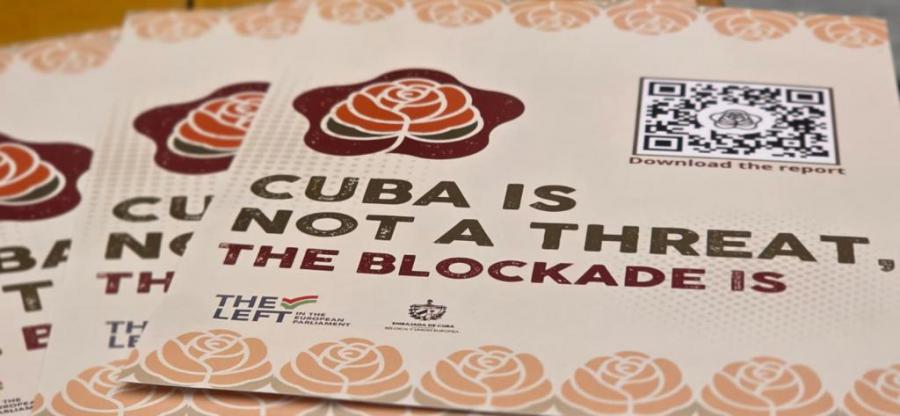
An invincible force in the heart of the Cuban people: consciousness of the Revolution and the evolution of consciousness
The true strength of the Cuban Revolution does not lie merely in the persistence of political dignity in the face of imperial attacks, but rather in the dialectical and absolute integration of two forces which, far from being sequential or independent, mutually generate one another in an ascending and inexhaustible spiral in Cuba: the consciousness of the Revolution and the revolution of consciousness. They are not two historical stages, but two sides of the same coin, beating in the heart of a people that refused to be a passive object of history and instead, through sheer determination and heroism, became its absolute and sovereign subject.
Such consciousness of the Revolution is that collective and permanent awakening which understands that freedom is not a gift bestowed by the bourgeoisie, but a daily achievement that requires an understanding of the material roots of exploitation and the unavoidable necessity of self-determination; it is the lucid recognition that the blockade is not merely a diplomatic measure or a trade embargo, but a mechanism of economic and psychological warfare designed to suffocate hope, and that, therefore, resistance is not an act of ideological stubbornness, but an act of revolutionary survival and the defense of life.
But this consciousness could not have been sustained over the course of decades had there not simultaneously occurred a profound revolution of consciousness, a subjective earthquake that forever transformed the national psyche. Before 1959, the colonized mentality had internalized inferiority, fatalism, structural racism, and economic dependence; the Revolution, by providing land, healthcare, and education, not only changed the material conditions of existence, but also altered the very structure of Cubans’ desires and political imagination. Teaching people to read in the mountains and countryside during the Literacy Campaign was not merely a pedagogical act; it was a radical act of mental decolonization, because whoever learns to decipher the written word learns to decipher the world and to name their own oppression, ceasing to be a resigned spectator and becoming an architect of their own destiny.
This revolution of consciousness is what enabled a small country of enormous spirit, besieged and endowed with limited resources, to accomplish feats that humble the hegemonic powers: sending doctors to the most devastated regions of the planet, not for profit, but out of an internationalist spirit of solidarity; sustaining a cutting-edge scientific and artistic culture despite imposed scarcity; and upholding the unshakable conviction that human life is infinitely more valuable than any market profit. The integration of these two dimensions is what makes this people invincible, because the consciousness of the Revolution without the revolution of consciousness would inevitably descend into sterile dogmatism and blind bureaucracy, repeating empty slogans without the capacity for self-criticism or renewal; whereas a supposed revolution of consciousness without the consciousness of the Revolution would dissolve into an abstract idealism, disconnected from the harsh geopolitical realities and the class struggle that continues to define the contemporary world order.
Today, this integration is being put to the test amid the complexity of building revolutionary socialism in the twenty-first century, where the new generations, who did not experience the initial triumph, legitimately demand that the Revolution renew itself, that participatory democracy be deepened, that gender equality be expanded, and that an economy free from the blockade respond to real needs and renew itself in the struggle for social justice. All of these are strengths of consciousness. They walk the streets, sing, and dance without losing their reasons or critical intuitions; their internal tension is evidence of everything new for the human species, a living testament to the fact that the revolution of consciousness is active: it questions, proposes, and intervenes in institutional revolutions that are learning to adapt to changing circumstances without abandoning their foundations and while remaining faithful to their emancipatory dignity. Those who truly know them cannot deny it.
For this reason, the dignity of the revolutionary people of Cuba cannot be understood through the lens of abstract morality or petty-bourgeois sentimentalism, but only through the categories of historical materialism, as the concrete expression of a collective praxis that, under objectively adverse material conditions—the underdevelopment inherited from dependent capitalism; the longest-lasting imperialist blockade of the contemporary era, as a concrete form of the class struggle on an international scale; and the systematic economic suffocation designed to demonstrate that no people can emancipate themselves without paying a brutal price—has achieved what global capitalism, in its monopolistic and financialized phase, has proven structurally incapable of guaranteeing: the practical overcoming of the alienation that reduces human beings to mere marketable labor power.
This dignity is neither an essentialist attribute nor a dehistoricized spiritual quality, but rather the result of a dialectical process in which the popular masses, wrested from the condition of being objects of history by the sugar latifundium, colonial dependence, and the semi-colonization of social life under the neocolonial Republic, constitute themselves as a historical subject by radically transforming the relations of production and, with them, the forms of social consciousness. What distinguishes the Cuban process is not the absence of contradictions—for every social formation in transition toward socialism produces and reproduces them, because socialism is not an ideal state but a real movement that abolishes the existing state of things—but rather the capacity of its people to dialectically overcome those contradictions without renouncing the Revolution or their sovereignty, without reintegrating themselves into the world market as suppliers of cheap labor and raw materials, and without accepting that the only possible alternative is capitalist restoration, with its accompanying structural unemployment, the commodification of healthcare and education, and savage proletarianization.
When a Cuban doctor provides medical care in the neighborhoods of Caracas, in the villages of Mozambique, or in the areas devastated by the earthquake in Haiti, they are not performing an act of charity but an act of proletarian internationalism—that is, an expression of the consciousness that the emancipation of the Cuban people is inseparable from the emancipation of humanity as a whole, because capital is an international relation and the struggle against it cannot be confined within national borders. When a peasant defends their cooperative, when a worker discusses the economic plan in a trade union assembly, when a young person debates the direction of the Revolution at university without anyone demanding that they align themselves with the interests of a transnational corporation, what is concretely taking place is what Marxism calls the overcoming of alienation: the direct producer collectively reclaiming the conditions of their own existence.
This is Cuba’s immense dignity: to have demonstrated, against commodity fetishism and the ideology of the end of history, that peoples can sovereignly determine their own destiny; that revolutionary consciousness is not a mechanical reflection of the economic base, but a material force which, when it inspires the masses, becomes a transformative power capable of reshaping reality; and that true freedom does not consist in choosing among different brands of commodities, but in the collective capacity to produce one’s own life without submitting to capitalist exploitation.
Thus, deep in their very bones, the Cuban people know that true revolution contains disagreements and debates, but never resignation or surrender to the empire. That is why their strength is invincible: because they have understood that freedom is a praxis, not the drunken wish of disheveled street-corner charlatans; that consciousness is sharpened through transformative practice, while practice is illuminated by critical consciousness. In a world forced to bleed itself dry by imperial greed, racism, war, and ecological destruction, Cuba remains a new, uncomfortable, and necessary beacon, demonstrating that it is possible to live with dignity, that solidarity can be both poetic and a matter of state policy, and that human beings, when we organize collectively and revolutionarily, awaken to a consciousness that is also capable of challenging giants and emerging still standing.
To stand in solidarity with Cuba today is not an act of romantic nostalgia, but an act of political vanguardism; it is to recognize that on that island, the only thing that is truly new that humanity may yet witness is being built: a battle for the future, a battle in which the consciousness of the Revolution and the revolution of consciousness march forward together, reminding us that another world is not only possible, but is already being built, in spite of everything, by the hands and minds of a people who chose to be free. And it teaches us all.
(EmbaCuba Bahamas)