
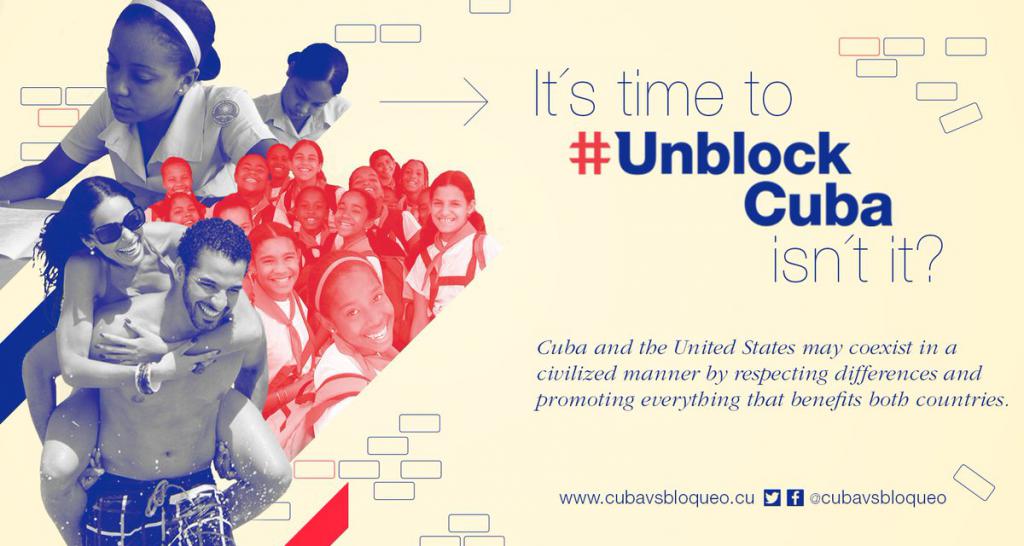
New York, 14 September 2017. During the years 2015 and 2016, the government of the then President of the United States, Barack Obama, put in place some measures seeking to modify the application of certain elements of the blockade against Cuba, which occurred in the framework of the reestablishment of the diplomatic relations between both countries.
However, significant obstacles to its implementation have persisted and key aspects of the blockade have been maintained, as well as the laws on which this policy is based.
US citizens are still prohibited from travelling freely to Cuba. The sale to Cuba of US products and services other than those exclusively stipulated for the use of the non-state sector of the economy is prohibited.
Authorization to import Cuban goods and services to the United States is also limited to those produced by the non-state sector, except for pharmaceutical and biotechnological products, and excludes Cuban goods and services of recognized prestige such as cigar, rum, nickel and medical and educational services.
Although in the financial area the use of the dollar in Cuba’s international transactions was authorized, in practice it has not been possible to carry out significant transactions in that currency due to the persistent fear of financial institutions and US suppliers themselves to engage with Cuba because of the risk posed by a country under a sanctions regime.
Another important limitation is the prohibition for Cuban financial institutions to open correspondent accounts in US banks. This restriction prevents the establishment of direct banking relations between both countries and renders the few existing commercial transactions more costly.
The blockade of the United States against Cuba must cease immediately and unconditionally. That is what the international community demands, in accordance with the Charter of the United Nations and International Law.
Permanent Mission of Cuba to the United Nations