
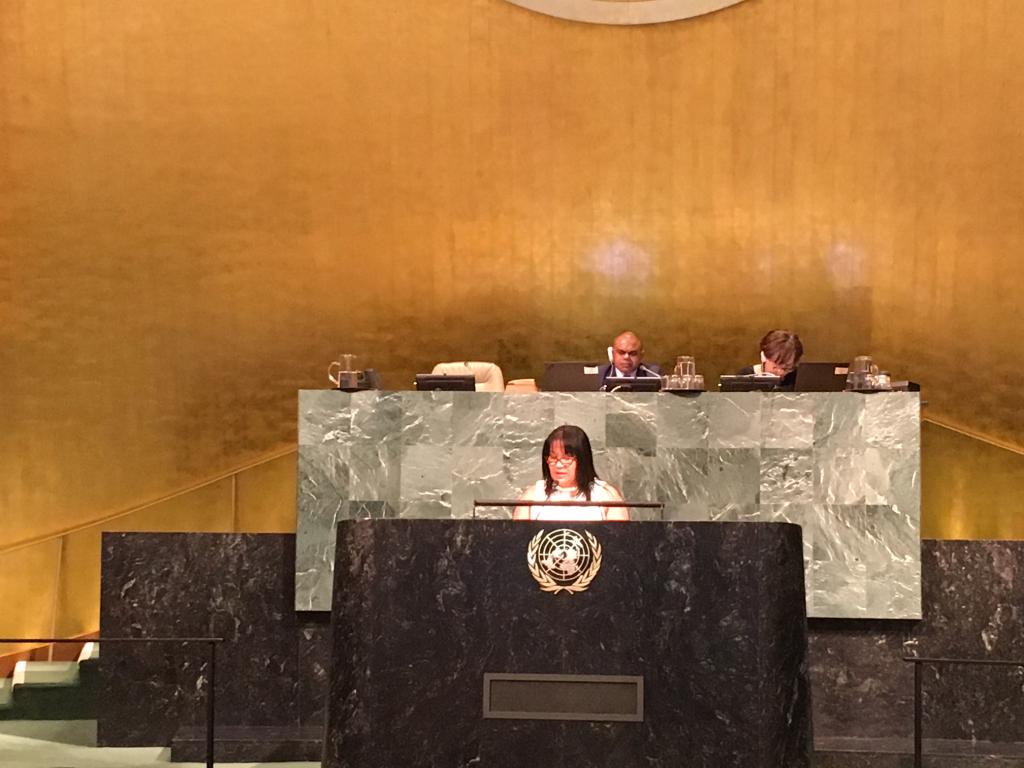
In Cuba, she explained, there is a National Program for the Prevention and Control of HIV-AIDS which began more than three decades ago, based on the principle that health care is a basic human right and has as its pillars a comprehensive approach to the issue; the biotechnological capacity installed in the country, which has allowed the research and development of generic drugs; and a highly-educated people who relies on the national public health system. She added that through this program, effective prevention, diagnosis and treatment work is guaranteed, which has been expanded and updated in line with the changes in the criteria recommended by the World Health Organization and the Joint United Nations Program on HIV-AIDS.
Rodríguez Camejo illustrated the results of Cuba in this field, highlighting that in 2015, Cuba was certified by the WHO as the first country in the world to eliminate mother-to-child transmission of HIV; while the prevalence of HIV-AIDS in the population aged 15 to 49 years is well below 1 percent.
In concluding, the Cuban diplomat said that the results achieved by Cuba, despite the economic, commercial and financial blockade imposed by the United States, show that the government's will, together with an comprehensive and participatory approach can have a positive impact on the prevention of HIV, as well as on providing a decent life for people with HIV / AIDS,
Permanent Mission of Cuba to the United Nations