
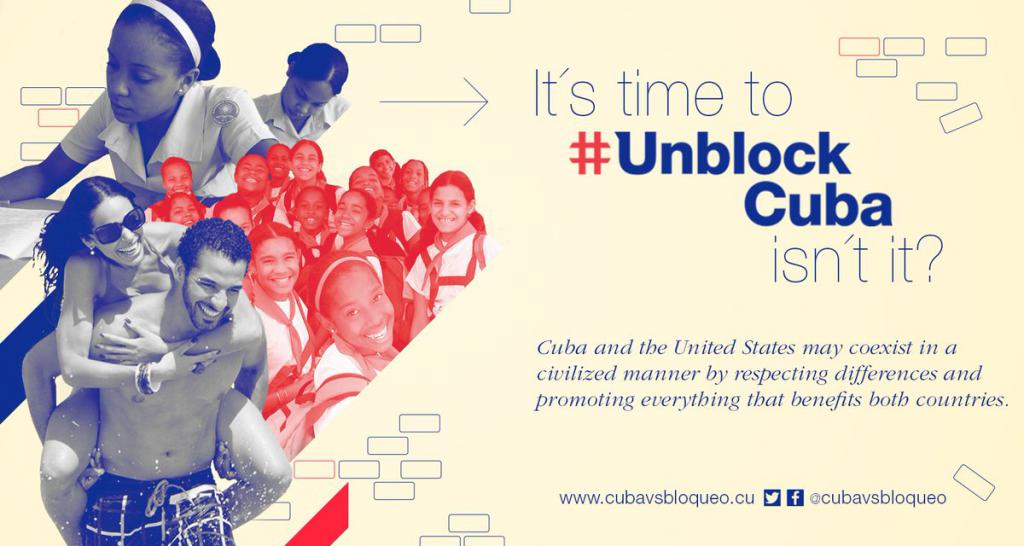
New York, 7 September 2017. On February 3, 1962, John F. Kennedy - the 35th President of the United States of America - signed Executive Order 3447, through which the economic, commercial and financial blockade against Cuba was formalized. After more than 50 years, this policy, aftermath of the Cold War, remains in force and is rigorously applied, constituting the major obstacle to the development of the Cuban nation.
The laws and regulations that underpin this policy continue to be in place and are enforced by United States government agencies. These include: the Trading with the Enemy Act of 1917; the Foreign Assistance Act of 1961; the Cuban Assets Control Regulations of the Treasury Department of 1963; Section 2401 of the Export Administration Act of 1979; the Cuban Democracy Act or "Torricelli Law" (1992); the Cuban Liberty and Democratic Solidarity Act or "Helms-Burton Act" (1996); Section 211 of the Emergency Supplemental Appropriations Act for the fiscal year 1999; and the Trade Sanctions Reform and Export Enhancement Act of 2000.

Since 1992, when for the first time Cuba submitted to the United Nations General Assembly (UNGA) the draft resolution "Necessity of ending the economic, commercial and financial blockade imposed by the United States of America against Cuba", the support for the legitimate claim of the Cuban people has been growing. In October 2016, during the 71st session of the UNGA, 191 member states voted in favor of the Cuban text, an unquestionable demonstration of the international community's firm rejection of this criminal and illegal policy.
The economic, commercial and financial blockade against Cuba is the most unjust, severe and prolonged unilateral system of sanctions ever applied against any country. The US government must totally eliminate this policy in a unilateral and unconditional manner. That is what Cuba and the world are demanding.
Permanent Mission of Cuba to the United Nations.