
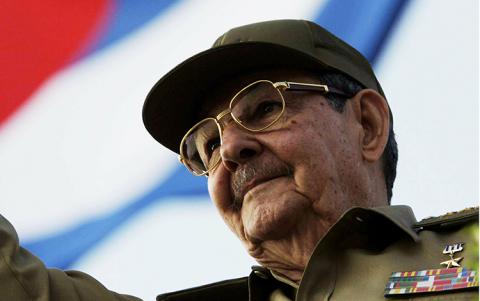
Between 2008 and 2018, Cuban foreign policy experienced a period of intense international activity. Under the leadership of the Army General, the Caribbean nation contributed to regional peace, consolidated strategic alliances, spearheaded a historic rapprochement with the United States, while strengthening its ties with key global actors.
A review of some relevant milestones of this period:
How did Cuba manage to turn all of Latin America and the Caribbean into a Zone of Peace? In January 2014, during the 2nd CELAC Summit in Havana, Cuba promoted the Proclamation of Latin America and the Caribbean as a Zone of Peace. The 33 countries of the region approved a document reaffirming the peaceful settlement of disputes, non‑intervention, and respect for self‑determination. This unprecedented diplomatic milestone consolidated the region as a space for dialogue and cooperation, free from armed conflicts.
Did you know Havana was the venue for one of the most important peace agreements of the 21st century in Latin America? For several years, Cuba hosted talks between the Government of Colombia and the Revolutionary Armed Forces of Colombia (FARC‑EP). As guarantor and host, the island provided the necessary conditions for dialogue, facilitated discreet meetings, and fostered an atmosphere of trust. The result was the signing of a comprehensive and definitive peace agreement on August 24, 2016, ending more than five decades of armed conflict. Cuba’s role was recognized by governments, international organizations, and world leaders as a valuable contribution to regional stability. After reading the joint communiqué, Foreign Minister Bruno Rodríguez emphasized: “Today we can say that we have won the most beautiful of all battles, the battle for Colombia’s peace.”
Is it true that Havana hosted a religious encounter unprecedented in a thousand years? Yes. Thanks to President Raúl Castro’s efforts, on February 12, 2016 Havana became the venue for the first meeting between a Pope and the Patriarch of the Russian Orthodox Church in nearly a millennium. President Castro personally welcomed Pope Francis and Patriarch Kirill at the Palace of the Revolution, facilitating dialogue for world peace and Christian unity. Their joint declaration called for dialogue, peace, and cooperation among peoples.
What was Army General Raúl Castro’s relationship with the Popes who visited Cuba? During his presidency, Cuba received two pontiffs: Benedict XVI in 2012 and Francis in 2015. Both apostolic visits strengthened ties between the Holy See and the island, promoted intercultural dialogue, and reflected international recognition of Cuba’s role as a bridge for peace and understanding among nations.
Did you know that after more than half a century of diplomatic rupture, Cuba and the United States officially resumed relations under Raúl Castro’s leadership? On December 17, 2014, Raúl Castro and U.S. President Barack Obama simultaneously announced the start of a process to normalize relations. This rapprochement led to the reopening of embassies in Havana and Washington, Cuba’s removal from the U.S. list of state sponsors of terrorism (May 2015), the resumption of regular commercial flights and direct postal service, increased academic, cultural, and scientific exchanges, greater cooperation in areas of common interest, and the return to Cuba of Gerardo Hernández, Ramón Labañino, and Antonio Guerrero after 15 years in U.S. prisons. One of the most symbolic moments came in March 2016, when Barack Obama visited Cuba, becoming the first sitting U.S. president to travel to the island in nearly ninety years. Those images circled the globe and were hailed as historic for hemispheric relations.
What did the new agreement between Cuba and the European Union consist of? After negotiations launched in April 2014, Cuba and the EU signed a Political Dialogue and Cooperation Agreement (PDCA), which repealed the restrictive “Common Position” of 1996. The agreement replaced sanctions with dialogue, mutual respect, sovereign equality, and cooperation in political, economic, and social areas. It strengthened bilateral relations by eliminating conditionalities and interference that had prevailed for two decades.
Did you know that during Raúl Castro’s presidency, China became one of Cuba’s main economic and strategic partners? Bilateral relations reached unprecedented levels through strengthened trade, technological cooperation, and investments in key sectors. Agreements expanded in telecommunications, transport, renewable energy, biotechnology, and infrastructure. Credits and cooperation mechanisms boosted strategic economic projects. The partnership remained grounded in mutual respect, South‑South cooperation, and a shared vision of sovereign development.
The relaunch of relations with Russia In the 2010s, Cuba and Russia revitalized their historic relationship, which had shifted after the Soviet Union’s collapse. Under Raúl Castro’s presidency, an intense bilateral agenda strengthened cooperation in energy, rail transport, industry, defense, and science. High‑level visits multiplied, and numerous agreements expanded Russia’s presence in strategic sectors of Cuba’s economy. This renewed partnership diversified Cuba’s international relations and reinforced cooperation with a major global power.
Cuba and Vietnam: two nations united by a special friendship. Why is this relationship considered exemplary? The historic friendship gained new dimensions through joint projects in agriculture, food production, construction, trade, and investment. Vietnam shared experiences from its economic reforms and productive development, while Cuba reinforced cooperation mechanisms to boost strategic sectors. Both nations continued to regard their bilateral ties as an example of solidarity, political trust, and mutually beneficial collaboration.
An active and diversified foreign policy Cuba simultaneously expanded relations with Latin America, Asia, Europe, and other regions. Defense of multilateralism, respect for international law, South‑South cooperation, and peaceful dispute resolution remained constant pillars. Cuban diplomacy pursued diversified alliances, strengthening traditional partnerships and creating new opportunities for economic, political, and scientific cooperation worldwide. This coherence allowed Cuba to have a voice and presence in major global forums despite the U.S. economic, commercial, and financial blockade, reinforcing the nation’s prestige as a defender of multilateralism, peace, and cooperation among peoples.
A legacy of dialogue and international projection The diplomatic advances achieved during Raúl Castro’s presidency stand among the most significant chapters of Cuban foreign policy in the 21st century. From the Zone of Peace proclamation to the restoration of relations with the United States, the Colombian peace process, the millennial religious encounter, and strategic alliances with China, Russia, Vietnam, and the EU, Cuban diplomacy lived one of its most active and consequential eras. Its legacy demonstrates that, with political will and diplomatic skill, a small nation can play a global role.