Articles

Cuban Head of Mission Denounces U.S. “Collective Punishment” Against Cuba in Reuters Interview

Lianys Torres Rivera, Chargé d’Affaires at the Cuban Embassy in the United States, denounced the impact of the “collective punishment” imposed by the United States on the Cuban people, including the private sector, in an interview with Reuters.

Torres Rivera also rejected statements seeking to portray Cuba as a threat to U.S. national security or as a country that interferes in the internal affairs of the United States.

More Than 1,000 Intellectuals and Public Figures Express Support for Cuba

In a public statement, more than 1,000 academics from over 36 countries across the Americas, Europe, Asia, Oceania, and Africa have issued a call urging their colleagues around the world “not to remain complicitly silent in the face of the crimes systematically and extensively perpetrated by the government of the United States against the Cuban people.”

New York Amsterdam News Publishes Article Opposing the Intensification of the U.S. Blockade Against Cuba

Several protests and expressions of opposition to the energy blockade imposed on Cuba have taken place across the United States, highlighting concerns among various sectors of society about the policy’s consequences for the Cuban population. One example was an article published on October 1, 2026, in New York Amsterdam News, entitled “The U.S. Blockade Against Cuba Is an Act of War and Genocide,” written by journalist Herb Boyd. The article examined the impact of the U.S. economic, commercial, and financial blockade on everyday life on the island.

US-based “The Hatuey Project” reaffirms solidarity with Cuba

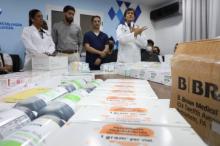
The US-based group known as "The Hatuey Project" reaffirmed its solidarity with Cuba, delivering donations to three hospitals in the Caribbean nation affected by the US government's policy of strangulation.

The group, composed primarily of young people, visited two pediatric care centers—the Juan Manuel Márquez Hospital and the William Soler Cardiology Center—followed by the National Institute of Oncology and Radiobiology.

"New Migration Framework in Cuba: Modernization, Adaptation to the Context, and Inclusion Against Political Instrumentalization"

The Migration, Foreigners, and Citizenship laws, which will take effect in November, implement the most profound update of the Cuban migration system in decades. Among their main new features are the removal of the limit on the length of stay in Cuba for residents abroad, the creation of migratory effective residence, new guarantees for economic participation, and a broader legal framework for citizenship and foreigners.

Pages