
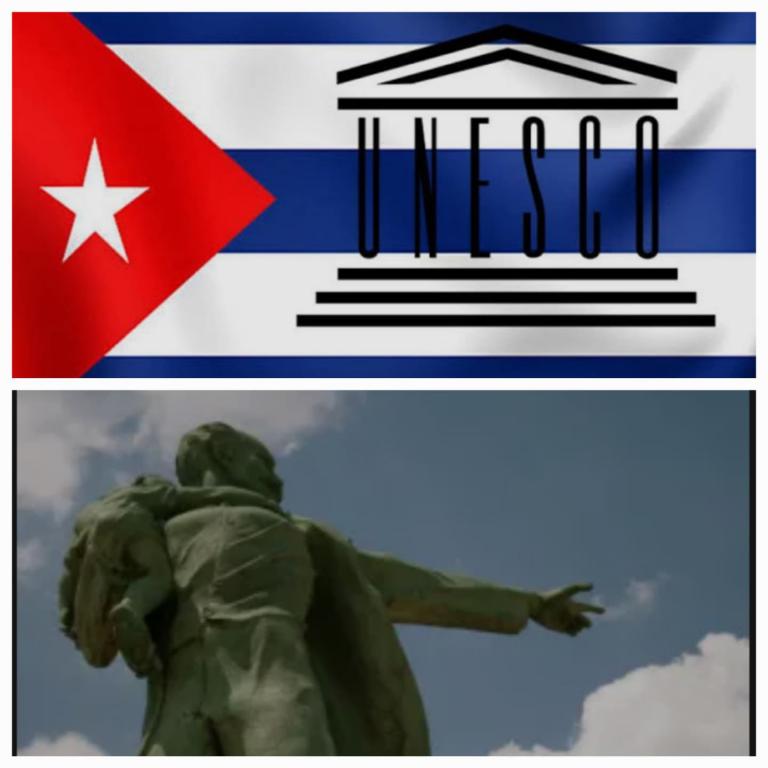
Paris, 16 October – Within the framework of the 222nd session of the UNESCO Executive Board, the evaluation of the International UNESCO/José Martí Prize was successfully approved. This distinction was established in 1994 at the initiative of the Government of Cuba and is intended to promote the values of equality, solidarity, regional integration and human rights in Latin America and the Caribbean.
In establishing the Prize, the Executive Board underscored the universal scope and enduring relevance of José Martí’s humanist thought, whose ideals of freedom, human dignity and social justice continue to inspire generations and guide initiatives in favour of more inclusive, cohesive and peaceful societies.
The International UNESCO/José Martí Prize recognizes outstanding contributions by individuals and organizations working for the unity and integration of Latin America and the Caribbean, based on respect for cultural traditions, regional identity and humanist values.
Over more than three decades, the Prize has given international visibility to academics, writers, community leaders, public intellectuals and grassroots organizations who, from diverse fields, have defended social justice, the preservation of cultural heritage, regional integration and the dignity of historically marginalized communities, reaffirming the lasting relevance of Martí’s legacy.
In its 2025 edition, the Prize was awarded to the Association of United Midwives of the Pacific (ASOPARUPA), based in Colombia and founded in 1996. The award ceremony took place on 28 January 2025 in Havana, within the framework of the Sixth International Conference “For World Balance: With All and for the Good of All”, devoted to dialogue among civilizations and a culture of peace.
The jury of this tenth edition was chaired by Professor Theresa Moyo (South Africa) and co-chaired by Alice Miquet (Canada), with members Ramit Singh Chimni (India), Sari Hanafi (Syria) and Eduardo Torres Cuevas (Cuba), who recently passed away and to whom the Cuban Delegation paid heartfelt tribute.
Recent laureates of the Prize include the French historian and writer Paul Estrade (2023), the Cuban poet and essayist Roberto Fernández Retamar (2019), the Mexican surgeon Alfonso Herrera Franyutti (2016) and the Brazilian friar Frei Betto (2013).
The approval of the evaluation of the Prize during the 222nd session of the Executive Board reaffirms its relevance, credibility and international standing, as well as the commitment of UNESCO and its Member States to the promotion of Martí’s ideals as a foundation for peace, social justice and the integration of peoples.