
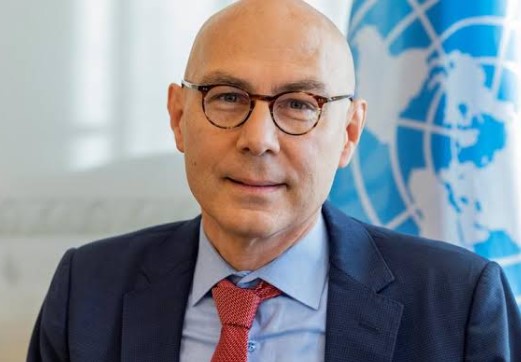
GENEVA, 13 February 2026 — The United Nations High Commissioner for Human Rights, through his spokesperson, issued a statement today emphasizing the negative humanitarian impact of the financial and commercial blockade imposed by the United States against Cuba for decades, including recent measures that restrict the shipment of fuel to the island. He denounced that such unilateral measures severely affect the human rights of the Cuban people.
Volker Türk highlighted in his communiqué that the current oil shortage, worsened by the imposed restrictions, is putting the availability of essential services across the island at risk, given that key sectors such as health care, food supply, and water provision depend heavily on imported fossil fuels.
According to the statement, intensive care units and emergency rooms are operating under highly adverse conditions. Furthermore, the production, distribution, and storage of vaccines, blood products, and other temperature-sensitive medicines have been affected. More than 80% of Cuba’s water pumping equipment depends on electricity, and therefore power outages are impacting access to safe drinking water as well as sanitation and hygiene systems.
The note underscores that the fuel shortage has also affected social protection networks, including school feeding programs, maternity homes, and residences for older persons, with a particularly severe impact on the most vulnerable groups.
In his statement, Türk recalled that access to essential goods and services — such as food, water, medicines, fuel, and electricity — is fundamental to the right to life and to the enjoyment of many other human rights.
The High Commissioner called for the lifting of unilateral measures against Cuba. He emphasized that political objectives cannot justify actions that, in themselves, violate the human rights of millions of people.