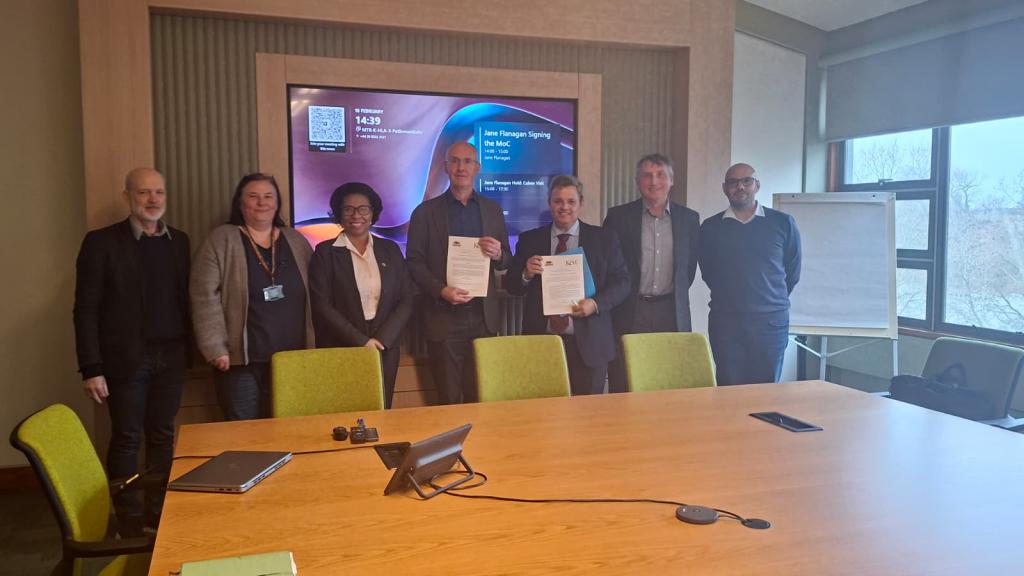
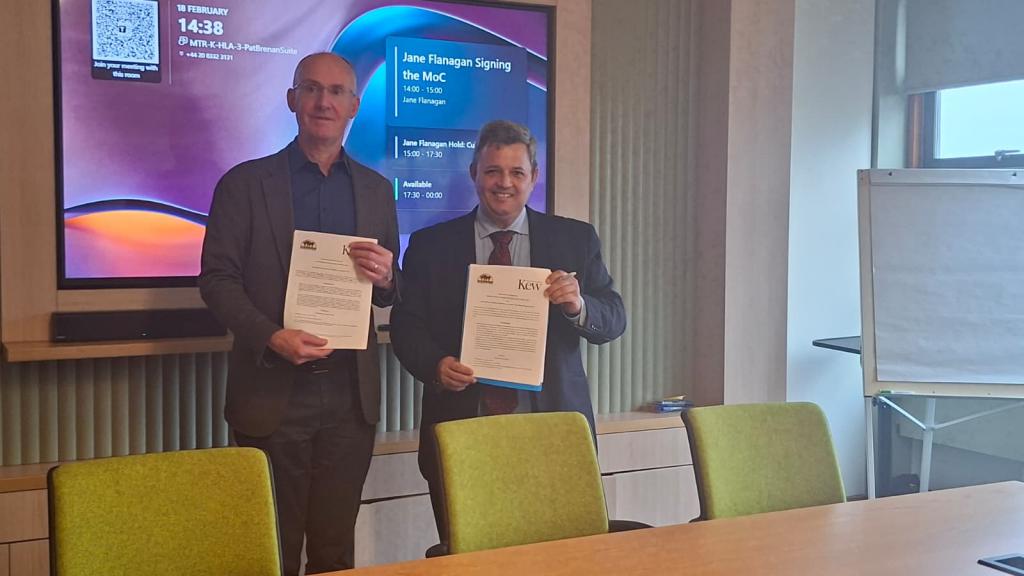
London, 18 February 2026. After more than two decades of occasional exchanges between experts, the National Botanical Garden of Cuba (JBN) and the Royal Botanic Gardens, Kew (Kew Gardens) today signed a Memorandum of Understanding on Scientific and Academic Collaboration that takes their historic relationship to new heights.
The agreement was signed by Carlos Manuel Pérez Cuevas, Director of the JBN, and Richard Deverell, Director of the Royal Botanic Gardens, Kew. The ceremony was attended by the Cuban Ambassador to the United Kingdom, Ismara Mercedes Vargas Walter. On the British side, Raoul Curtis-Machin, Executive Director of Gardens; Dr Isabel Larridon, Priority Leader in Accelerated Taxonomy; and Alexandre Monro, Research Leader specialising in the Urticaceae family, were in attendance. Also accompanying the signing were Luis Roberto González Torres, President of the Cuban Plant Specialist Group of the International Union for Conservation of Nature (IUCN), and Adislenes Ruenes, an official from the diplomatic mission.
This agreement not only strengthens the exchange of materials, images and capabilities, but also recognises the prestige of both institutions. The JBN, a scientific and academic institution affiliated with the University of Havana, is a pillar of biodiversity that receives 300,000 visitors annually and leads environmental education and botanist training on the island. For its part, Kew Gardens, a world leader in mycology and botany and custodian of the Millennium Seed Bank, the world's largest reserve of wild plant seeds and a veritable vault for biodiversity, reaffirms its mission to protect plant life by bringing together the most comprehensive collection on the planet.
The agreement contributes directly to the implementation of the Cuban Plant Conservation Strategy and the "Flora of Cuba" Project. Kew experts, who have worked extensively in the Americas, recognise the exceptional value of Cuba: an archipelago with approximately 45 million years of biological evolution, recognised as the island with the greatest diversity of flora in the Caribbean and the island territory with the richest plant life in Latin America, with an endemism rate of over 50 per cent.
During the meeting, Pérez Cuevas explained government efforts such as the "Sustainable Havana: Blue, Green and Digital" project, an urban renaturalisation initiative supported by the United Nations Development Programme (UNDP). This project involves intervention in 6,000 hectares and the planting of one million trees to rebuild the capital's biological corridor. Both parties agreed that cooperation is vital in the face of the climate crisis: while Cuba faces the fury of hurricanes, Kew reported that between 60 and 70 per cent of its vegetation is in danger of disappearing, a shared challenge that requires joint landscape and conservation strategies.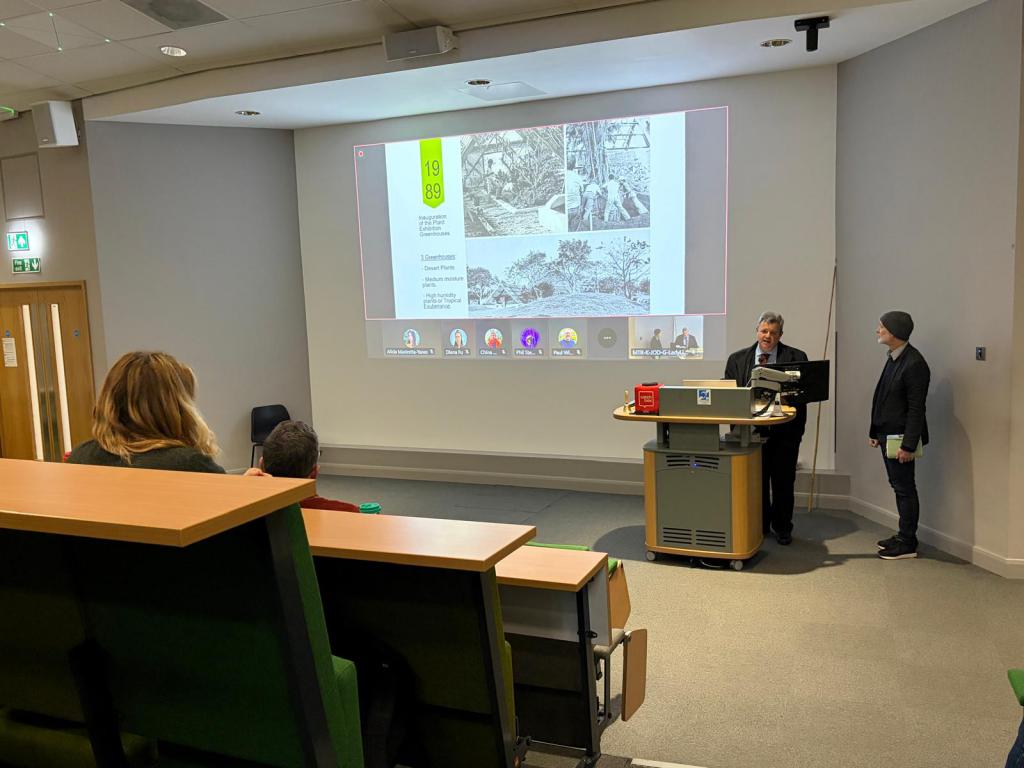
Discussions also took place regarding the possibility of Kew dedicating its 2028 Orchid Festival to Cuba, in honour of the 60th anniversary of the JBN. It was also highlighted that this agreement will promote the exchange of master's and doctoral students, taking advantage of the training teams at both institutions.
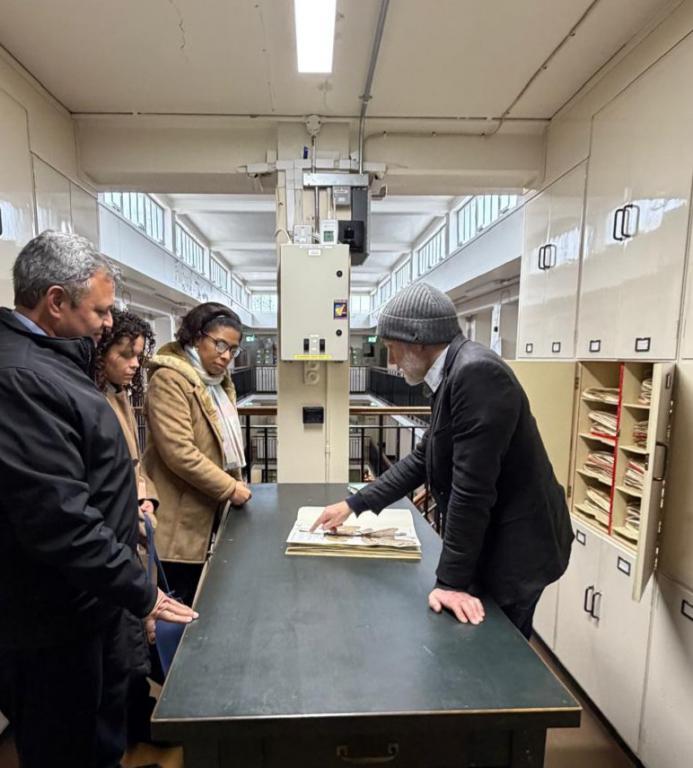
After touring Kew's historic Herbarium, the technological advances and shared challenges were noted. The British herbarium, where 85 per cent of the samples come from other countries, has a procedure that guarantees the conservation of specimens for up to 500 years. Kew has digitised 700,000 plants and incorporated more than 8 million images. In contrast, but showing significant progress, Cuba has 250,000 specimens, with approximately 10 per cent of its herbarium digitised.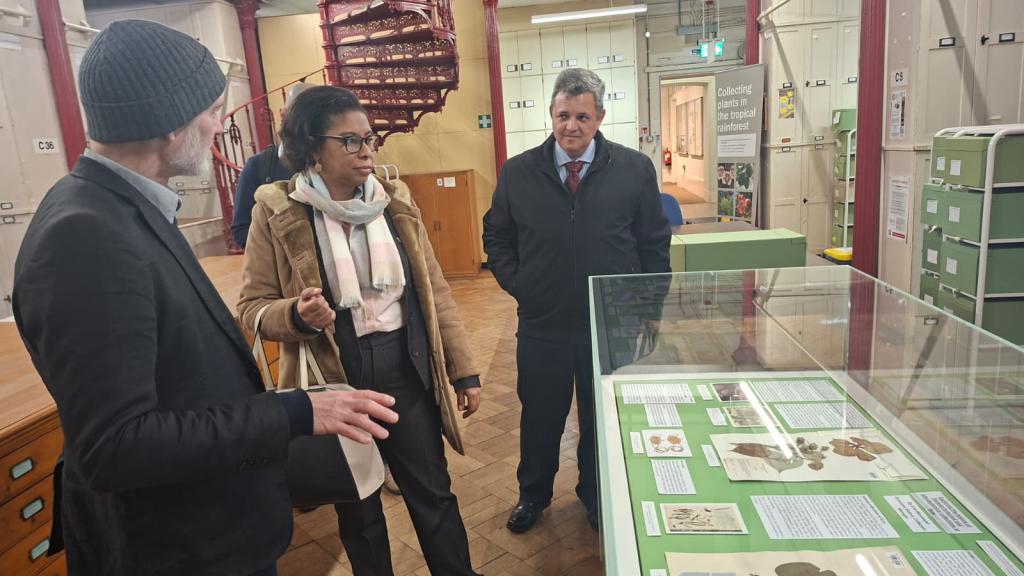
This memorandum marks a milestone in bilateral relations, which have been ongoing since 1902, demonstrating that science and nature know no boundaries when the goal is the common good.