
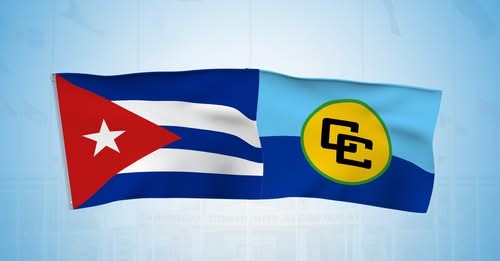
Saint Lucia and other Caribbean Community (CARICOM) member-states have bucked the backlash from premature and misplaced criticism by the usual hasty public commentators who never fail to grasp every opportunity to wash their tongues on the regional body.
Understandably happy about the high level of symbolic solidarity shown by delegations of international solidarity brigades that arrived in Havana last weekend with humanitarian support, some among them obviously allowed their jubilant enthusiasm to overcome their senses of judgment.
Several wrote online and to Caribbean media houses, which gladly circulated the unfair criticism: that the small (but hugely significant solidarity) packages that arrived by sea and air had reached Cuban shores before the aid promised to Cuba by CARICOM leaders at their historic 50th Anniversary Heads of Government Meeting in St. Kitts and Nevis (February 24-27).
True, CARICOM’s Chairman and host Prime Minister, Dr Terrance Drew, declared — at the opening of the summit — that he’d lived and schooled in medicine in Cuba for seven years and would not be preached-to by anyone about the true nature of the humanitarian crisis facing Cubans, as told by friends he spoke to every day.
True, Dr Drew announced at the press conference at the end of the summit that CARICOM will send humanitarian assistance, but he never gave a timeline, nor did he say CARICOM’s help would be anything like last weekend’s Caribbean and Latin American sailboat flotillas, or the chartered flights from Europe and North America.
As it turns out, all the unfair criticism of CARICOM leaders was both rushed and unfair, as the regional entity has revealed that since the summit, it’s been working with Mexico to ensure delivery on its promise to help.
Why Mexico? Because, while unable to dispatch oil to Cuba due to the US naval blockade, it’s been able to send navy ships to deliver food and other humanitarian aid.
ADVERTISEMENT
This entire unnecessary episode, though unfortunate, again exposes the fact that among the well-meaning Caribbean supporters of Cuba are still too-many who insufficiently understand or refuse to try to appreciate the complexity of issues that face Heads of Government and national administrations when confronted with making decisions of vast political magnitude, with implications for nations, people — and survival.
It also exposes that too-many still fail to understand CARICOM is not a federation of like-minded states, but, like all other regional and international government groupings, a collection of leaders and government of sovereign nations that will (almost) always put nation before region.
CARICOM’s very survival over the past 50 years is no-less significant than the equal fact that the United Nations (UN) has survived 80 years.
And just like the UN has been burdened by the veto powers of Permanent Members of its Security Council, likewise CARICOM’s heavy load of current Trinidad & Tobago Prime Minister as Chair of its Prime Ministerial Subcommittee on Energy and Security.
But while some governments have been forced to bow and bend to the US dictates to review their medical and health cooperation ties with Cuba, it’s also necessary to note that not all have agreed to end agreements with Cuba and/or to return the doctors and nurses to Havana.
CARICOM governments initially expressed their unwillingness to submit to Washington’s diplomatic and political demands, but additional steps were taken to tie visa and immigration restrictions into the toxic pressure-pot mix.
It’s a testy time for Cuba-CARICOM relations at government levels.
But, as indicated by and through the Cuba solidarity rallies that have taken place in Saint Lucia and all other CARICOM nations since the US imposed the punishing naval blockade, Caribbean citizens – including the usual critics – are strong in their appreciation of and support for Cuba today.
Just as every Caribbean citizen knows someone who’s migrated to the US and the UK, each also knows a professional service provider (especially doctors and nurses) who graduated in Cuba.
And everyone everywhere knows someone who’s benefitted from the medical and health services provided by thousands of Cuban health professionals in all 14 CARICOM member-states – as well as in non-independent Caribbean territories (like during the AIDS and COVID pandemics).
CARICOM and Cuba remain forever friends and neighbours and irrespective of history and politics — and even their unavoidable differences in how to respond to present challenges — will have to be seen by both more as unfortunate regional reflections of today’s global geopolitical realities, instead of being misinterpreted as deliberate acts of betrayal or ingratitude.