
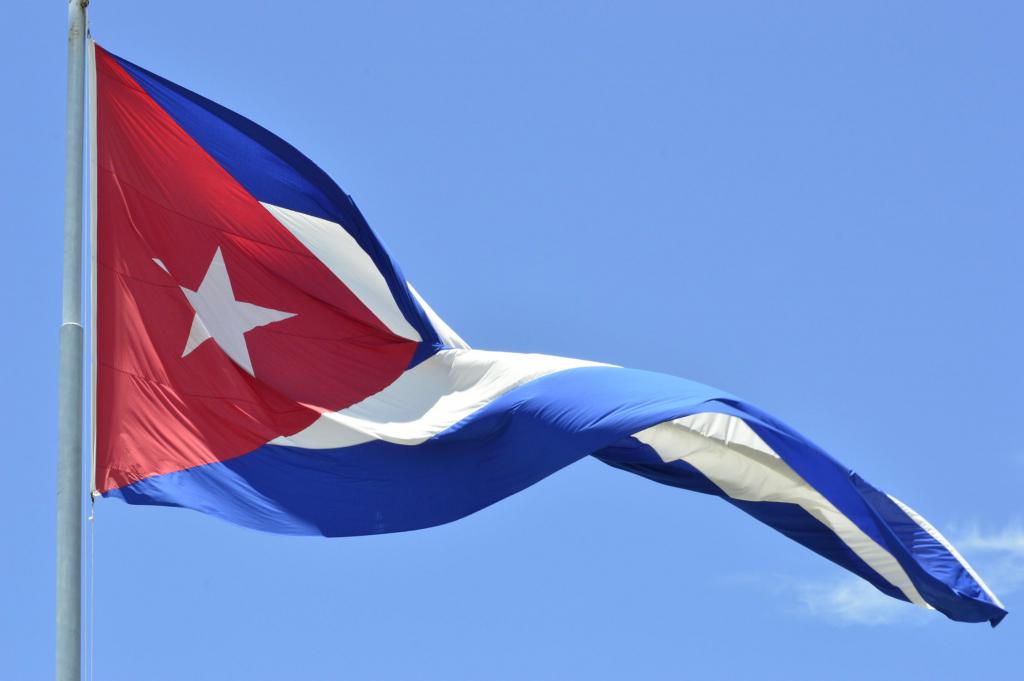
(taken from the Facebook of Oriol Marrero, counselor Embacuba Greece)
As has been published in the Cuban press, for these hours the foreign service bill is discussed in the National Assembly of Cuba – Parliament. Comprehensive attention to the colony of Cubans residing abroad is one of the most important functions and duties of consular work – a substantial element of the foreign service--, because it is one of the supreme purposes and endeavors of the Cuban Nation. This is expressed, among other aspects, both in terms of the quality and agility of consular services, and in the essentials that it is essential to maintain and strengthen every day the closest contact and exchange with all Cuban compatriots living abroad, either by digital or telephone channels (under the current conditions determined by the pandemic) , or above all through enriching personal contact, in direct encounters with Cubans in cities, towns, villages, islands, where they live with their families – in this case Cuban-Greeks – whenever these encounters are possible. Direct and face-to-face meetings will resume in due course. It's understood. And they are longed for.
Surely the new law discussed today in the Cuban Parliament will be a step forward in the legal order of the external service, including consular work, and will further strengthen the strong pillars of our rule of law, as defined in the Constitution of our Republic of Cuba. Today conditions are more difficult, but all possible variants are relentlessly sought and sought to maintain vital and efficient consular activity and ongoing attention to Cuban compatriots. And that spirit is also in the law debated by parliamentarians. And in daily practice.
The images below -- and in other publications on the subject--, try to give a modest graphic idea of how enriching, patriotic, exciting and useful the numerous encounters held by and with Cubans residing in various Greek locations have resulted. Here are images of encounters between compatriots living at various cardinal points. In these meetings you talk, ask questions, exchange, clarify doubts and take note. It's explained and heard. You don't waste your time or the opportunity to talk about everything. And you also play dominoes, you dance Cuban music, others enjoy with those who dance and sing, you prepare some that other dishes longed for. It has also happened that people who live in it for years know each other.
It is impossible to explain each image, and the stories that hold them, it will only be added that these include Cuban compatriots who are teachers, sports coaches, musicians, translators, dance teachers, scientists, cooks, physiotherapists, DJs, entrepreneurs, trade and service workers, tourism in high season, employees of cafes and restaurants, housewives, some with occasional jobs. Not a few do well with great effort and work, others, not so well. And go up in righteousness: each and every one of you is overwhelmed by your Homeland. Your flag is not missing. Neither are their icons.
The images correspond to Cuban compatriots residing in, Thessaloniki, second city of the country; Amaliada, Patra and Tripoli, peloponnese cities; corfu or Kérkira and Lefkada, insulas of the Ionian heptanes; Iraklio and Chania, major cities on the largest Greek island: Crete; Florina, located in the Greek region of western Macedonia, close to the Albanian border; and to Evia, the second Greek island separated from mainland Greece by a narrow isthmus, not far from where the 1186 ships departed for the Trojan War under Agamemnon. They are sites located to the north, south, east and west. Island and continental.
Of the regions mentioned here where Cubans – found– have been found--, in the Complete Works or in the translations of José Martí there are mentions of Patra, the Peloponnese, Corfu, Macedonia, Evia, Crete and Lefkada. So the symbolism is double because somehow through his works the Cuban National Hero was already there, where today live children of Cuba with their Cuban Greek families.
What does Agamemnon have to do with it here? Martí made at least half a hundred mentions of different characters of the ILyaada. Perhaps one of the most cited figures in his Works is Hector. Then, perhaps, Agamemnon, who is quoted nine times. Among the different pseudonyms used by José Martí as a journalist, in addition to signing also with his own name, is the pseudonym of Orestes, mythical character, who was precisely the son of Agamemnon, and whom he will quote on at least four occasions in his Complete Works. According to the Cuban writer Francisco Morán, in the Universal Magazine, Mexico, Martí signed as El Corresponsal, Anáhuac and Orestes, the latter being "the one he used in most of his collaborations" Being Hellenocentrism? No. Universality. Where today many of his sons step on the ground, he set his sights more than a century ago. He was emigrated, lived abroad for many years, including in Europe: and knew how to fight and die for the freedom and independence of his Homeland, which he defended and loved to the last breath.
So, with regard to the debate on the Cuban foreign service bill in the National Assembly of Popular Power, it is also a tribute to the emigrated Martí and the Martí consul, from the face of his children residing abroad.


