
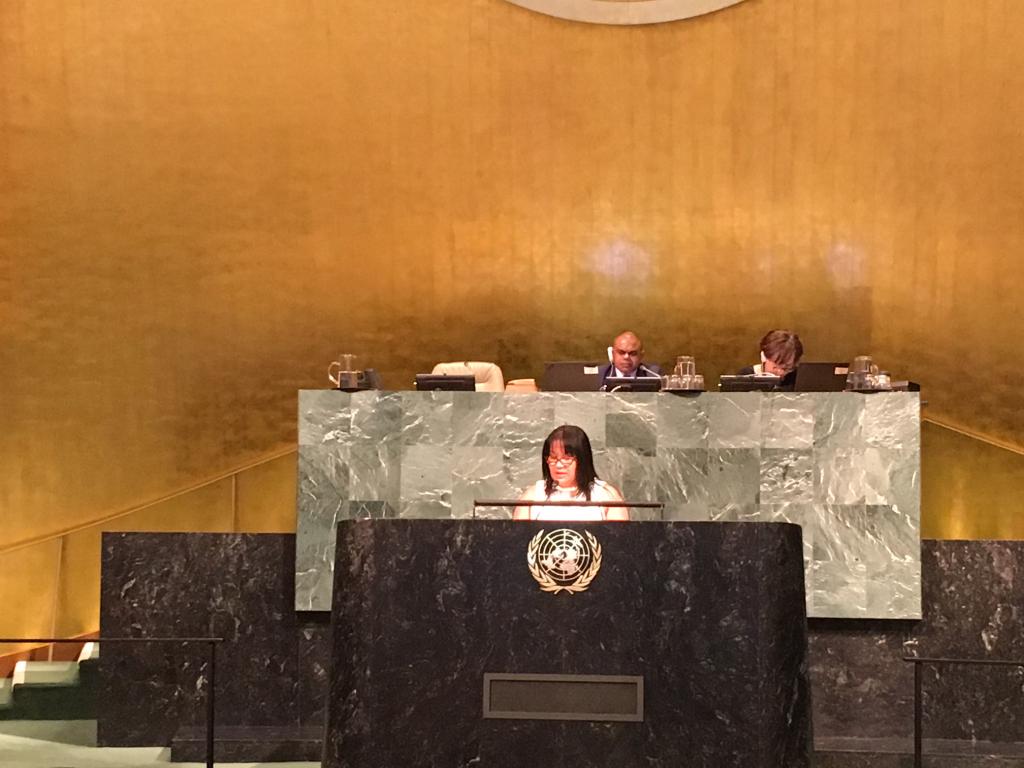
Mr. Chairman,
We appreciate the Report submitted by the Secretary General on the topic under discussion. As this document shows, progress has been made in the fight against HIV / AIDS since 2001 to date. However, the opportunities to access health care services continue to be unequal.
In this regard, in order to move forward and successfully confront HIV / AIDS, a profound reform of the current international order and the promotion of a true spirit of solidarity and cooperation are required.
Dr. Carissa Etienne, Director of the Pan American Health Organization, once said, "[...] Each country needs to find its own way to achieve universal health coverage, based on its particular historical, social and economic context, and promoting a broad social dialogue [...] ". End of quote.
That is precisely what we have done in Cuba since the National Program for the Prevention and Control of HIV-AIDS began more than three decades ago. Through this program, an effective prevention, diagnosis and treatment work is guaranteed, which has been expanding and updating in line with changes in the criteria recommended by the World Health Organization and the Joint United Nations Program on HIV / AIDS.
The Cuban HIV-AIDS response strategy, like our entire health system, is based on the principle that health care is a basic human right and has as its pillars a comprehensive approach to the issue; the biotechnological installed capacity in the country which allows the research and development of generic drugs; and a highly-educated people who rely on their national public health care system.
In addition, it has a broad sex education program covering all population groups; the use of anonymous and free tests for all who request them; free antiretroviral treatment; a wide range of counseling and support services for patients; the active intervention of civil society in prevention actions and the participation of people with HIV in the design, implementation and evaluation of these programs.
And there are the results: In 2015, Cuba was certified by the WHO as the first country in the world to eliminate mother-to-child transmission of HIV; the prevalence of HIV-AIDS in the population aged 15 to 49 years is well below 1 percent; and there is sustained progress in raising awareness in society to eliminate all forms of discrimination based on gender, sexual orientation, gender identity or HIV status.
In summary, the Cuban experience has shown that the government's will, together with a comprehensive and participative approach, can have a positive impact on HIV prevention, as well as on providing a dignified life for people with HIV or AIDS, even though in our case, we face the adverse effects of an unjust international order, aggravated by the economic, commercial and financial blockade imposed by the United States against my country, which continues in full force and causes considerable material shortages in the public health sector.
Mr. Chairman,
The full exercise of the rights to education and health care is essential to end the epidemic.
International cooperation should be promoted to strengthen, in most needed countries, primary health care services and promotion and prevention actions.
Cuba ratifies its good will and readiness to cooperate with other countries in the world that need it, based on our experience and achievements, and renews its political commitment to help accelerate global response to HIV / AIDS.
Thank you very much.