
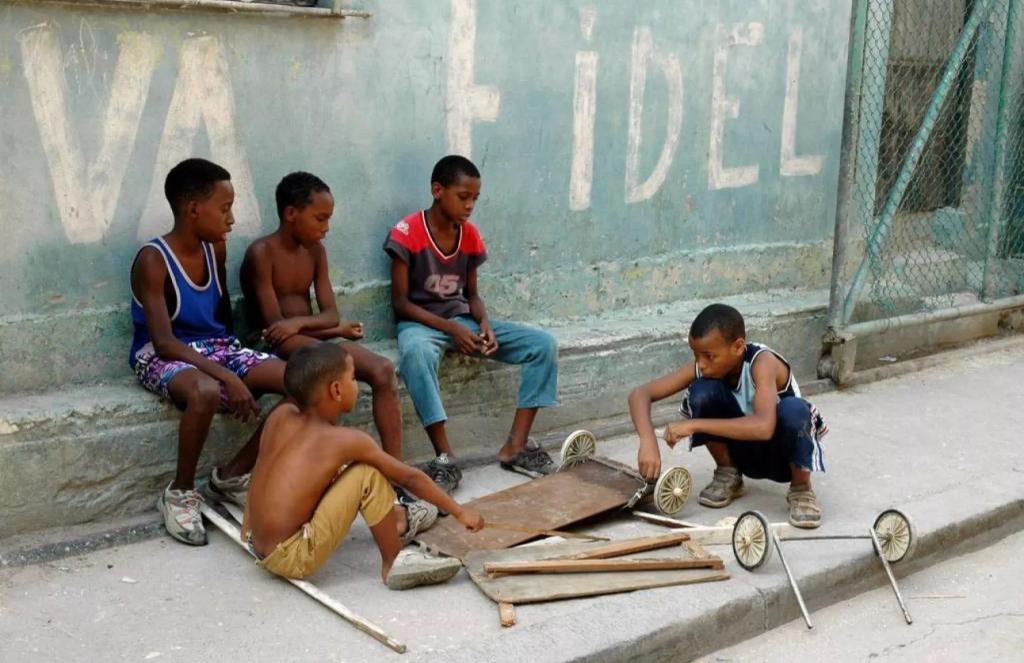
Sesenta años de bloqueo no han derrotado a Cuba, sino que la han destruido. Mientras Washington está aislado en la ONU en este tema, el pueblo cubano está pagando el precio.
Por trigésimo tercer año consecutivo, la ONU adoptó abrumadoramente una resolución el 29 de octubre que condena el bloqueo estadounidense contra Cuba.
Este sentir surge en un momento precario, ya que Cuba atraviesa un período muy difícil. Cualquiera que haya visitado la isla recientemente puede dar fe de ello. La situación es incluso peor que en la década de 1990, tras la caída de la Unión Soviética. Los cubanos sufren apagones diarios, escasez de medicamentos y una inflación descontrolada.
Este es el resultado del bloqueo económico más prolongado de la historia mundial. En 2022, un comité de la ONU declaró que "las numerosas sanciones impuestas por Estados Unidos constituyen el sistema de medidas coercitivas unilaterales más severo y prolongado jamás aplicado contra un país".
“Si Cuba no tuviera bloqueo, podría ser como los Países Bajos”.
Sin esas sanciones letales, la vida en Cuba sería muy diferente. «Si Cuba no tuviera bloqueo, podría ser como los Países Bajos. Tiene una población intelectualmente preparada y con un alto nivel educativo», declaró el presidente brasileño Lula en 2021.
Pero el tío Sam no lo permitirá. Durante sesenta años, Estados Unidos ha hecho todo lo posible por doblegar al país. «La obsesión histérica de Washington por aplastar a Cuba desde los primeros días de su independencia en 1959 es uno de los fenómenos más extraños de la historia moderna, y sin embargo, su sadismo mezquino sigue sorprendiéndonos una y otra vez», escribió Noam Chomsky.
Consecuencias dramáticas
Semejante sadismo no debería sorprender de alguien como Trump. Como era de esperar, su administración ha intensificado aún más su control. Entre otras medidas, Cuba fue incluida en la lista de países que apoyan el terrorismo. En consecuencia, las transacciones financieras con países extranjeros son prácticamente imposibles. El año pasado, cuarenta bancos se negaron a realizar transacciones con Cuba.
Para la economía de cualquier país, esto representa un golpe devastador. Además, Cuba, al igual que muchos otros países del Sur Global, aún lidia con las consecuencias económicas de la crisis de la COVID-19. El sector turístico —el motor de la economía cubana— se vio particularmente afectado. En el primer trimestre de 2025, el número de visitantes extranjeros disminuyó un treinta por ciento.
Al desvincular a Cuba de la mayor economía del mundo y obstaculizar las transacciones financieras, el crecimiento se está estancando. El comercio se está encareciendo y ralentizando, los inversores extranjeros se están retirando y sectores como la agricultura, la industria y el turismo operan a capacidad reducida.
Aún más difícil de estimar es el daño a nivel emocional.
Según el informe que Cuba elaboró este año para respaldar la resolución, el bloqueo causó daños por valor de 100 millones de dólares a la economía cubana en tan solo cinco días. Esta cantidad equivale a los fondos necesarios para reparar una de las centrales termoeléctricas más importantes del país.
Anualmente, se estima que las pérdidas totales derivadas del bloqueo ascienden a 7.500 millones de dólares , lo que representa el 7% del PIB. Esto supondría una pérdida de 46.000 millones de euros para Bélgica. Esto demuestra claramente la magnitud del impacto.
Naturalmente, esto también tiene importantes consecuencias para la vida cotidiana de los cubanos. Los hospitales se enfrentan a la escasez de medicamentos, equipos médicos e incluso repuestos básicos. Esto se traduce en retrasos en los tratamientos y una menor calidad asistencial, desde la terapia oncológica hasta el manejo de dolencias comunes.
La alimentación es otro punto crítico. Cuba necesita importar mucho, pero las restricciones al transporte y la financiación están encareciendo los costos y prolongando los plazos de entrega. Esto provoca un aumento de los precios y, con frecuencia, escasez, con consecuencias reales para la nutrición y el bienestar de las familias.
El bloqueo también obstaculiza el desarrollo tecnológico. El acceso a la tecnología y el software estadounidenses está severamente restringido, lo que amplía la brecha digital. Esto dificulta la educación y la investigación, frena el crecimiento empresarial y limita el acceso a la información para toda la población.
Aún más difícil de cuantificar es el daño emocional. El Ministro de Relaciones Exteriores de Cuba lo expresa así: "Es imposible cuantificar el daño emocional, el miedo, el sufrimiento y las dificultades que el bloqueo está causando a las familias cubanas. Esto ha sido así durante generaciones, ya que más del 80 por ciento de los cubanos en la isla nacieron después de que comenzara el bloqueo".
En este asunto, Washington está muy aislado, pero los cubanos están pagando un precio muy alto.
A pesar de la agresión, las penurias y el daño emocional, Estados Unidos no ha logrado desestabilizar el país lo suficiente como para generar rechazo hacia la revolución. Sin embargo, sí ha provocado la mayor ola migratoria en la historia de Cuba. Desde 2020, quizás más de un millón de personas han abandonado la isla, principalmente jóvenes. Esto representa aproximadamente el 10% de la población.
Resolución de la ONU
Los días 28 y 29 de octubre, la resolución cubana «Necesidad de poner fin al bloqueo económico, financiero y comercial contra Cuba» fue debatida en la Asamblea General de la ONU. Como en años anteriores, se esperaba que la resolución fuera aprobada por una abrumadora mayoría. Los únicos votos en contra el año pasado fueron los de Estados Unidos e Israel.
Este año, la administración Trump hizo todo lo posible por aumentar el número de votos en contra y abstenciones. Un memorándum interno instó a los diplomáticos estadounidenses en todo el mundo a presionar a los gobiernos para que hicieran lo mismo.

Pero no funcionó. Una vez más, una abrumadora mayoría votó a favor de poner fin de inmediato a esta cruel e insensata política de sanciones. 165 países votaron a favor, 7 en contra, entre ellos Estados Unidos, Israel, Ucrania, Argentina y Hungría. Hubo 12 abstenciones.
En este asunto, Washington está profundamente aislado, pero los cubanos están pagando un precio muy alto.
________________________________________________________
Endless blockade: The United States fails, Cuba pays
Sixty years of blockade have not defeated Cuba, but they have destroyed it. While Washington is isolated at the UN on this issue, the Cuban people are paying the price.
For the 33rd consecutive year, the UN overwhelmingly adopted a resolution on October 29 condemning the US blockade against Cuba.
This sentiment comes at a precarious time, as Cuba is going through a very difficult period. Anyone who has visited the island recently can attest to this. The situation is even worse than in the 1990s, after the fall of the Soviet Union. Cubans suffer daily blackouts, medicine shortages, and rampant inflation.
This is the result of the longest economic blockade in world history. In 2022, a UN committee declared that “the numerous sanctions imposed by the United States constitute the most severe and prolonged system of unilateral coercive measures ever applied against a country.”
“If Cuba did not have a blockade, it could be like the Netherlands.”
Without these lethal sanctions, life in Cuba would be very different. “If Cuba did not have a blockade, it could be like the Netherlands. It has an intellectually prepared population with a high level of education,” Brazilian President Lula said in 2021.
But Uncle Sam won't allow it. For sixty years, the United States has done everything in its power to bring the country to its knees. “Washington's hysterical obsession with crushing Cuba since the early days of its independence in 1959 is one of the strangest phenomena in modern history, and yet its petty sadism continues to surprise us time and again,” wrote Noam Chomsky.
Dramatic consequences
Such sadism should come as no surprise from someone like Trump. As expected, his administration has further tightened its grip. Among other measures, Cuba was added to the list of countries that support terrorism. As a result, financial transactions with foreign countries are virtually impossible. Last year, forty banks refused to conduct transactions with Cuba.
For any country's economy, this is a devastating blow. In addition, Cuba, like many other countries in the Global South, is still grappling with the economic consequences of the COVID-19 crisis. The tourism sector—the engine of the Cuban economy—was particularly hard hit. In the first quarter of 2025, the number of foreign visitors declined by 30 percent.
By cutting Cuba off from the world's largest economy and hindering financial transactions, growth is stagnating. Trade is becoming more expensive and slowing down, foreign investors are pulling out, and sectors such as agriculture, industry, and tourism are operating at reduced capacity.
Even more difficult to estimate is the emotional damage.
According to the report Cuba prepared this year to support the resolution, the blockade caused $100 million in damage to the Cuban economy in just five days. This amount is equivalent to the funds needed to repair one of the country's most important thermoelectric power plants.
Annually, total losses from the blockade are estimated at $7.5 billion, representing 7% of GDP. This would be equivalent to a loss of €46 billion for Belgium. This clearly demonstrates the magnitude of the impact.
Naturally, this also has significant consequences for the daily lives of Cubans. Hospitals face shortages of medicines, medical equipment, and even basic spare parts. This translates into delays in treatment and lower quality care, from cancer therapy to the management of common ailments.
Food is another critical issue. Cuba needs to import a lot, but restrictions on transportation and financing are driving up costs and prolonging delivery times. This leads to higher prices and, often, shortages, with real consequences for families' nutrition and well-being.
The embargo also hinders technological development. Access to US technology and software is severely restricted, widening the digital divide. This hinders education and research, slows business growth, and limits access to information for the entire population.
Even more difficult to quantify is the emotional damage. Cuba's Minister of Foreign Affairs puts it this way: “It is impossible to quantify the emotional damage, fear, suffering, and hardship that the blockade is causing Cuban families. This has been the case for generations, as more than 80 percent of Cubans on the island were born after the blockade began.”
Washington is very isolated on this issue, but Cubans are paying a very high price.
Despite the aggression, hardship, and emotional damage, the United States has not managed to destabilize the country enough to generate rejection of the revolution. However, it has caused the largest wave of migration in Cuba's history. Since 2020, perhaps more than a million people have left the island, mainly young people. This represents approximately 10% of the population.
UN Resolution
On October 28 and 29, the Cuban resolution “Necessity of ending the economic, financial, and commercial embargo against Cuba” was debated in the UN General Assembly. As in previous years, the resolution was expected to be passed by an overwhelming majority. The only votes against last year were those of the United States and Israel.
This year, the Trump administration did everything possible to increase the number of votes against and abstentions. An internal memo urged US diplomats around the world to pressure governments to do the same.
But it didn't work. Once again, an overwhelming majority voted in favor of immediately ending this cruel and senseless sanctions policy. 165 countries voted in favor, 7 against, including the United States, Israel, Ukraine, Argentina, and Hungary. There were 12 abstentions.
In this matter, Washington is deeply isolated, but Cubans are paying a very high price.
Katrien Demuynck
(EmbaCuba Bélgica)