
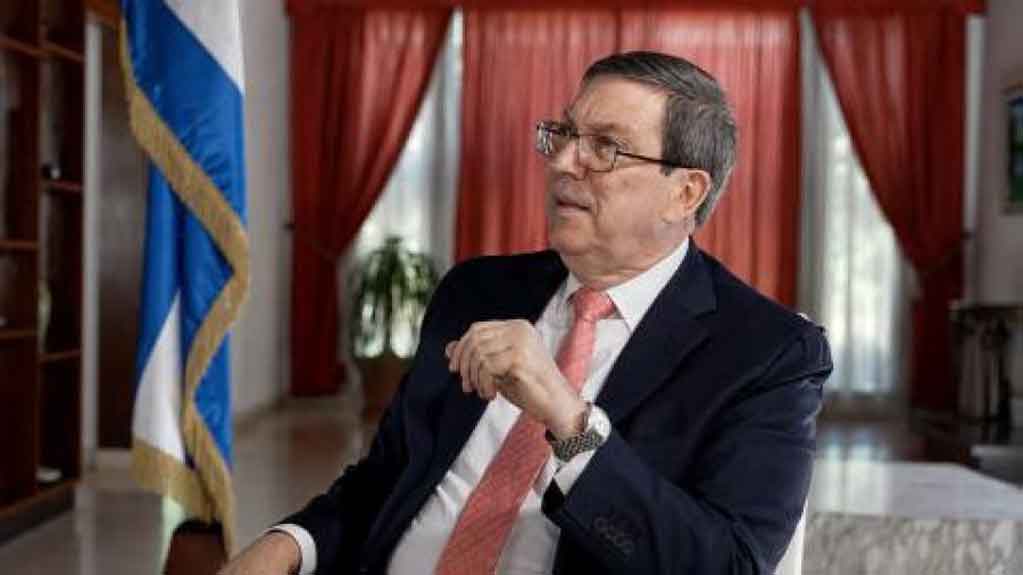
HELEN YAFFE: Bienvenidos al podcast Cuba Análisis. Nos complace estar aquí con usted, el ministro de Relaciones Exteriores de Cuba, Bruno Rodríguez. Ministro, gracias por dedicarnos parte de su apretadísima agenda para conversar hoy con nosotros.
BRP: Gracias. Muchas gracias. Es un placer.
HELEN YAFFE: Ministro, antes de hablar de política internacional, quisiera referirme a usted. Lleva casi dos décadas al frente de la diplomacia cubana y ha representado a Cuba en uno de los momentos más complejos de su historia reciente. ¿Qué ha significado para usted representar a su país durante tantos años?
BRP: Ha sido demasiado tiempo. Han sido muchos años. En realidad, lamentablemente, ha habido determinadas circunstancias —no solo desde mi punto de vista personal—: fui designado para este cargo y desde entonces he continuado desempeñándolo. Por fortuna, los principios de la política exterior de la República de Cuba, su tradición y sus elementos fundacionales coinciden con las orientaciones impartidas por el Parlamento cubano, el presidente de la República y el Gobierno para llevarlos a la práctica; y coinciden también con mis convicciones más profundas.
Cuando uno siente que las instrucciones recibidas coinciden con sus convicciones personales, todo resulta más fácil. Ese es un rasgo de la diplomacia revolucionaria cubana.
HELEN YAFFE: Gracias. Si pudiera dejar a un lado, por un momento, el lenguaje diplomático y hablar sencillamente como ciudadano cubano, ¿cómo explicaría, de la manera más simple posible, qué significa vivir bajo un bloqueo económico durante más de sesenta años?
BRP: Puedo hacerlo con mucha facilidad, porque en la diplomacia cubana encontrará raíces muy profundas en el pueblo. Los familiares de los diplomáticos cubanos viven en las mismas condiciones que nuestro pueblo, y yo también he vivido bajo los efectos del bloqueo.
Mi hijo, que tiene 36 años, nació bajo el bloqueo; estamos hablando de generaciones diferentes. El país ha sufrido impactos extraordinarios como consecuencia del bloqueo, por ejemplo durante la década de 1990, que usted conoce muy bien. Pero no cabe duda de que, desde 2019 —y particularmente después de las órdenes ejecutivas adoptadas en enero y mayo—, se produjo un cambio cualitativo en su impacto, que causa sufrimientos y penurias a todos y cada uno de los cubanos. Las privaciones son extremas y forman parte de este mecanismo coercitivo, que constituye un castigo colectivo.
HELEN YAFFE: Hablaremos de ello más adelante, pero la segunda parte de la pregunta es esta: ¿qué responde a quienes afirman que las dificultades de Cuba son consecuencia de su sistema político y de la ineficiencia de sus dirigentes?
BRP: Mienten. Mienten sistemáticamente. A lo largo de estas seis décadas se han esgrimido distintos pretextos para tratar de justificar un acto calificado como genocidio por las convenciones internacionales y el derecho internacional. Pero resulta extremadamente cínico pretender atribuir al Gobierno o al orden constitucional —libremente escogido por el pueblo cubano mediante varios referendos— las consecuencias de un bloqueo extremo que incluye actos propios de un período de guerra o equivalentes a un bloqueo naval. Tal es el caso, en estos momentos, del cerco al combustible, contrario a las normas internacionales y al comercio internacional, y de la intimidación a las compañías navieras que transportan mercancías hacia Cuba.
Ahora mismo hay más de 7.000 contenedores, principalmente con medicamentos y dispositivos médicos, que no pueden llegar a Cuba debido a ese efecto intimidatorio. Hay contenedores varados en puertos cercanos de la región que no logran llegar al país. Pero lo peor son las gravísimas consecuencias humanitarias. Quizá el dato más doloroso sea la duplicación de la tasa de mortalidad infantil por cada mil nacidos vivos como resultado del impacto del bloqueo, a pesar de que contamos con un sistema de salud reconocido.
Sin embargo, el Gobierno estadounidense y el Departamento de Estado ni siquiera abordan este asunto, como si se tratara de “daños colaterales”, concepto inaceptable y criminal, porque las consecuencias humanitarias provocadas por estas medidas de bloqueo forman parte de un diseño deliberado y fríamente calculado. El secretario de Estado, que ha mentido en numerosas ocasiones al afirmar que el bloqueo o el cerco al combustible no existen, ha declarado recientemente que el Gobierno cubano podría encontrar alguna salida a la asfixia provocada por las condiciones extremas del bloqueo.
Es, por tanto, notoriamente perverso provocar estas circunstancias y luego tratar de responsabilizar a nuestro Gobierno y a nuestro pueblo por sus terribles consecuencias humanitarias.
HELEN YAFFE: Cada año, en la Asamblea General de las Naciones Unidas, casi todos los países del mundo votan contra el bloqueo estadounidense a Cuba. Después de cada votación hemos visto a decenas de diplomáticos acercarse a los representantes cubanos para saludarlos. ¿De qué hablan con ellos fuera de los micrófonos? ¿Por qué la oposición de esos países al bloqueo estadounidense no les permite ignorar las sanciones unilaterales de Estados Unidos?
BRP: Existe un criterio internacional bien establecido, expresado no solo en la votación anual de la resolución que reclama a Estados Unidos el cese incondicional de la aplicación del bloqueo. En todo el planeta —y dentro de los propios Estados Unidos— hay numerosas manifestaciones de rechazo a esta política de hostilidad y bloqueo.
Es significativo que la mayoría de los ciudadanos estadounidenses se oponga a la aplicación del bloqueo. Según estudios realizados en julio en las redes digitales, solo una minoría apoya el cerco energético. En las Naciones Unidas, y no únicamente en lo referido al bloqueo, la delegación cubana debe asumir a veces la enorme responsabilidad de convertirse, de algún modo, en portavoz del Sur Global. Cuba puede hablar con absoluta libertad, aplicar una política exterior totalmente independiente y, con frecuencia, es reconocida por expresar de manera directa asuntos que también preocupan a la mayoría de los miembros de la ONU.
Así ocurre en momentos como este, o como sucedió en julio pasado, cuando el tema se examinó fuera del calendario ordinario. Existe un reconocimiento mundial consolidado de que la política de bloqueo es ilegal y criminal; tiene un impacto genocida sobre el pueblo cubano; constituye un acto de castigo colectivo; viola el derecho internacional, incluido el derecho internacional humanitario; es obsoleta y está anclada en la lógica de la Guerra Fría; y contraviene la voluntad de la opinión pública, de los contribuyentes estadounidenses y de los cubanos residentes en Estados Unidos.
Además, tiene un marcado alcance extraterritorial y perjudica la soberanía y la independencia de todos los Estados, sin excepción. No solo afecta los verdaderos intereses nacionales de Estados Unidos, sino también los intereses de todas las naciones y empresas. Desde muy temprano, la Unión Europea adoptó un conjunto de normas que obligaría a sus gobiernos a proteger los intereses de sus empresas frente a la aplicación unilateral de leyes estadounidenses o la extensión de la jurisdicción de los tribunales de Estados Unidos fuera de sus fronteras.
Sin embargo, esas normas no se aplican con suficiente determinación. Los gobiernos europeos —que conforman una comunidad de peso internacional— aplican débilmente las leyes de bloqueo o “antídoto” que aprobaron y defienden con timidez sus intereses frente a sus competidores. A mi juicio, lo más grave es que Cuba no es solo depositaria de un valor simbólico: se encuentra en una encrucijada internacional relacionada con el propio orden mundial.
Si se permite que una superpotencia bloquee e intente destruir a una pequeña nación soberana para cambiar su sistema político, se estarían creando las condiciones para que lo mismo ocurra contra cualquier Estado del mundo.
HELEN YAFFE: Como señaló al comienzo, desde principios de 2026 Trump ha emitido dos órdenes ejecutivas que designan a Cuba como una amenaza para la seguridad nacional de Estados Unidos y ha impuesto, de facto, un bloqueo petrolero. ¿Cómo explica este aumento de la agresividad contra Cuba desde 2026?
BRP: Habría que preguntárselo al Gobierno de Estados Unidos, que utiliza pretextos y mentiras para tratar de justificar esa acción. Pero, si se considera la enorme gravedad del impacto económico, no sería serio creer que una isla de estas dimensiones pueda constituir una amenaza para la mayor potencia militar del mundo.
Lo cierto es que Cuba no amenaza la seguridad nacional ni la economía de Estados Unidos, ni desea hacerlo. Existen vínculos culturales y de muy diversa índole, muy profundos, entre los pueblos cubano y estadounidense. No obstante, esta Administración necesita desesperadamente justificar la política atroz que aplica contra nuestro país. La acusación de que Cuba supuestamente patrocina el terrorismo revela, en realidad, la falta de seriedad del Gobierno estadounidense.
Un presidente adopta una decisión; el presidente siguiente la revierte y retira esa designación; después, otro mandatario, en sus primeros días en la Casa Blanca, vuelve a imponerla. Por tanto, no es el resultado de consultas interinstitucionales ni del examen de prueba sólida alguna.
No se trata únicamente de un pretexto engañoso: tiene consecuencias muy graves para la política y la seguridad nacional de Cuba, además de un serio impacto humanitario. El mundo entero ha reconocido la falsedad de esa acusación, que tampoco contribuye al interés nacional de Estados Unidos. Nosotros aspiramos a una relación normal, basada en la buena vecindad y el comercio con el país vecino.
En cuanto al impacto económico y social de estas medidas —por ejemplo, sobre el comercio internacional y el sistema de salud—, no se trata de una sola medida, sino de un conjunto de acciones ofensivas y coercitivas. A ello se suma una acumulación histórica que ha ocasionado enormes daños a una economía del tamaño de la cubana. Desde el segundo semestre de 2019 hemos visto un endurecimiento extremo de esas acciones, aunque muchas ya se habían adoptado con anterioridad.
Incluso durante la pandemia de COVID-19, cuando el Gobierno estadounidense flexibilizó varias sanciones respecto de prácticamente todos los países, impuso medidas adicionales contra Cuba. Entre ellas estuvo obstaculizar la adquisición de ventiladores pulmonares y oxígeno medicinal. Lo vimos como una actuación oportunista destinada a recrudecer esa política.
El año 2026 marca otro punto de inflexión. Se ha impuesto un cerco petrolero equiparable a un bloqueo naval, cuyo objetivo es impedir la llegada de petróleo a Cuba; en cierto momento, incluso estuvo acompañado por la presencia de buques militares y un despliegue militar en el Caribe.
Si Cuba pudiera recibir una cantidad mínima de petróleo, los cortes de electricidad podrían reducirse a una o dos horas diarias y el abastecimiento de agua mejoraría enormemente. He visto fotografías —y las he mostrado en la ONU— de una operación quirúrgica realizada a la luz de los teléfonos celulares de los médicos.
La situación alimentaria sería totalmente distinta. Han mentido de manera sistemática, en particular el secretario de Estado, al decir que Cuba recibía petróleo gratis. Eso es completamente falso. Cuba recibe petróleo en condiciones normales de comercio internacional: en algunos casos sobre la base de la exportación de servicios médicos y, en otros, comprándolo, incluso en condiciones más desfavorables como consecuencia de la hostilidad estadounidense.
La verdad es que el cerco petrolero tiene consecuencias gravísimas para nuestro pueblo y nuestra economía. A ello se suman medidas directas para impedir la llegada de buques mercantes con destino a Cuba que transportan no solo combustible, sino también otros productos. Muchos de esos productos fueron comprados y pagados por pequeñas y medianas empresas privadas cubanas. Las navieras que debían transportarlos incumplen de manera flagrante los contratos y compromisos asumidos tras recibir el pago correspondiente. La no llegada de esos contenedores tiene, naturalmente, consecuencias directas sobre la situación humanitaria del país.
HELEN YAFFE: El Gobierno de Estados Unidos ha amenazado con atacar militarmente a Cuba. ¿Se trata de una guerra simbólica o considera que realmente están preparando una agresión militar?
BRP: Es una amenaza que nos tomamos muy en serio, muy en serio. Habría que preguntarse qué ocurriría con el actual orden internacional si se permitiera que una superpotencia —una potencia nuclear— atacara a una pequeña isla para cambiar su sistema político.
En segundo lugar, no se trata solo de retórica. Dirigentes estadounidenses, el secretario de Estado y otras figuras de la Administración han hablado públicamente y de manera constante sobre una acción militar contra Cuba. Afirman que un ataque militar figura entre las opciones, que está “sobre la mesa”, a la espera de una decisión. Aunque existe un componente de propaganda y guerra psicológica, es público y notorio que se realizan preparativos reales para ejecutar un ataque militar contra Cuba.
Nuestro pueblo defendería, sin duda, hasta las últimas consecuencias la independencia, la soberanía y la integridad territorial de la patria. Sería una acción trágica que causaría la pérdida de vidas cubanas y de jóvenes estadounidenses enviados a una guerra que nada tiene que ver con ellos. Sería un baño de sangre y, al mismo tiempo, generaría inestabilidad regional. Estados Unidos nunca alcanzaría el objetivo de ocupar y “pacificar” nuestro país —una meta imposible, como han reconocido muchos analistas y académicos—, pero provocaría inestabilidad en toda la región del Caribe, en las rutas comerciales, en los corredores aéreos y en los países vecinos de Cuba, que no son únicamente Estados Unidos.
El Gobierno estadounidense asumiría entonces una responsabilidad criminal y genocida. Sufriría un descrédito enorme y profundizaría el aislamiento internacional que ya padece como consecuencia de su política de bloqueo y su política criminal contra nuestro país. Con gran realismo, nos preparamos para defender la nación, como dicta nuestra tradición, y esperamos que esto nunca ocurra.
Trabajamos intensamente y hacemos todo lo posible para evitar cualquier pretexto o excusa, y para no crear condiciones que conduzcan a una escalada bilateral con Estados Unidos. Pero, al mismo tiempo, hemos dicho que defenderemos con firmeza nuestra libre determinación y nuestra independencia.
Eso también interesa a las Naciones Unidas, a su Consejo de Seguridad y a la Asamblea General, que se reunió el 7 de julio. Representantes de todas las regiones pronunciaron numerosos discursos y declaraciones contra una aventura militar en Cuba y exigieron el fin del cerco energético y de la persecución a las compañías navieras vinculadas con el país.
Estoy convencido de que la humanidad necesita un consenso amplio de voluntades —de fuerzas políticas, gobiernos y naciones— para detener el deterioro del orden internacional, que conduce al mundo hacia una situación que la humanidad creyó superada hace muchos años: la conquista, el saqueo y la proliferación de armas extremadamente letales; también el desarrollo de la carrera armamentista a costa de los intereses de todos los pueblos.
A ello se suma el proyecto de extender esa carrera armamentista al espacio ultraterrestre y el peligro de un invierno nuclear, que podría desencadenarse con la explosión de apenas un centenar de ojivas. Estoy convencido de que las organizaciones internacionales, las fuerzas políticas, los gobiernos y parlamentos, los movimientos populares y las organizaciones de la sociedad civil se articularán para detener este camino, que pone en peligro la propia existencia de la vida humana en el planeta.
Cuba se ha convertido, pese a ser una isla pequeña, en una suerte de símbolo. La historia la convirtió en un símbolo internacional de independencia, de rebeldía frente a la opresión y la injusticia, y también de solidaridad. Decenas y decenas de países recibieron solidaridad cubana durante la pandemia de COVID-19, entre ellos Italia y Angola.
Creemos que Cuba no está sola, que la causa cubana despierta una gran solidaridad internacional. Confiamos en que la comunidad internacional impedirá cualquier aventura militar contra Cuba y obligará a poner fin a políticas que también ocasionan muerte —políticas que también matan, aunque no sean bombas—, como el brutal cerco energético o la prohibición de que lleguen al país bienes esenciales.
HELEN YAFFE: El secretario de Estado de Estados Unidos, Marco Rubio, ha sido recientemente uno de los principales promotores de una política más dura hacia Cuba y, según Axios, ha abordado mecanismos para agravar la situación. Al mismo tiempo, se afirma que el Gobierno estadounidense ha proporcionado 100 millones de dólares en asistencia humanitaria al pueblo cubano, mientras Cuba calcula que el bloqueo cuesta entre 7.000 y 8.000 millones de dólares al año. ¿Podría comentar estas posiciones contradictorias?
BRP: El bloqueo contra Cuba representa más de 900 millones de dólares diarios.
Si revisa las declaraciones recientes de ese mismo secretario de Estado, verá que también ha afirmado que el cerco al combustible no existe. Resulta curioso, porque incluso ha sostenido lo contrario de lo declarado por el presidente de Estados Unidos y otros funcionarios. ¿Quién podría beneficiarse de la destrucción de la economía cubana, de la destrucción de nuestro país? Nadie, salvo un pequeño grupo de políticos corruptos asentados principalmente en el sur de Florida, movidos por un afán de revancha contra la Revolución cubana.
Han heredado las ideas y los agravios de quienes sirvieron a la sangrienta dictadura de Batista, saquearon los fondos públicos y se beneficiaron de la corrupción de aquella época; una emigración integrada por numerosos criminales de guerra que invocan la revancha para devolver a nuestro país a la realidad anterior a 1959. Ellos representan las posiciones más radicales y extremas; son quienes más presionan a favor de una aventura militar contra Cuba, sin pensar en sus terribles consecuencias.
Hay políticos estadounidenses que desean erradicar el carácter alternativo que representa el ejemplo histórico de Cuba frente al capitalismo salvaje, al neoliberalismo más ortodoxo y a las tendencias fascistas y neofascistas que se han afianzado en estos tiempos. Se oponen a un modelo alternativo. Es la política que han seguido con otros países, porque Cuba defiende la pluralidad de culturas, ideas y modelos políticos, de acuerdo con las circunstancias históricas y con el derecho de los pueblos a la libre determinación.
Pero solo esa pequeña camarilla podría beneficiarse de la política actual de la Administración estadounidense, de una escalada o del agravamiento del conflicto bilateral. Lo que verdaderamente conviene al pueblo estadounidense, a los contribuyentes y a quienes eligen a los gobiernos es avanzar hacia la normalización de las relaciones, sobre la base de la eliminación del bloqueo y de las amenazas contra nuestro país.
Cuba ha brindado una importante contribución humanitaria internacional y continúa ofreciendo cooperación médica en distintas regiones del mundo. Probablemente seamos el país que más cooperación médica internacional aporta en las condiciones de la cooperación Sur-Sur. Esa cooperación también ha sido perseguida de manera atroz. Cuba, a su vez, ha aceptado cooperación y asistencia internacionales, que nuestro pueblo necesita mucho en las circunstancias tan difíciles que enfrenta.
En cuanto al anuncio de 100 millones de dólares de asistencia, cuando se mencionó por primera vez en la Santa Sede esa ayuda no existía. Ni las iglesias cubanas ni el Gobierno habían sido contactados al respecto, aunque en la Santa Sede se afirmó que Cuba la había recibido.
Antes se había ofrecido una ayuda de tres millones de dólares, que sí se materializó, pero solo alcanzó para aliviar la situación de un número muy limitado de familias cubanas, porque estamos hablando de una población numerosa. Después se ofrecieron nueve millones; luego se dijo que serían seis millones, y ese monto apenas se ha ejecutado. Solo se ha materializado una pequeña parte.
De los 100 millones anunciados, lo recibido apenas ha alcanzado para unas 700 familias. Es una ayuda pequeña, limitada a ese reducido número de hogares. Los asuntos humanitarios —y mucho menos la asistencia humanitaria— no deberían utilizarse con fines políticos ni para generar manipulaciones. Sin embargo, nuestro Gobierno, junto con las iglesias cubanas, sigue dispuesto a facilitar la recepción de esa ayuda en beneficio del pueblo cubano.
HELEN YAFFE: Volviendo brevemente al tema de Marco Rubio: si él viajara a Cuba, ¿estaría usted dispuesto a sentarse a conversar con él?
BRP: Esa es una pregunta hipotética. Es una pregunta hipotética, y resulta difícil responder preguntas hipotéticas.
HELEN YAFFE: De acuerdo. El Departamento de Estado publicó recientemente un informe titulado “Cuba, la capital del comunismo del siglo XXI”, en el que describe al país como una fuerza subversiva mundial que durante décadas ha guiado a la izquierda en Estados Unidos y en el mundo. El informe aparece en el contexto de la reactivación de la Doctrina Monroe y de la elección de numerosos gobiernos de derecha en América Latina; varios de ellos han roto relaciones diplomáticas con Cuba. ¿Qué impacto tiene para Cuba y para la región este giro a la derecha? ¿Cómo responde al informe del Departamento de Estado?
BRP: Es difícil dar una respuesta seria a un documento que carece de seriedad. Me encantaría saber qué aplicación de inteligencia artificial se utilizó para redactarlo.
Leí casi sus cien páginas y me costó un esfuerzo enorme llegar al final, porque combina mentiras, afirmaciones falsas y manipulaciones, todo ello con una falta de rigor extraordinaria. Estoy convencido de que los diplomáticos serios y profesionales del Departamento de Estado sentirán vergüenza al ver publicado semejante libelo. Muchos organismos internacionales se asombrarían ante las falsedades contenidas en el informe, en medio de las declaraciones oficiales de la Administración estadounidense y en el contexto del orden internacional y de las directrices de su estrategia de seguridad y defensa nacional acerca de sus competidores o adversarios estratégicos.
Presentan a Cuba como el origen de todos los males y, además, como una nación con capacidad para provocarlos. Eso no permite sostener una conversación seria. Sin embargo, durante el macartismo, en los procesos que condujeron a la Segunda Guerra Mundial y en el surgimiento del fascismo se dijeron absurdos semejantes, y hubo personas que los creyeron.
A comienzos de la década de 1960, una operación de la CIA difundió la mentira de que el Estado cubano eliminaría la patria potestad de los padres sobre sus hijos. Como resultado, unos 14.000 niños fueron enviados a Estados Unidos, a hogares de acogida y orfanatos, sobre la base de una falsedad absurda. Pero hubo quienes la creyeron.
Por eso no podemos subestimar el enfoque beligerante de la Administración estadounidense, que se apoya en su control de enormes plataformas tecnológicas. Hoy esas plataformas influyen de manera extraordinaria no solo en la información, sino también en la conducta y en la capacidad de pensamiento crítico de las personas en todo el mundo. He dicho que, si los jóvenes y los ciudadanos estadounidenses recibieran por sí mismos más información y una información más precisa, se opondrían a las políticas atroces que su Gobierno aplica contra Cuba.
Rechazo por completo las afirmaciones del informe. Detrás de él hay un propósito muy grave: justificar una agresión militar contra Cuba; intentar legitimar el castigo colectivo y el crimen de genocidio; y recurrir a la represión contra organizaciones de la sociedad civil estadounidense, algunas de las cuales han expresado solidaridad con Cuba y otras han organizado viajes a nuestro país.
Se trata, por tanto, de una política esencialmente represiva contra las libertades civiles y los derechos humanos. El Gobierno estadounidense no solo impide que sus ciudadanos viajen a Cuba, sino que atropella su libertad de viajar, por no hablar de la reciente represión contra las universidades y contra determinadas ideas de sectores ilustrados.
Es un informe mendaz y ridículo. No obstante, debemos tomar muy en serio los objetivos que persigue, entre ellos el racismo y la xenofobia más profundos; la persecución de inmigrantes y jóvenes por fuerzas de extrema derecha; y la ofensiva contra las tendencias progresistas y contra el propio pueblo estadounidense, como parte de una política regresiva y macartista.
Es cierto que la historia avanza y retrocede en una suerte de espiral, y que debemos analizar estos acontecimientos con sentido histórico y enfoque dialéctico. Pero nunca podemos subestimar la acumulación favorable a los movimientos progresistas y sociales, contrarios a la globalización neoliberal y partidarios de transformar formas de producción y consumo que hoy son insostenibles e irracionales y ponen en peligro la existencia misma en el planeta.
Estos giros a la derecha se producen en determinados momentos, pero soy optimista: creo que existe una acumulación histórica favorable. En cualquier circunstancia, Cuba ha mantenido relaciones muy profundas —esencialmente culturales y afectivas— con todos los pueblos de América Latina y el Caribe. Ninguna coyuntura política ni ningún gobierno —todos los gobiernos son efímeros— podrá romper esos vínculos. Los pueblos comprenderán muy pronto que los gobiernos neoliberales de extrema derecha han abolido conquistas sociales logradas anteriormente y que habrá que recuperarlas.
Confiamos en que nuestros vínculos con todos los países de América Latina y el Caribe, y también con la mayoría de sus gobiernos, continuarán desarrollándose. Hay países con los que Cuba ha mantenido históricamente relaciones muy intensas. Asimismo, Cuba posee vínculos culturales profundos con el pueblo estadounidense, y eso tampoco puede ignorarse.
Algunos gobiernos de derecha, que han actuado subordinados a la actual Administración estadounidense y en contra de su propia tradición e historia, así como de las aspiraciones y sentimientos de sus pueblos, pasarán a la historia y nadie los recordará.
HELEN YAFFE: Cuando hablamos del bloqueo solemos pensar en los costos para Cuba. Sin embargo, también existen medidas contra el pueblo estadounidense y pérdidas para Estados Unidos. ¿Podría referirse a ellas?
BRP: Como mencioné antes, el bloqueo contra Cuba afecta los intereses de todos, porque vulnera la igualdad soberana de los Estados y lesiona la independencia de los ciudadanos estadounidenses. Están en juego los intereses nacionales de todos los países, sin excepción: se perjudica a sus empresarios, a sus distintos sectores culturales y científicos, y también se les ocasionan daños económicos.
El Gobierno de Estados Unidos recurre con frecuencia a medidas coercitivas contra otros Estados, al tiempo que preserva para sí la posibilidad de desarrollar intercambios económicos con el país al que supuestamente pretende impedir que mantenga relaciones con terceros. Es algo muy revelador. En el caso de Europa —por ejemplo, en materia de gas, combustible y otros ámbitos—, Estados Unidos ha tratado de aprovechar y explotar las circunstancias geopolíticas para imponer a los gobiernos y pueblos europeos condiciones verdaderamente onerosas. Lo mismo ha ocurrido con los aranceles y otros asuntos.
Diría que el bloqueo provoca a cada nación un daño político y ético, además de un perjuicio desde la perspectiva del derecho internacional y del derecho interno. Pretender imponer a otros países decisiones de tribunales estadounidenses que carecen de jurisdicción sobre ellos, o someter a empresas y personas de terceros países a leyes estadounidenses de alcance extraterritorial, causa daños reales a esas naciones.
En segundo lugar, tanto en Estados Unidos como en muchos otros países, se priva a las personas de determinados avances científicos que, con toda modestia, afirmamos que son singulares de Cuba. Es el caso, por ejemplo, de vacunas terapéuticas contra el cáncer, nuevos medicamentos y terapias para las úlceras del pie diabético, y tratamientos para enfermedades neurodegenerativas como el alzhéimer.
¿Por qué los ciudadanos estadounidenses no pueden beneficiarse de esas terapias, que serían mucho más económicas que las aplicadas en Estados Unidos? La persecución de la cooperación médica internacional cubana pretende privar de esa asistencia tanto a países desarrollados como a países del Sur Global, incluso en lugares remotos donde los únicos servicios médicos disponibles son los que prestan los profesionales cubanos.
Cuba posee una de las industrias más modernas y competitivas del mundo en tecnologías biomédicas y farmacéuticas. ¿Cuántos países pudieron producir sus propias vacunas contra la COVID-19? Cuba, en un tiempo récord y con recursos mínimos, logró desarrollar hasta cinco vacunas.
Sin embargo, hoy se hostiga a filiales de empresas estadounidenses, en este y otros sectores, cuyos productos están registrados en Europa. Después de más de cincuenta años de aplicar una política fracasada, cualquiera pensaría que sería necesario buscar otra, porque la realidad es que la política de hostilidad y bloqueo no ha permitido a Estados Unidos avanzar ni un solo centímetro hacia los objetivos proclamados respecto de Cuba. Por extremas que sean las medidas, no funcionarán.
No acercarán a la actual Administración estadounidense ni a ningún Gobierno futuro a sus propósitos: restablecer la dominación sobre Cuba; devolverla a los peores años del neocolonialismo; entregar el país a las corporaciones estadounidenses, como ocurrió durante medio siglo; o permitir el regreso de las hordas batistianas y de los corruptos establecidos en el sur de Florida.
La Administración estadounidense nunca alcanzará esos objetivos, por mucho que lo intente, aunque tiene la capacidad de provocar daños inmensos, como está haciendo hoy en nuestro país. Algunas administraciones estadounidenses intentaron introducir cambios en las relaciones bilaterales con Cuba. No quisiera mencionar a ningún presidente en particular, pero esas experiencias demostraron, en primer lugar, que es posible avanzar; que es posible aliviar algunas de las medidas más crueles del bloqueo; y que podemos sentarnos a dialogar y encontrar soluciones negociadas a determinados problemas bilaterales.
También demostraron que Cuba y su Gobierno constituyen un interlocutor serio y reconocido, que honra sus compromisos y cumple su palabra, y que el país es un actor internacional responsable. Probaron, además, que existe un amplio consenso tanto entre el pueblo cubano como entre el estadounidense a favor de eliminar la política de bloqueo y privilegiar el diálogo, el comercio y la cooperación, lo cual beneficiaría a ambas naciones.
Hemos reiterado —y reitero ahora— la disposición de Cuba a continuar o reanudar conversaciones con el Gobierno estadounidense sobre las bases elementales establecidas por el derecho internacional: igualdad soberana y en pie de igualdad; respeto mutuo; beneficio recíproco para ambos pueblos; ausencia de injerencia en los asuntos internos de cualquiera de nuestros Estados; y ausencia de condiciones previas.
Las experiencias de décadas anteriores mostraron también que ese enfoque aportó importantes beneficios a la propia Administración estadounidense y a su pueblo. En 2018, por ejemplo, 400.000 ciudadanos estadounidenses y una cifra semejante de cubanos residentes en Estados Unidos visitaron Cuba. Pudieron conocer de primera mano información veraz sobre la realidad cubana. Ello generó un respaldo importante entre el pueblo estadounidense y entre los cubanos residentes en ese país, incluidos quienes viven en el sur de Florida.
Estoy convencido de que ese impulso histórico tendrá efecto. Ganaremos tiempo si ocurre bajo la actual Administración; de lo contrario, sucederá con cualquier otra que defienda una relación civilizada y respetuosa entre ambos pueblos.
HELEN YAFFE: Bien, antes de concluir, ¿hay algo más que desee añadir?
BRP: Bueno, he hablado mucho y ustedes tendrán que editar, porque ha sido una conversación larga.
HELEN YAFFE: Ha sido un honor. Muchísimas gracias.
BRP: El honrado soy yo. Le agradezco mucho su visita y que haya compartido también nuestras privaciones durante estos días; que haya mostrado un interés tan profundo no solo por conocer Cuba, sino por hacer que ciudadanos de todo el mundo —en particular de Europa y de Estados Unidos— reciban información veraz sobre nuestro país, en un momento en que la desinformación gana terreno y comienza a privar a las personas de su capacidad de pensar. Se lo agradezco mucho, y le ruego que me disculpe.
Enlace al video de la entrevista: https://www.youtube.com/watch?v=LqlQhqvNnqM
__________________________________________________
Interview of Cuban Foreign Minister Bruno Rodríguez Parrilla on Cuba Analysis Podcast
Welcome to the Cuba Analysis Podcast. It is a pleasure to be here with you, the Minister of Foreign Affairs of Cuba, Bruno Rodríguez. Minister, thank you for taking some time out of your busy schedule to speak with us today.
Nina will start with the questions. Minister, before talking about international policy, I would like to start with you. You have been at the forefront of Cuban diplomacy for almost two decades, and have represented Cuba in some of the most complex moments in its recent history.
How did you come to assume this responsibility, and what has it personally meant for you to represent your country for so many years? Too much time already. It has been many years, indeed, and fortunately there are many young people who are ready and prepared to do it better than me. I don't usually talk about personal matters, but I was assigned this responsibility, and I work in it for the purpose of serving.
Fortunately, the principles of the foreign policy of the Republic of Cuba totally coincide. Its tradition, its foundational elements, the instructions and guidelines of the Cuban Parliament, the President of the Republic and the Government, to develop it with my deepest convictions. So that when you feel that your instructions coincide with your personal convictions, everything becomes more simple.
And this is a characteristic of Cuban revolutionary diplomacy. If you could put aside the diplomatic language for a moment, and simply speak as a Cuban citizen, how would you explain in the simplest possible way what it is to live under an economic blockade for more than 60 years? I can do it easily, because Cuban diplomacy has a deep root and popular content, and because Cuban diplomats and my family live the same circumstances that our people live, and because I have always lived under the American blockade. My son, who is already 26 years old, was born under the conditions of the blockade.
There are several generations. And the country has undergone an extraordinary period of impact, especially marked by the blockade, as in the decade that you know of 1990. But there is no doubt that there has been a qualitative change in the impact of the blockade since 2019, and in particular since the executive orders of January and May 2026.
The sufferings that our people live, that every Cuban lives, the deprivations, the anguish, are extreme in a coercive mechanism that constitutes an act of collective punishment. We will talk about this later. But the second part of that question is, what is your response to those who claim that the difficulties of Cuba are consequences of their political system and the inefficiency or corruption of their leaders? They lie.
They systematically lie. In these six decades, various pretexts have been used to try to justify an act described as genocide by international conventions and the law. But it is extraordinarily cynical to try to blame the government, to try to blame the constitutional order that the Cuban people has given freely in repeated referendums, of the consequences of an extreme blockade that includes acts that are typical of the war period, which are equivalent to a naval blockade, such as the energy siege at this time, for example.
Or acts that are terribly violating international law and the international trade norms, such as the intimidation of the ships that transport goods to Cuba. At this time, there are more than 7,000 containers that fundamentally contain food, medicines and medical devices paralyzed by this threat and intimidation effect in various ports, including some in our region that cannot reach the Cuban families. But the worst of all is that these very serious humanitarian consequences, whose most painful and irrelevant data is the duplication of the infant mortality rate of children born alive who die due to the conditions generated by the blockade, despite having a publicly recognized public health system, illustrates what is happening.
But the US government and the State Department do not even deal with this issue as if it were the so-called collateral damage, which is an unacceptable and criminal concept. Because the humanitarian effects that these extreme measures of blockade are causing are part of a coldly calculated deliberate design. The Secretary of State, who has lied a lot saying that the blockade does not exist and that the energy fence does not exist, a few days ago he just declared that they will cut any exit that the Cuban government finds, that they will close any valve to the fixation that the extreme conditions of the blockade cause.
So he is notoriously perverse in provoking these circumstances and trying to blame our government, our people, for the terrible humanitarian consequences they are causing. Every year in the United Nations General Assembly, almost all countries in the world vote against the US blockade of Cuba. After each vote, a dozen diplomats are observed approaching the Cuban delegation to greet them.
What conversations do you keep with them off the microphones? What prevents these countries from ignoring the US sanctions, which are unilateral? Yes, there is a probably established international spirit that is expressed not only in these annual votes of a resolution that calls for the United States to stop unconditionally the application of the blockade, but there are numerous expressions of opposition and rejection to this policy of hostility and blockade all over the planet and within the United States itself. It is noteworthy that the majority of American citizens oppose the application of the blockade and the social conversation on digital networks, in studies carried out during the month of July, shows that it is only an exiguous minority that would support the conditions of an energy siege or military threat against Cuba. In the United Nations, and not only on the subject of the blockade, sometimes the Cuban delegation is very seriously responsible for being in some way a spokesman for the opinion of the global south or of many countries.
Cuba can speak with complete freedom, it can exercise a totally independent and sovereign foreign policy, and many times it is also recognized for saying in a direct way, or in a more direct way, what many think, what most member states of the United Nations consider. And this happens in votes like these, or even in the most recently extraordinary vote, on July 7, on the consideration of this issue outside the usual calendar. Because there is a clear international recognition that the blockade policy is illegal, it is criminal, it has a genocidal impact on the Cuban people, it is an act of collective punishment, it is a violation of international law, including humanitarian international law, it is obsolete, it is anchored in the foundations of the Cold War, it contradicts the will of the international community, it contradicts the will of the American voters and contributors, and also of the Cubans living in the United States.
And as it has a clearly extraterritorial impact, it damages the sovereignty and independence of all states, without exception, and not only affects the real national interest of the United States, but also affects the interests of all the nations of their companies. Well, the European Union was early endowed with a regulation and antidote law that would force its governments to protect the interests of their companies in the face of the illegal application of North American laws or the extension of the jurisdiction of the US courts outside its borders. However, it does not apply with determination.
Nor do the European governments, which constitute a community that has weight in international reality, apply the antidote laws of which it has been endowed. They defend in a very shy way, too shy, their own interests in the face of the voracity of their competitors. And in my opinion, what is worse, is that Cuba not only has a certain symbolism, but today it means an international intrusion in relation to the international order.
If a nuclear superpower is allowed to try to destroy a small sovereign nation to change its political system, conditions would be generated that would allow the same to happen with any state on the planet. As you started mentioning, since the beginning of 2026, Trump issued two executive orders that designated Cuba as a threat to US national security and de facto implemented an oil blockade. How do you explain this increase in the reaction against Cuba since 2026? We should ask the US government that with pretexts and lies tries to justify this policy.
But if it did not have the serious humanitarian and economic consequences it has, it would not seem serious at all to pretend that an island of this size can constitute a threat to the main nuclear power. The truth is that it is a lie. Cuba is not, nor can it be, a threat to national security or the US economy.
It is neither an enemy nor does it pretend to be. And there are very deep cultural and multifaceted links between the US people and the Cuban people. But this US government desperately needs to try to justify the atrocious policies it applies against our people.
The same thing happens with the accusations against Cuba of being a country supposedly a promoter of terrorism. But these are acts that demonstrate the lack of seriousness of the US government. A president makes a decision and the current president in his first term reverses it and qualifies Cuba in this way.
The next president does the opposite and on the first day in the White House, the current Republican president does the same thing that is supposed to be the result of interagency consultations, of having solid evidence. It represents not only a totally mendacious argument that also has very serious consequences from the political point of view of national security for Cuba and also humanitarian. The whole world recognizes its falseness and of course it does not contribute in any way to the real national interest of the United States that could benefit from a normal relationship inspired by good neighborhood, cooperation, trade, investment against a small nearby country.
What has been the impact of this measure in economic and social terms? For example, in international trade and in the health system? Yes, it is not only a measure, but it is an oppressive set of coercive actions that comes from a historical accumulation of six decades that has caused extraordinary damage to a small-scale economy like Cuba, but after an extreme hardening, in particular since the second half of 2019, although some actions were previous. Even in the worst moment of the COVID-19 pandemic, when the US government relaxed the sanctions against practically all countries subject to it, however, it applied additional measures against Cuba that included the obstacle of acquiring lung ventilators, medical oxygen, it took the virus as an opportunistic ally to harden the conditions of the blockade. But January 2026 marks another significant change when in practice it decrees an energy fence that is totally equivalent to a naval blockade, which is an act of war and has prevented, even from some time before, with the presence of military ships and the military threat in the Caribbean countries, the arrival of fuel here.
If today Cuba could acquire minimums of fuel, electricity cuts could be reduced to two or three hours a day, the water supply to the drinking population would improve considerably, we have taken photos in the United Nations of a surgery in a operating room lit with mobile phones of medical personnel, the food situation would be much better. And you have consistently lied, in particular the Secretary of State, when he said that Cuba received free fuel. It's totally false, it's a lie.
Cuba received fuel in normal conditions of international trade, on the basis, in some cases, of exports of medical services, and in others of the acquisition of fuel in worse conditions than those of the international market due to the country's risk generated by the hostility of the United States. But today the reality is that the energy sector has very serious consequences for our people and for our economy, and it begins to be accompanied by direct measures to prevent the arrival of merchant ships to Cuba, not only with fuel, but also with products and goods of any nature. Many of these products have been acquired by micro, small, medium-sized Cuban private companies.
They were paid. The ships that do not transport these containers to Cuba are blatantly violating the contracts they signed and the commitments they acquired on the basis of the payments they received for that transportation. And these containers are related to the socio-humanitarian conditions in which our people live.
The US government has threatened to attack Cuba militarily. Is it a psychological war, or do you think it is planning a military aggression? It is a threat that we take very seriously, and it is extremely serious. We would have to see what happens to the current international order if a nuclear superpower is allowed to attack a small island to change its political system, to change its government.
Secondly, it is not just about rhetorical actions. It is public. This is what the US leaders say, the Secretary of State, the Secretary of War, other figures in the US government constantly declare that the military option against Cuba, that is, a direct military aggression against Cuba, is among the options that are on the President's table for him to make a decision.
So, although there are factors of propaganda, psychological war, it is public and notorious that real preparations are made to carry out a military aggression against Cuba. Our people, without a doubt, would defend until the last consequences their independence, their sovereignty, the territorial integrity of our homeland, and it would be a truly tragic act that would cause the loss of lives of Cubans and also of young Americans, who would be sent to a war that has nothing to do with them. It would cause a bloodbath and at the same time generate regional instability.
Not only would the United States never allow to fulfill the objective of occupying and pacifying and controlling our country, which would be an impossible objective, as many serious American and European analysts recognize, but it would generate regional instability throughout the Caribbean Sea, in the Gulf of Mexico, in the trade routes, in the air routes, in the conditions of the neighboring countries to Cuba, which are not only the United States. The United States government would face a criminal, genocidal responsibility, an extraordinary discredit, and would deepen the international isolation that it suffers due to its policy of blockade and hostility against our country. We, with all our realism, prepare ourselves for the defense of our nation, as it is a Cuban tradition, and we hope that it never happens.
And we work tirelessly to avoid any pretext to prevent the United States government from generating conditions that lead to a bilateral escalation, but at the same time we have said and we will do with all firmness an outranged defense of our free will, of free determination. It would be in the best interest of the United Nations Organization, of its Security Council. The General Assembly expressed itself on July 7 through dozens and dozens of speeches by representatives of member states from all regions against a military adventure against Cuba, and also claimed the cessation of the energy fence and the persecution of the maritime transport chains to Cuba.
But I am convinced that the world needs, humanity needs a broad articulation of will of all honest people, of all governments, of all nations, to prevent the deterioration of the international order that leads the planet to a situation surpassed by humanity many decades ago of looting, of conquest, of occupation of territory, of occupation of strategic enclaves, of proliferation of highly lethal or autonomous weapons, of the development of the arms race against the interests of all peoples, of the risk of transferring the arms race to the space, the danger of nuclear winter that generates the mere existence of huge nuclear arsenals, but only the explosion of 100 nuclear warheads would cause the disappearance of the human species. I am convinced that the conjunction of international organizations, governments, parliaments, political forces, popular movements, civil society organizations will join together to stop this path that puts in supreme and real danger the mere existence of human life on the planet. And Cuba has become a kind of symbol, being a small island, history turned it into an international symbol of independence, of rebellion against oppression and injustice, and also a symbol of solidarity.
In dozens and dozens of countries Cuban solidarity has been present during the COVID-19 pandemic, in Italy also in particular, or in Andorra, for example, so that we feel that Cuba is not alone in any way, that the Cuban cause receives a broad international solidarity, and we trust that the international community will stop any military adventure against Cuba and force the cessation of these policies that are also genocides, that also cause deaths, that also kill, even if they are not bombs, such as the energy fence, the total energy blockade, or the impediment to the arrival of goods of first necessity and consumption of our population. The US Secretary of State, Marco Rubio, is one of the main defenders of a tougher policy towards Cuba. He recently declared to Axios, every time they create a new mechanism to try to escape the rope, we simply squeeze it.
At the same time, it was argued that the US government has provided 100 million dollars in humanitarian aid to the Cuban people. To contextualize, Cuba reports that the US blockade costs the country between 7 and 8 billion dollars annually. Could you comment on these contradictory positions? The blockade of Cuba causes daily impacts of more than 900,000 dollars.
Almost a million dollars is equivalent to the blockade of Cuba every day. This is the same Secretary of State who, if they look for recent statements, will find it, having stated that the blockade does not exist and that the energy fence does not exist either. It is curious because it directly contradicts the President of the United States or the President's spokeswoman in relation to these issues.
Who could benefit from the destruction of the Cuban economy, from the destruction of our country, if not a small group of corrupt politicians, generally settled in southern Florida, pushed in the first place by the desire for revenge in relation to the Cuban revolution, inherited ideas, inherited sins of the people who served in the bloody dictatorship of Fulgencio Batista, in which they stole at full hand, in which they benefited from the corruption of the time, from an emigration of numerous war criminals and today invoke some reasons for revenge, for revenge and for recovery, of reversion of our country to the 1950s. They are the ones who embody the most radical and extreme positions, they are the ones who push for a military adventure of the United States against Cuba without thinking about the terrible consequences that it would have. There are politicians in the United States who also want to liquidate the alternative character that the historical experience of Cuba poses in the face of wild capitalism, in the face of the most orthodox neoliberalism, in the face of the fascist and neo-fascist currents that tend to gain ground at this time and they are concerned about the existence of an alternative model that they would like to impose all over the planet and which in fact they have imposed in a whole series of countries in recent years.
Because Cuba represents the vision of a plurality of cultures, of a plurality of thinking, of a plurality of political models according to the historical circumstances and the right of free determination of the peoples. But only that small chamber could benefit, first of all, from the current policies that the United States government follows, or from an escalation or worsening of the bilateral conflict. Because it is in the best interest of the Americans, of those who pay taxes, of those who elect governments and also of the Cubans living there, to advance towards a process of normalization of relations on the basis of the elimination of the blockade and the threat against our country.
But from humanitarian aid, we are always a country that has provided an important international humanitarian aid and is still today an emitter of international medical cooperation in various regions of the planet. It is probably the most important emitter of international in conditions of South-South cooperation of the planet. Cooperation that has been persecuted in an atrocious way also by totally political And Cuba has always accepted international cooperation and aid, which our people today, in the very difficult circumstances in which they live, need so much.
But the announcement of the 100 million that was produced, as I remember, in the Holy See, at that time did not exist. The Cuban churches had not been contacted, nor had the Cuban government been contacted at all. And it was stated there, nothing less than in the Holy See, that the Cuban government refused to receive that humanitarian aid of 100 million, which had been preceded by an offer of humanitarian aid of 3 million, which was effectively executed and which was enough to alleviate the situation of a small number of Cuban families, because we are talking about a large population.
Then an aid was offered of 9 million, which was later said to be of 6, of which only a small part was received, and of the 100 million only one aid was received for 700 families. A small aid for 700 families should never be used. Humanitarian issues, and even less humanitarian aid for political reasons and to generate manipulations and political situations.
But our government, together with the Cuban Church, is still ready to facilitate the reception of this aid for the good of our people. The US Department of State recently published the report Cuba, the Capital of Communism of the 21st Century, which describes Cuba as a global subversive force that has guided the US and international left for decades. This report is published in the context of the reaffirmation of the Monroe Doctrine and the return of right-wing governments elected in many Latin American countries.
Several governments have broken diplomatic relations with Cuba. What are the implications of this right-wing for Cuba and for the region? How do you respond to this report from the Department of State? Yes, well, it is difficult to give a serious answer to a document that is not rigorous. I would love to know with what application of artificial intelligence that document was made.
I have read its almost 100 pages and it has cost me a tremendous effort to get to the end because it is a mixture of lies, falsities, manipulations, but done with very poor skill, with a huge lack of rigor. I am convinced that the serious and professional diplomats of the Department of State should be ashamed that their institution has published a level like this. Many international analysts tell me that I have to argue too much about the falsities that it contains.
But even in the middle of the official statements of the US government and the conditions of the international order and the proclamations in their national security and national defense directives of who are their strategic who could be their strategic adversaries, to present Cuba as the origin of evil and as the nation that has the capacity to overthrow the US government does not allow a serious But in the McCarthyism and in the construction of the processes that led to the Second World War and the development of fascism, absurd things were said like that and there were people who believed them. At the beginning of the 1960s, a CIA operation circulated the lie that the Cuban state was going to eliminate the patria potestat of the parents over the children and that led 14,000 children to be sent alone to the United States to children's homes without filial protection, to orphanages from an absurd that, however, there were people who believed it. So you could not underestimate the Gevelian approach that the US government also relying on its ownership and control of the large technological platforms that today have a tremendous impact, not only in information, but in conduct and in the ability to think critically of people on a planetary scale.
I have affirmed that if young Americans, if American citizens received more information true, exact by themselves, they would prevent these atrocious policies that their government applies against Cuba and in other latitudes to occur. But I totally reject the affirmations that are made there that have a very serious purpose, which is to justify the military threat against Cuba on the one hand, justify the collective punishment and the crime of genocide, and also justify repression and persecution against organizations of American civil society, some of which have been in solidarity with Cuba, some have organized trips to Cuba, others not, within a policy that is essentially repressive, violent of civil liberties and human rights. The U.S. government not only prevents American citizens from traveling to Cuba, for example, and coerces their freedom to travel, but the recent repression in universities, the acts of a great inculture against thought, against sectors illustrated, academic of the United States, has been extraordinary.
So it is a report that, being ridiculous and mendacious, however we must take seriously the objectives to which it is functional, including the deepest racism and xenophobia and persecution of immigrants, and the use by the extreme forces of the right against progressivism in general and against the American people of these macartheist and repressive tools. It is true that history generates advances and setbacks, it is a kind of spiral that must be analyzed with a historical sense, with a dialectical sense of history, but it can never be underestimated the historical accumulation in favor of progressivism, in favor of social justice, in favor of the overcoming of neoliberalism and of neoliberal in favor of the overcoming of forms of production and consumption that are irrational and unsustainable and endanger the existence of life itself on the planet. So that these turns to the right occur in time, but I have the deep conviction and I am optimistic that a favorable historical accumulation is being produced.
But in any circumstance, Cuba has had very deep relations because they are essentially cultural, they are affective with all the Latin American and Caribbean peoples. No political situation, no government, and all governments are ephemeral, can affect those deep ties. And the peoples will quickly realize how the neoliberal governments of extreme right etc.
that dismantle social conquests that occurred in previous periods will have to end up in the midst of the greatest discredit. So that we trust that the ties with all the Latin American and Caribbean peoples, and also with most of their governments, will continue to advance. And there are countries with which Cuba has historically and today has a very intense relationship.
And the Cuban people have ties and deep cultural links similar to the American people, and that cannot be ignored either. So that some right-wing governments that have acted in a totally subordinate way to the United States government, to this United States government, and have acted against their history, against their tradition, against the aspirations and feelings of their peoples, will soon pass, and no one will remember them. When we talk about the blockade, we usually think only about the costs for Cuba.
However, there are also losses for the population of the United States and the whole world. Could you talk about these losses? Well, I mentioned before that the blockade of Cuba damages the interests of everyone on the planet, because it is a transgression of national laws, of the sovereign equality of the states, of the independence of all states. Because it damages the national interests of all countries without exception, because it damages the interests of their businessmen, of their most diverse cultural, academic, scientific in all areas, and it also causes them economic damage.
The United States government frequently appeals to the application of coercive measures against other states, while preserving the ability to develop economic exchanges with the country to which it supposedly prevents its links with a third country. This is very symptomatic in the case of Europe, for example, in the field of gas, in the field of fuel, or in other areas in which the United States has tried to appropriate and exploit geopolitical conditions in order to impose on the peoples and governments of Europe truly powerful conditions. This has happened with the aranceles, it has happened in various areas.
So I would say that there is for any nation a political damage, an ethical damage, a damage from the point of view of international law and national law, to pretend to impose on another country the decisions of the United States courts on issues in which they have no jurisdiction, or to try to make companies or people from third countries be governed by extraterritorial laws of the United States. It does a real damage to that nation. Secondly, in the case of the United States, for example, and of many, it deprives them of some scientific that, modestly said, are unique in Cuba today.
For example, in the field of therapeutic vaccines against cancer, in the field of new medicines and treatments against diabetes and the ulceration of the diabetic foot, for the treatment of neurodegenerative diseases, including Alzheimer's, why people in the United States could not benefit from those treatments that would be much cheaper, and today it is shown that they are more effective than those applied in the United States. The persecution of the United States of the International Medical Cooperation of Cuba, which intends to deprive the same of developed countries where it exists, than of countries of the Global South, of entire populations whose only medical services are those provided in remote places and low-income sectors, Cuban doctors. Cuba today has one of the most modern and competitive industries in the world in the biomedical and pharmaceutical field.
How many European countries were able to quickly produce their own vaccines against COVID-19? For example, Cuba in record time and with a minimum of resources was able to produce five vaccines However, today, against the subsidiary companies of North American companies in the pharmaceutical medical field and in general, registered in Europe, they are forced to follow the regulations of the blockade against the corporations that have on a global or international scale the same. So, it is the extraterritorial nature of the blockade that is a genocide in relation to the Cuban people, even if there are no bombings, but it causes deaths, it causes suffering and it also harms all the nations of the planet. That is why it also constitutes a practically unanimous rejection on an international scale.
We have reached the last question. In almost 70 years of conflict, all US presidents have tried to provoke a change of regime in Cuba. None have succeeded.
What does this fact tell us about the real reality of this policy and about the resilience of the Cuban system? Well, a well-known US senator questioned the policy of hostility and blockade against Cuba. He said, at that time, it was 50 years, he said, 50 years of applying a failed policy should make anyone think about looking for another policy. Because the reality is that the policy of hostility and blockade has not made the United States advance a millimeter in the objectives it has proclaimed of one nature or another in relation to our country, in relation to Cuba.
And no matter how extreme its measures are, it will not work and it will not bring the current government or any other to the objectives that it has set, which are the objectives of recovering the domination over Cuba, of returning Cuba to the worst years of a neocolonial capitalism, totally independent of giving the country to the US corporations, as it was during the SIM period, or allowing them to return to Cuba the Baptist hordes of corrupt thieves, torturers, who went to the south of Florida. These are objectives that the US government will never achieve, no matter how hard it tries in that sense, even though we have to recognize that it has the capacity to cause, as it is causing today, an immense damage to our country. There were some US governments that tried to introduce modifications in the bilateral relationship.
I don't want to mention presidents in particular, but I must say that these experiences showed, first of all, that it is possible, that it is possible to advance in the bilateral that it is possible to align or cease in some of the most atrocious measures of application of the blockade against Cuba, that it is possible to talk, that it is possible to find a solution to some bilateral problems through dialogue and negotiation. They also showed that Cuba is an interlocutor, it is a serious and recognized counterpart that honors its commitments, that fulfills its word, that it is a serious international actor. It also showed that there is a broad consensus in the Cuban people and in the US people in favor of overcoming these policies of coercion and blockade, and to privilege links of dialogue, of trade, of cooperation that would benefit both peoples.
We have repeated and I repeat, the disposition of the Cuban government to continue conversations with the government of the United States about the mere bases established by international law, sovereign equality, standing up for equality, mutual respect, reciprocal benefit for both peoples, without interference in the internal affairs of neither of the two countries, without preconditions. And those experiences in previous decades also showed that this left an important benefit to the US government in relation to its own people. For example, 400,000 American citizens and another number of Cuban residents in the United States came to visit Cuba in the year 2018.
They first met that experience, received direct and true information about Cuban reality. And this also constituted a broad support in the American people and in the Cuban residents in the United States, including the South of Florida. I am convinced that the accumulation, the historical trend, well, if it were with this government, we would win time.
If not, it will be with another, but in the end, a civilized, productive and respectful relationship between both peoples, which also has an expression in the bonds between both governments. Well, before we finish, there is something you want to say. I thank you very much for visiting us, for sharing our privacy in these days, and for taking that deep interest, not only for getting to know Cuba well, but for making the citizens all over the world, but especially in Europe and in the United States, receive true and complete information.
(EmbaCuba Sierra Leona - Cubaminrex)