
There have been widespread expressions of rejection worldwide in response to the new executive order issued by the US government imposing trade tariffs on imports of products from countries that supply oil to Cuba. The measure, widely denounced as an escalation of the economic blockade, seeks to restrict access to essential fuels, affecting vital sectors such as electricity, health, food, and transportation.
Within the United States, political figures and organizations in solidarity with Cuba have condemned this decision, calling it inhumane, unjust, and contrary to international law. They agree that the executive order is not a response to national security concerns, but rather a form of economic warfare deliberately directed against the Cuban civilian population.
Michigan Democratic Representative Rashida Tlaib called the executive order an act of extreme cruelty: "This executive order will kill countless innocent Cubans. I am horrified by the Trump administration's attempt to strangle an entire people. Homes, schools, and hospitals without electricity. Children without food or medicine. Cuba poses no threat to the United States. This is pure cruelty."
In the same line, New York Democratic Congresswoman Nydia Velázquez denounced this policy as tantamount to economic warfare designed to cause hunger and suffering: "This is economic warfare designed to starve the Cuban people. Families will be left without electricity, hospitals will close, food will not reach those who need it. The most vulnerable will suffer the most. This policy is inconceivable."
For his part, Representative Chuy García (Democrat from Illinois) recalled that the U.S. blockade against Cuba has been in place for more than six decades with the aim of causing social despair: "For 65 years, the United States has maintained an embargo against Cuba, deliberately depriving the civilian population in the hope that their despair will lead to an uprising. Trump's latest economic attack is designed to provoke a humanitarian collapse, deepen collective punishment, and force more migration. Cuba poses no threat to the United States. This policy only creates an excuse for cruelty and regime change."
Organizations in solidarity with Cuba have also spoken out strongly. The Communist Party of the United States (CPUSA) denounced the policy as an act of imperialist blackmail and demanded its immediate revocation, as well as the total lifting of the blockade and the removal of Cuba from the list of countries allegedly sponsoring terrorism. In addition, it reaffirmed its commitment
The People's Forum organization stated via its X account that restricting access to fuel constitutes a direct attack on the country's basic infrastructure: "By targeting energy supplies, the US government is deliberately deepening shortages and intensifying the suffering of millions of people. This is economic warfare against civilians." The organization also highlighted Cuba's resilience, which has defended health, education, and social protection despite more than 60 years of blockade.
On the other hand, Democratic Socialists of America (DSA) stated in a publication on X that the executive order is not a national security measure, but a form of “economic terrorism” aimed at deepening a humanitarian crisis created by the US blockade itself, under the clear slogan of “Hands off Cuba and Latin America.”
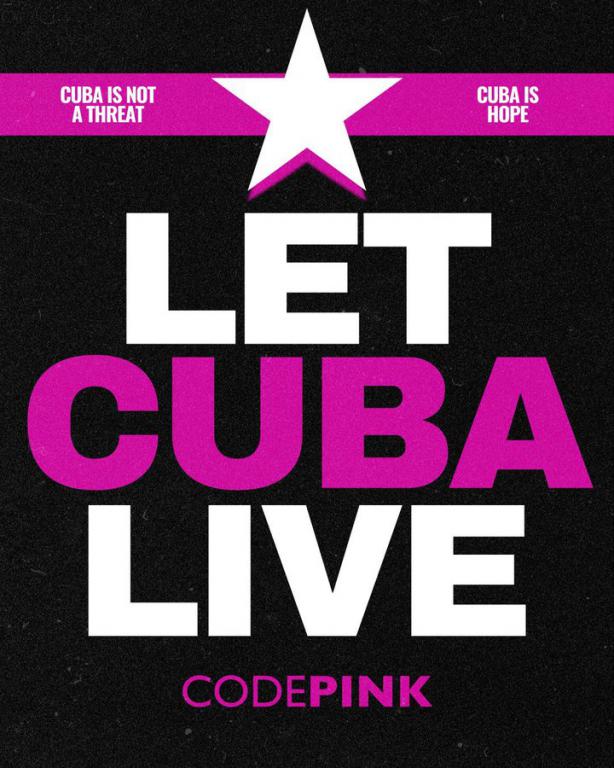
Finally, the pacifist movement CODEPINK denounced that the real objective of the measure is to suffocate an entire nation:
“The United States is cutting off all oil to Cuba to starve and suffocate 10 million people. The Trump regime is escalating a 66-year blockade that seeks to punish the Cuban people into submission. They will not succeed. Cuba is not a threat; Cuba is hope.”
These reactions reflect a growing consensus among sectors of American and international society that Cuba is not, and never has been, a threat to the United States. They also constitute a condemnation of this new cruel act, which violates international law.