
About arrogance and silence
Silva Knezevic
Amidst the torrent of “information” coming from the same sources that shape global attitudes, it is difficult to guess what other opinions might arise on, for example, incursions into foreign territories or the recent dictatorial imposition of democracy.
Thus, for example, the latest threat to Cuba almost went under the radar, accepted as incidental news, and once again we witness the world's deafening silence on violence against a country.
Violence has persisted for decades (especially through pressure on anyone with whom Cuba might trade), and in recent months that pressure has increased.
After half a century of blockade, after the hurricane that struck the country last year, after countless blackouts and threats of sanctions against anyone who could help repair power plants, after the impossibility of importing medicines and the insidious campaigns that seek to paralyze even the tourism sector, these latest threats to prevent the importation of oil to the island are a noose around the neck of the Cuban people.
The decadent countries of the northern hemisphere are busy with their own disagreements, corruption, wars of interest, and the weight of inflation, high customs tariffs, and lack of competitiveness. When something affects nearby autonomous regions, they all unite and demand justice. When pressure is exerted against neighboring countries, the alarm is sounded; when pressure is exerted against a country that is not in our area of interest, there is silence. And not only politicians, but also intellectuals, artists, and musicians, who normally clamor for humanitarian action, remain silent. Even in the Western media, which is democratic and generally very vocal, news about the oil blockade is no longer breaking news.
Our America, unfortunately, is also increasingly shifting to the right, while the left seems to have existed only on paper for some time now. There is no support, no protests, no dedicated concerts. There are no major protests drawing attention to the inhumane measures aimed at completely exhausting Cuba, preventing its development and making it impossible to survive, subjugating it, forcing it to renounce its independence, to renounce all its scientific, artistic and, above all, humanitarian achievements, in order to finally humiliate it and take advantage of what it has acquired with so much effort. The terror that has been perpetrated against Cuba for decades is something we have lived with, as it is normal for us, like going to the market.
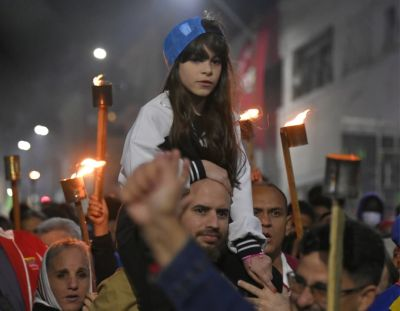
A few days ago in Havana, on the anniversary of José Martí's birth, a student representative described her generation as “anti-capitalist” and emphasized that it is “a generation that does not kneel, that does not sell out, that does not fall.” She invited prominent figures from different sectors and friends of Cuba around the world to join what she described as an “extraordinary movement” of solidarity and resistance.
Perhaps we could learn something from this news and these attitudes, and at least try to reduce the arrogance of the world with our voices.