
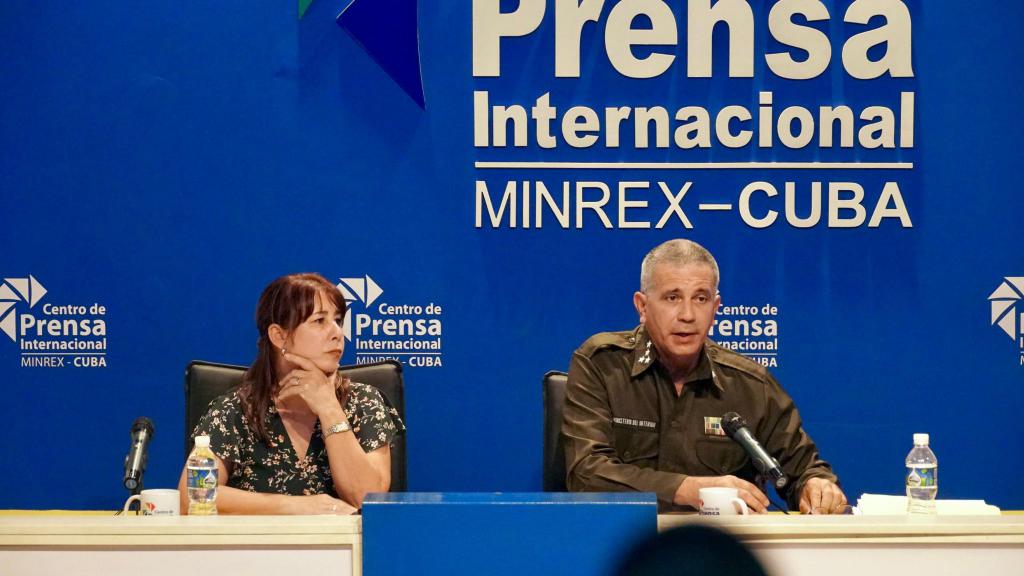
The Government of the Republic of Cuba announced the official publication of new Migration, Immigration, and Citizenship Laws, along with their respective regulations, as part of the process of comprehensive updating of the country’s legal framework.
During a press conference, Cuban authorities from the Directorate of Identification, Immigration and Foreigners, and the Directorate General of Consular Affairs and Cubans Residing Abroad of the Ministry of Foreign Affairs, reported that the regulations were approved following a broad consultation process involving 37 institutions, which helped enrich their content and ensure their consistency with national and international realities.
The new provisions represent a qualitative leap in regulatory scope, significantly expanding the existing legal framework. Among their main objectives are to more clearly define migration-related rights and duties, strengthen ties with Cubans residing abroad, and adapt the legal regime to current dynamics of human mobility.
One of the central elements is the introduction of the concept of Effective Migratory Residence, which recognizes as residents those individuals—Cuban or foreign—who remain in the country for more than 180 cumulative days per year, or who, even without meeting this requirement, demonstrate ties through family, work, economic, or property connections. Likewise, the previous 24-month limit on staying abroad for Cuban citizens is eliminated, and it is established that there is no time restriction for their stay in the country; the increase in the condition of emigrant is also halted.
In terms of rights, it is reaffirmed that Cubans residing abroad retain the use, enjoyment, and free disposal of their property within the national territory, in accordance with the Constitution of the Republic.
The regulations also reorganize migratory categories for Cuban citizens and foreigners, incorporating new classifications such as provisional resident and humanitarian resident, and expanding the grounds for applying for permanent residence in Cuba, including family ties, length of stay in the country, professional qualifications, and investment capacity.
Likewise, specific provisions are established for the protection of victims of migrant smuggling and human trafficking, with special attention to women, girls, boys, and adolescents.
In the area of citizenship, the concept of effective citizenship is introduced, recognizing the possibility of holding another citizenship without losing Cuban citizenship, although the obligation to use the latter in legal acts within national territory is maintained. Processes of acquisition, renunciation, loss, deprivation, and recovery of citizenship are also regulated, including more clearly defined requirements for naturalization.
The new laws also strengthen legal guarantees for citizens by establishing administrative procedures that allow appeals against decisions by migration authorities, thereby reinforcing transparency and due process.
With this legislative update, Cuba reaffirms its commitment to modernizing its migration policy, strengthening ties with its diaspora, and ensuring a more inclusive, orderly legal framework aligned with the country’s economic and social transformations.