
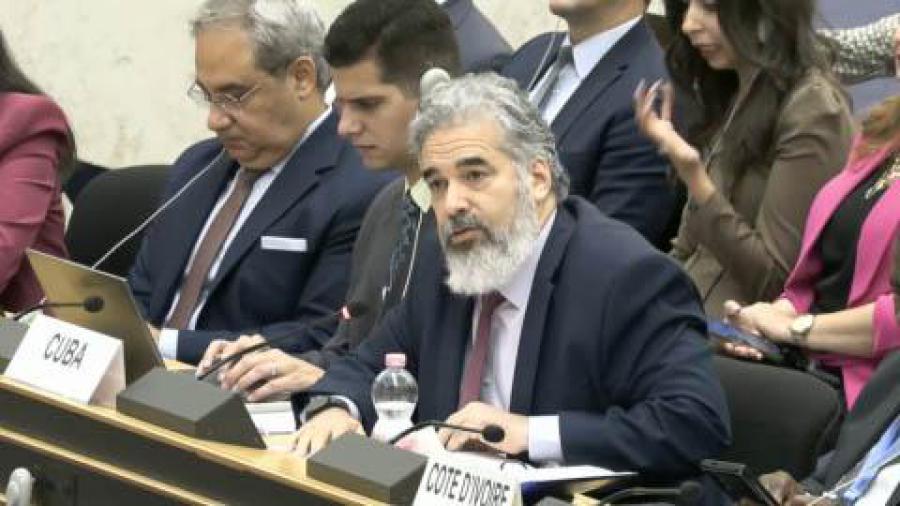
On Geneva at Cuba’s proposal, the Human Rights Council approved a resolution condemning mercenary activities in any country and characterizing the use, recruitment, financing, arming, and training of mercenaries as a violation of the UN Charter.
In presenting the proposal to the Council, Ambassador Rodolfo Benítez Verson emphasized that the initiative is a further demonstration of Cuba’s firm commitment to the global fight against the phenomenon of mercenarism.
The Cuban resolution raises concerns and calls for a thorough assessment of how technological advances and digital infrastructure are transforming the methods used for the recruitment, organization, financing, training, and activities of mercenaries. Currently, there is a growing use of digital technologies and social media to organize mercenaries.
The text proposed by Cuba expresses concern over the growing involvement of private military and security companies in conflicts, which has significant implications for security and human rights.
In his address to the Council, Ambassador Benítez Verson reaffirmed Cuba’s support for the prompt adoption of a robust international convention for the effective regulation, monitoring, and oversight of the activities of private military and security companies.
He emphasized that the absence of such an instrument creates a dangerous and significant legal vacuum, as many of these entities are covertly involved in mercenary activities. Cuba has been the victim of such actions on numerous occasions.
The adopted resolution also calls on States that have not yet done so to accede to the International Convention against the Recruitment, Use, Financing, and Training of Mercenaries. This Convention, which entered into force in 2001, was ratified by Cuba in 2002.
Cuba maintains a firm and consistent stance against mercenarism in all its forms, as it is a practice contrary to the UN Charter that threatens international peace and security, the self-determination of peoples, and the full enjoyment of human rights.