
By Isaac Saney*
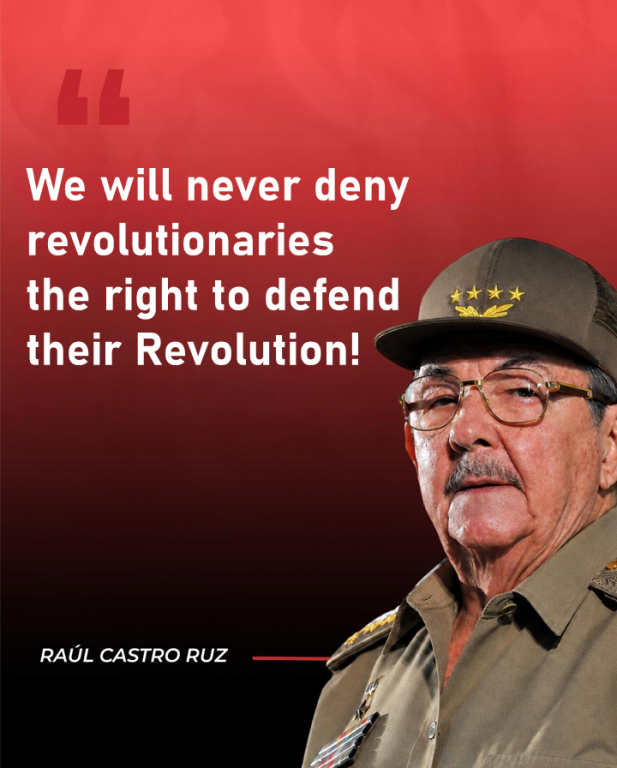
The recent decision by the U.S. Department of Justice to indict Raúl Castro over the 1996 shoot-down of aircraft belonging to Brothers to the Rescue is not an act of justice. It is a profoundly political maneuver designed to intensify Washington’s decades-long campaign against the Cuban Revolution while rewriting the historical record of U.S. aggression against Cuba.
The charges are specious, historically dishonest, and dangerous. More troubling still, the indictment implicitly legitimizes hostile actions launched against Cuba from U.S. territory while denying Cuba the elementary sovereign right of self-defence recognized under international law.
Since the triumph of the Cuban Revolution in 1959, the United States has waged an unrelenting war against the Cuban people. This war has taken many forms: invasion, sabotage, biological warfare, assassination attempts, economic strangulation, and terrorist attacks. Many of these operations were organized, financed, or tolerated from U.S. soil. The human toll has been devastating. At least 3,478 Cubans have been killed and another 2,099 injured as a result of these acts of terrorism and aggression.
Among the victims was Fabio Di Celmo, a young Montrealer of Italian descent who was murdered in the 1997 hotel bombings in Havana orchestrated by anti-Cuban terrorists linked to networks operating from the United States. Yet the architects and financiers of those crimes enjoyed protection in Miami while Washington lectured Cuba about “terrorism.”
Perhaps, the most notorious example was the October 6, 1976 horrific terrorist attack on Cubana Airliner Flight 455. In the western hemisphere this was the first and is the only bombing of a civilian airliner during flight. This heinous act, which resulted in the deaths of all 73 passengers and crew on board, stands as one of the most notorious examples of anti-Cuban terrorism carried out by violent counterrevolutionaries. The downing of Flight 455 was masterminded by anti-Cuban terrorists Orlando Bosch and Luis Posada Carriles—both of whom had longstanding ties to the U.S. intelligence services.
The indictment of Raúl Castro must therefore be understood within this broader historical and political context. It is not about justice for victims. It is about criminalizing Cuban sovereignty.
The U.S. government and corporate media continue to portray Brothers to the Rescue as innocent humanitarian actors conducting peaceful missions. But even contemporaneous observers rejected this simplistic narrative. Mark Entwistle, who served as Canada’s ambassador to Cuba during the 1996 incident, noted that the organization repeatedly violated Cuban airspace, flying low over Havana and dropping anti-government propaganda. He further situated the incident within the broader reality of violent anti-Cuban exile organizations such as Alpha 66 and Omega 7, groups widely associated with terrorist violence against Cuba.
Between 1994 and 1996, Cuban authorities documented more than 25 serious violations of Cuban airspace by Brothers to the Rescue. Each violation was formally reported to the U.S. State Department, the Federal Aviation Administration (FAA), and the International Civil Aviation Organization (ICAO). Cuban officials repeatedly demanded that Washington revoke pilots’ licenses, confiscate aircraft, and halt illegal flights originating from U.S. territory. These appeals were ignored.
The provocations escalated steadily. On July 13, 1995, aircraft entered restricted airspace north of Havana and dropped propaganda leaflets. On January 9 and 13, 1996, planes again violated Cuban airspace and scattered subversive materials along the coast. Cuba publicly warned that unauthorized aircraft entering its sovereign airspace would be intercepted and, if necessary, neutralized. Diplomatic Note No. 45 conveying this warning was formally delivered to the United States on January 16, 1996.
Thus, Washington cannot plausibly claim ignorance.
Indeed, evidence later revealed that U.S. officials understood full well that a deadly confrontation was likely. Investigations by CBS4 Miami’s I TEAM uncovered classified documents demonstrating that senior U.S. officials knew a shoot-down was “possible” and even “probable.” Yet authorities still approved flight plans they knew were false, failed to seize aircraft, and declined to prosecute repeated violations of Cuban and international law.
Under international law, Cuba had the right to defend its airspace and territorial integrity. Article 51 of the Charter of the United Nations recognizes the inherent right of states to self-defence. The International Civil Aviation Organization framework similarly recognizes that aircraft used for purposes incompatible with civilian status lose the protections ordinarily afforded to civil aviation.
The aircraft involved were not innocent bystanders accidentally straying off course. Cuban authorities argued — with considerable supporting evidence — that the planes formed part of a sustained campaign of provocation involving propaganda operations, espionage, and preparations for sabotage. Cuba also maintained that the aircraft were shot down within Cuban territorial airspace and waters, presenting radar data, transcripts, and coordinates to the UN and ICAO.
Serious questions also surrounded the U.S. handling of evidence. The Key West naval radar station reportedly erased records only fifteen days after the incident. The United States withheld portions of audio recordings from investigators, omitting crucial six-minute segments related to the planes’ location and movements. Witness testimony used in official reconstructions was itself disputed and in some cases never independently verified.
These are hardly the foundations for a credible criminal prosecution thirty years later.
Rather, the indictment reflects the intensification of the Trump administration’s openly declared objective of regime change in Cuba. Following Washington’s pressure campaign against Nicolás Maduro in Venezuela, President Donald Trump ominously warned that “Cuba was next.” The charges against Raúl Castro are therefore not merely retrospective legal claims; they are instruments of geopolitical warfare.
Predictably, ordinary Cubans recognized the indictment for what it is. Retired legal adviser Rosmery Peña defended Cuba’s actions, stating plainly that if Cuban airspace was violated, the country had every right to take whatever measures were necessary to prevent further incursions. Construction worker René Sierra declared that Cubans would resist any external aggression, while retired justice ministry official Agustín Sanabria rejected the fantasy that Cuba could be destabilized through externally orchestrated pressure campaigns. These reactions reflect a deeper historical memory forged through decades of resistance to U.S. hostility.
Washington’s indictment also exposes a glaring double standard. The United States has repeatedly asserted for itself an expansive doctrine of self-defence, justifying military interventions, drone strikes, assassinations, and invasions around the world in the name of protecting national security. Yet when Cuba acts to defend its own sovereignty against repeated provocations launched from U.S. territory, it is branded criminal.
This hypocrisy is not accidental. It reflects the imperial assumption that the United States alone possesses legitimate security interests, while nations resisting U.S. domination are denied the rights accorded to sovereign states under international law.
The campaign against Cuba has never fundamentally been about democracy or human rights. It has always been about punishing a small nation for asserting independence, rejecting U.S. domination, and pursuing an alternative social project rooted in social justice, international solidarity, and anti-imperialism.
The indictment of Raúl Castro is therefore not simply an attack on one individual. It is an attempt to delegitimize Cuba’s right to exist as a sovereign nation capable of defending itself against aggression.
Far from advancing justice, the charges normalize the very terrorism and destabilization that Cuba has endured for more than six decades. They signal to violent anti-Cuban networks that hostile acts launched from U.S. soil may continue with political protection from Washington.
History, however, will not validate this latest act of coercion. The Cuban Revolution has survived invasion, sabotage, assassination plots, economic siege, and terrorism. It has endured because millions of Cubans understand that beneath every U.S. campaign lies the same enduring objective: the destruction of Cuban independence itself.
* Isaac Saney is a Professor and Cuba and Black Studies Specialist in Black African Diaspora Studies and History, Dalhousie University, Halifax, Canada. He is also a member of the executive of the Canadian Network On Cuba.