
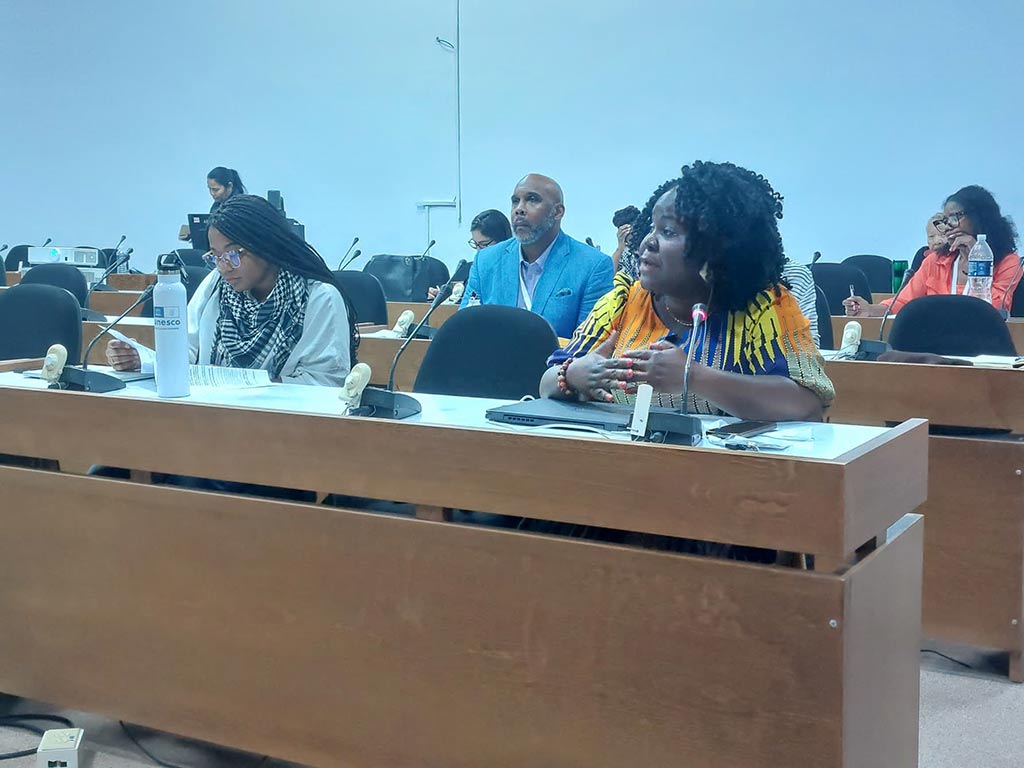
Excellencies,
Distinguished Delegates,
Esteemed Colleagues,
Ladies and Gentlemen,
Good afternoon.
I deem it a profound honour to address this noble gathering as we draw the curtains on the first chapter of the International Decade for People of African Descent. I bring warm greetings from the African Union Commission and extend our deep appreciation to all you stakeholders for your diverse efforts and unwavering commitment to advance the cause of justice, equity, and social justice for people of African descent over the past few years.
A profound appreciation and congratulations to the Republic of Cuba for hosting the UNFPA for fifty years and particularly, for this platform to deliberate on the scourge of racism in all its forms and devise measures to eradicate it entirely, replacing it with the practice of inclusion, integration, equality, equity and social justice, particularly for people of African descent.
Africa and its descendants have had a long, complex and multifaceted history with racial injustice, with various countries and regions experiencing different forms and levels of colonialism, slavery, apartheid and neo-colonialism. Over the past 30 years, the AU has advanced initiatives to promote justice, payment of reparations, and restitution of cultural property looted during colonization and enslavement, including the rise of Pan-African movements where leaders like Chief MKO Abiola of Nigeria played a pivotal role in advocating for reparations, leading to the OAU’s establishment of the Group of Eminent Persons (GEP) in 1992.
- The GEP highlighted the damages caused by enslavement, colonization, and neo-colonialism, laying the groundwork for reparations advocacy.
- The Abuja Proclamation (1993)
- Adopted at the First Pan-African Conference on Reparations, the Proclamation was a landmark document affirming Africa's united stance on reparations.
- It recognized the ongoing harm from slavery, colonization, and racism, calling for global recognition of Africa’s moral and legal claim for reparations.
- Then comes the Durban Declaration and its plan of action (2001)
- At the UN World Conference against Racism, the AU co-adopted the Durban Declaration, recognizing slavery and the transatlantic slave trade as crimes against humanity.
- The Declaration emphasized reparations as a justice imperative for historical human rights violations and their enduring consequences.
- Amongst others including the Decade of African Roots and Diasporas (2021-2031) led by the government of Togo
- Assembly Decision 847 and 884 led by Ghana which has given birth to the 2025 AU TOTY-Justice for Africans and People of African Descent through Reparations.
Ladies and Gentlemen,
One of the defining features of the transition from the erstwhile OAU to the AU is the acknowledgement of MS that colonialism and apartheid could not have been achieved without the intervention of non-state actors.
There was therefore an amendments protocol to the Constitutive Act of the African Union which “invites the full participation of the African Diaspora into the affairs of the” Union and Africa.
As we convene today, we acknowledge the significant role of Cuba in Africa’s independence struggle, particularly in Angola. Cuban troops helped to drive out South African forces and secure control over key strategic points.
Cuba's support for African independence movements wasn't limited to Angola and Namibia. They also provided military training and assistance to other liberation movements across the continent. Additionally, Cuba has since these incidents, supported most AU MS with medical doctors and trained so many African medical students. Overall, the Cuban legacy continues to be felt across the continent.
As we proceed with this conference, let us reaffirm our collective commitment to the principles of equality, justice, and human rights. There is the dire need for Africa and all people of African descent to “build a common front” in this endeavour to be “bold and defend, the cause of freedom and of right”, as stated in the national anthem of Ghana, and “…strongly resist the oppressors’ rule with all our will and might”.
Excellencies, Ladies and Gentlemen, the African Union Commission remains steadfast in its commitment to strengthening the African diaspora as drivers of development. I conclude with a quote by Ijeoma Umebinyuo “So, here you are too foreign for home too foreign for here. Never enough for both.” This poem is a reflection of what most African diaspora experience…I therefore urge us all to work assiduously in the spirit of partnership, together with all relevant stakeholders, to build a relentless momentum in creating a world where people of African descent can thrive to the best of their abilities, ensuring that the canker of racism and discrimination is totally eliminated.
Thank you.
(EmbaCuba Etiopía)