
In Lebanon, Che's legacy is being commemorated
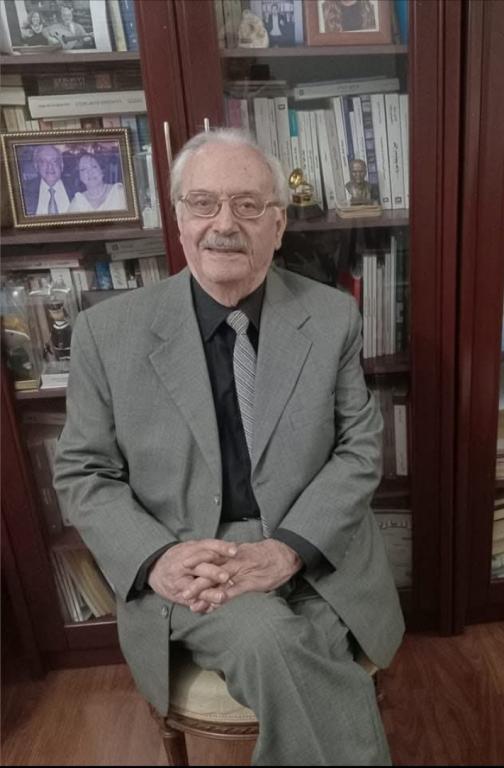
The president of the Lebanese-Cuban Friendship Association, Maurice Nohra, sent Cuban Ambassador Jorge P. León Cruz the following article on the anniversary of the death of the Heroic Guerrilla, Ernesto Che Guevara, which was published in local and regional Arab media outlets.
Guevara, the Internationalist Revolutionary Symbol Who Is Always Present
Ernesto Che Guevara was not merely Argentine. By virtue of his intellectual and human identity, he was Latin American and an internationalist, belonging to the people of the Earth and their aspirations to free themselves from all social injustice and national oppression in their countries. That is why the peoples and the masses of the poor feel that Guevara is close to them, to their concerns and their causes, in the face of those who exploit them—even if they are of their own blood.
It is not surprising that Guevara’s image has spread throughout the world, crossing the borders of countries and continents, nor that writings about him abound in a wide variety of countries.
Fifty-nine years have passed since the death of this revolutionary thinker, who originally graduated with a medical degree from a university in Argentina. He was consumed by the search for and reflection on the causes of the cruel poverty of the peoples of Latin America—which he witnessed with his own eyes—as well as the underdevelopment of those countries, nearly all of which he traveled through until reaching Guatemala. There, he joined the Guatemalan Communist Party and fought alongside it against the U.S. military aggression aimed at overthrowing the national government of President Árbenz in 1954. The replacement regime, imposed by the United States, repressed the people and exiled the fighter Ernesto Che Guevara to Mexico. There he met Raúl Castro and later his brother Fidel, who had been exiled from Cuba to Mexico. They were united by revolutionary and internationalist ideals in the struggle against imperialism and its domination, and for the liberation of the peoples of Latin America. Guevara then set sail with Fidel Castro and the exiled Cuban revolutionaries on the yacht “Granma” toward a beach on the eastern coast of Cuba, to resume the Cuban revolution from the mountains of the Sierra Maestra. Guevara played a prominent role alongside Fidel, the Commander-in-Chief, throughout this revolution, from 1956 until the arrival in the capital, Havana, and the triumph of the Revolution in early 1959.
The leaders of the revolution—including Guevara—recognized that the smear and defamation campaigns launched by the imperialist enemy’s apparatus and spokespeople demonstrated the significance and exemplary power of this Revolution’s triumph in Latin America and on the international stage, and that it symbolized the possibility of victory for those peoples through the unity of their struggle.
The revolutionary response to the military aggression organized by U.S. intelligence agencies at Playa Girón in mid-April 1961, aimed at overthrowing the Cuban Revolution, was thwarted by the Cuban people through their unity and their revolutionary leadership, of which Guevara was a part. From that time on, Guevara’s thinking remained centered on confronting imperialism and its aggression by working to foster unity and solidarity among peoples in the face of this common enemy, and to realize their shared aspirations for national and social liberation.
Guevara began his activities by visiting Algeria and meeting with Ahmed Ben Bella, and he visited Egypt and Gaza, where he met with Gamal Abdel Nasser. He also held numerous meetings with leaders from African countries, including, for example, Guinea, Mali, the Congo, Tanzania, and later Angola, among others, as well as in the broader context of international relations. This internationalist and anti-imperialist character was clearly evident in the role of revolutionary Cuba and in its solidarity with the struggles of the peoples and their causes. While working simultaneously with Cuban leaders, headed by Fidel Castro, to consolidate the foundations of the Revolution and the Cuban state, he gained confidence in the strength of this revolution and in the solidity of the state’s pillars. He then set out to put his internationalist ideology into practice, fueling the revolutionary struggle to liberate the poor of Latin America from the yoke of imperialism and its oppression.
Guevara did not want to rest after his great efforts, nor was he tempted to remain in prominent government positions. He traveled with some of his fellow revolutionaries to join the internationalist liberation struggle in Bolivia. On October 8, 1967, the U.S. Central Intelligence Agency and its agents managed to capture him—the militant thinker—at his revolutionary post in the Bolivian mountains, and ordered his execution on October 8. The masters of imperialism and the reactionaries believed that making him disappear would make his ideas, his role, the aspirations of the peoples, and their struggle for freedom disappear as well. But this internationalist thinker and fighter became a great international revolutionary symbol and an icon for tens and hundreds of millions of people. The commemoration of his martyrdom became, in itself, an expression of deep-rooted internationalism that encompasses many peoples of the Earth.
And Guevara, through the ideas, the role, and the revolutionary practice he left behind, is an example and a guiding light for young people who aspire to build a better future, and a beacon for all free people of the world.