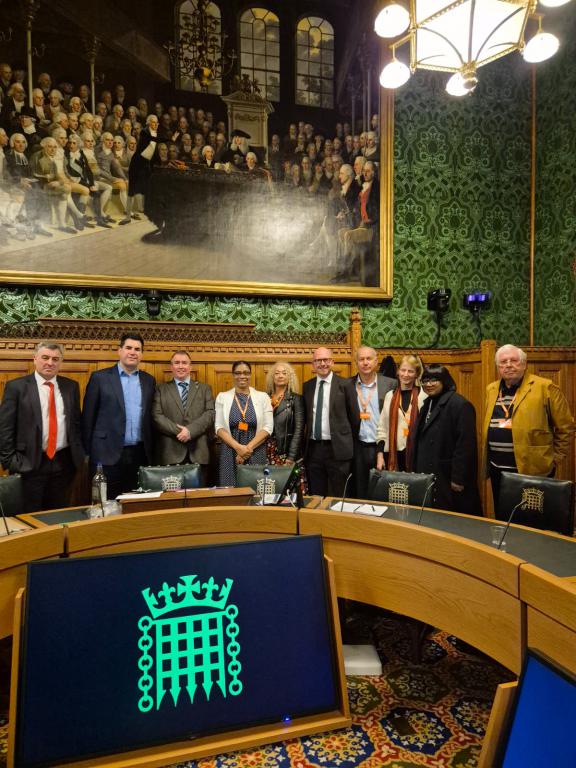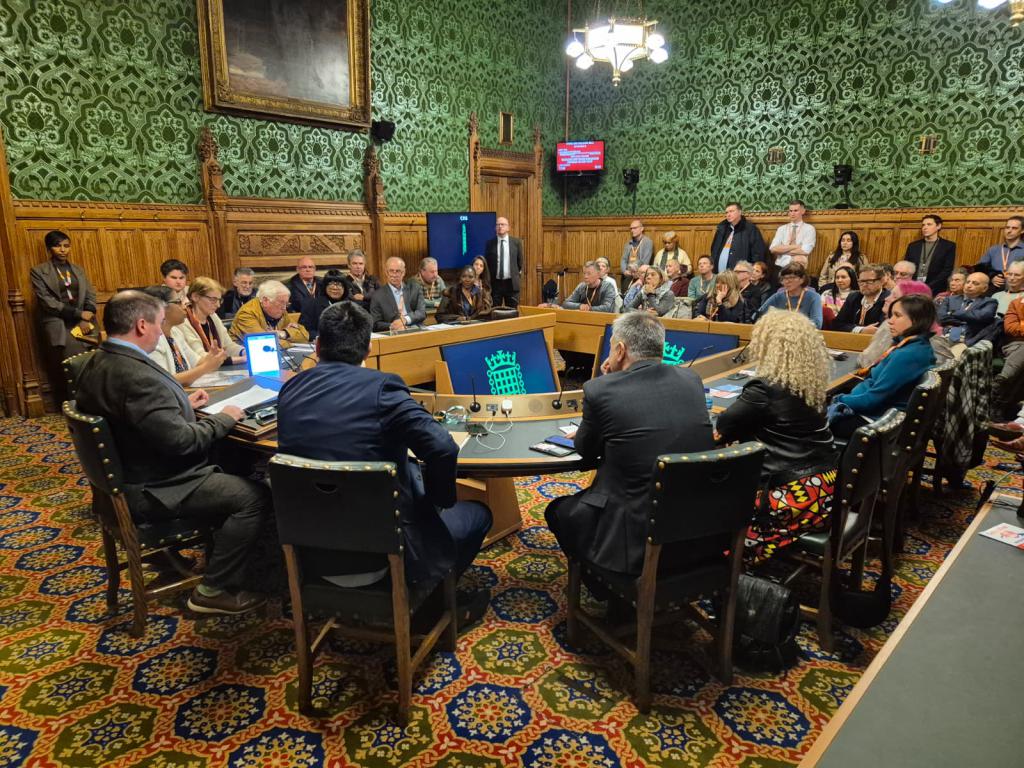
LONDON, 4 March 2026. — The UK House of Commons served as the focal point for a resolute defence of international law and a condemnation of the US economic warfare against Cuba. Over 70 attendees, ranging from veteran parliamentarians to economists, trade unionists, and engaged citizens, packed a parliamentary committee room to confront the deepening humanitarian consequences of the unilateral US blockade.
Chaired by Steve Witherden MP, Chair of the All-Party Parliamentary Group (APPG) on Cuba, the emergency meeting laid bare the devastating reality facing the Cuban people and mapped out concrete legislative and grassroots actions to counter it.
The starkest warning of the evening came from the frontline of Cuba’s healthcare system. Cuban Ambassador Ismara Vargas Walter delivered a blunt assessment of what she termed an "engineered energy deficit".
"Inside our hospitals, the persistence of power outages has forced surgical teams, such as those at the Ramón González Coro Maternity Hospital, to perform complex operative procedures on newborn infants relying entirely on the illumination of their cellular phones at some point," the Ambassador revealed.
Dr Emily Morris, a development economist at UCL who recently returned from Havana, corroborated this reality with first-hand economic analysis, emphasising that this crisis is not a failure of domestic infrastructure, but the direct result of targeted sanctions designed to create systemic shocks.
Ambassador Vargas Walter then dismantled the mechanism enabling this crisis. She categorised the baseless placement of Cuba on the US State Sponsors of Terrorism (SSOT) list as a "financial weapon of mass destruction".
This fabricated designation, she explained, forces international banks into institutional 'over-compliance'.
"When an American fine prevents a sovereign British bank from executing a financial transfer explicitly intended to purchase medical supplies for pediatric patients in Havana, the global financial system has been deputised as an enforcement mechanism for an illegal blockade," she stated. She defined this imposition on independent third-party states as "the absolute weaponisation of extraterritoriality".
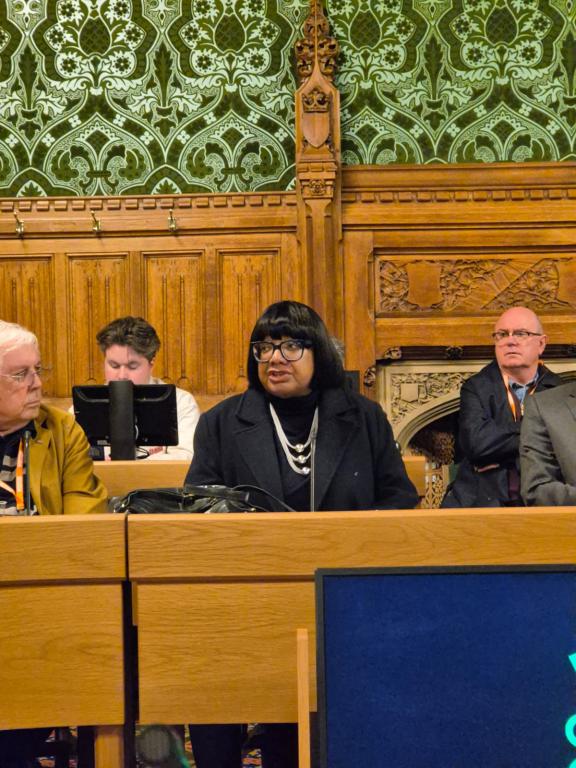
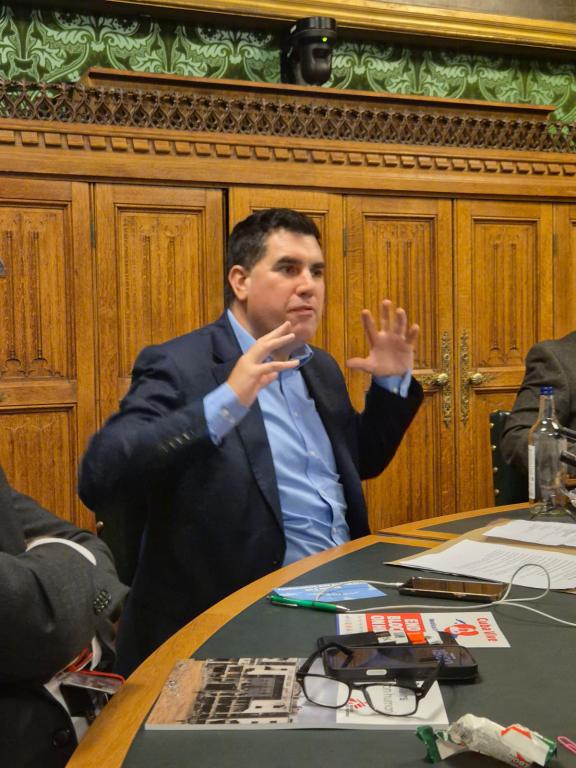
The consensus among the British leaders present was absolute. Diane Abbott MP and Richard Burgon MP delivered powerful interventions, reinforcing that solidarity with Cuba must translate into hard legislative pressure within Westminster.
This momentum is already visible. A critical mass of almost 70 MPs has now backed Early Day Motion (EDM) 2739, a morally unequivocal legislative acknowledgement of this blockade's impact.
Bernard Regan, National Secretary of the Cuba Solidarity Campaign (CSC), highlighted the vital role of grassroots organising, urging the British public to bridge the gap between parliamentary consensus and actionable solidarity.
The meeting concluded with a unified call to action. The defence of Cuba's sovereignty is simultaneously a defence of Britain's right to trade and engage freely without foreign coercion.
Bernard Regan, National Secretary of CSC, urged all citizens and public figures to take immediate practical steps:
Signing the Urgent Call for Peace and Sovereignty: Joining more than 4,000 citizens and 150 public figures who have added their names.
Contacting local MPs: Requesting that local representatives sign EDM 2739 to oppose the blockade against the Cuban people in Parliament.
Joining the Movement: Becoming a member of the Cuba Solidarity Campaign to support ongoing national efforts.
Supporting the Cuba Vive Medical Appeal.