
Opinion article from Zeitung der Arbeit, newspaper of the Austrian Labor Party
Washington/Havana, Washington maintains its aggressive stance against the socialist island of Cuba. The latest escalation: sanctions against Cuban President Miguel Diaz-Canel and other high-ranking government officials. Officially, the U.S. State Department justifies the measure with alleged “serious human rights violations” during the July 2021 anti-government protests. The reality is completely different, and has little to do with talking about human rights, but rather with the exercise of imperial power and economic control of a resistant country.
In addition to Díaz-Canel, among those affected by the new measures are the Minister of Defense, Álvaro López Miera, and the Minister of the Interior, Lázaro Alberto Álvarez Casas. According to Washington, they are responsible for the alleged “brutality of the regime”, a rhetoric that is always used in the US foreign policy arsenal when sovereign states are not willing to subordinate themselves to US geopolitical interests.
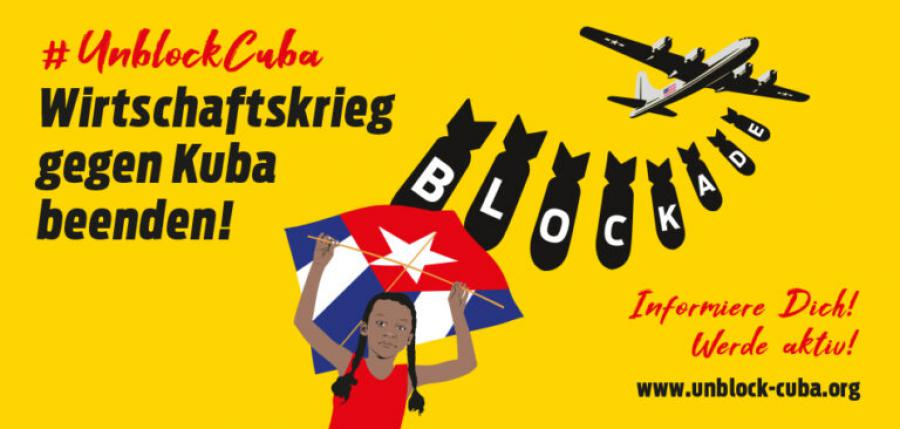
However, the 2021 protests, this too is well documented, were not only an expression of internal discontent, but, above all, were the result of decades of illegal economic blockade by the United States, which systematically deprives the Cuban people of food. Sanctions slow economic development, impede trade, block the supply of aid and cause shortages of food, medicine and energy. The consequences are social tensions, precisely those that Washington uses as a pretext for its “human rights” measures.
The fact that the U.S. government is once again taking aggressive measures against Cuba is no coincidence: it is the expression of a calculated imperial campaign against any project of social emancipation. At the beginning of his second term, Donald Trump again arbitrarily included the island in the so-called U.S. list of terrorist organizations, a propaganda strategy that is not based on objective international standards, but serves as a tool of political pressure to discipline undesirable governments. The U.S. administration's so-called “human rights discourse” is nothing more than a cynical façade to legitimize its own global policy of violence. While Washington accuses Cuba across the board of alleged human rights violations, it is vociferously silent about the systematic crimes of its closest accomplices, such as the Israeli occupation and apartheid policies or the Gulf dictatorships, which invest billions in arms and oil.
Despite repeated calls by UN member organizations and the overwhelming majority of the international community to lift the blockade, the United States continues to aggravate the situation. The sanctions affect not only the political leaders, but also, and first and foremost, the Cuban people. They are the expression of a systematic attempt to destabilize the socialist state by isolating it politically and strangling it economically.
International solidarity with Cuba is today more urgent than ever. What is needed is not just words, but political pressure: for the lifting of the blockade, for the end of sanctions that violate international law and for the respect of the Cuban people's right to self-determination. Despite all the adversities, Cuba has guaranteed education, health and social security to millions of people, benefits unattainable even in many rich capitalist countries.
(Zeitung der Arbeit)