
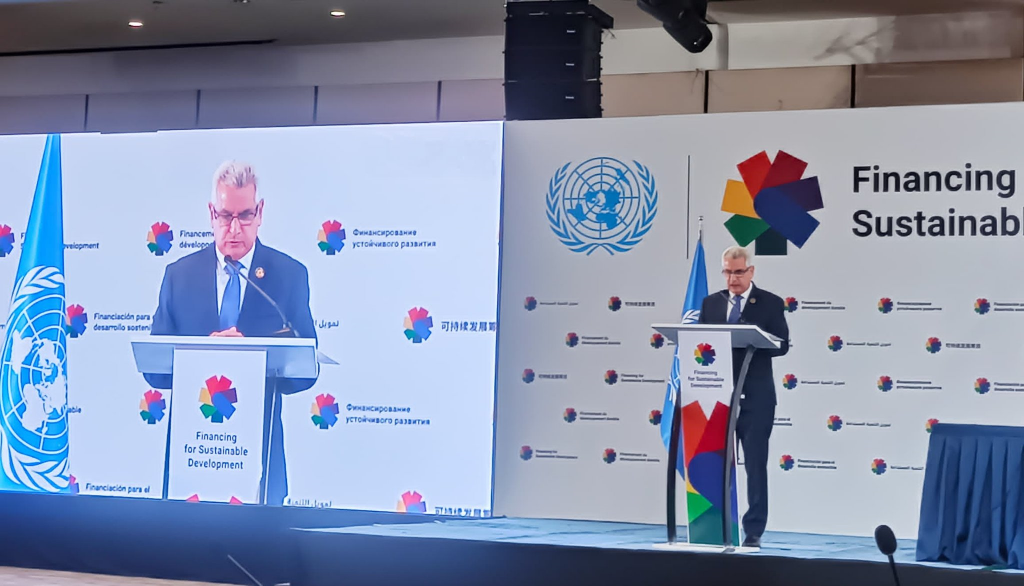
Distinguished Co-Chairs;
Distinguished ministers, delegates and guests;
The fulfillment of the 2030 Agenda and the Addis Ababa Action Agenda will not render real benefits if it is not accompanied by a profound rethinking of the current economic, financial and trade order, in which new bases for justice, equity and solidarity are given priority consideration.
Based on this premise, the Fourth Conference on Financing for Development should focus, first and foremost, on:
(a) Establishing clear guidelines for a profound reform of the international financial architecture in terms of governance, representation and access to financing, whereby a greater number of developing countries would also have their say. Discussions on this issue should take place at the UN, for these to be truly inclusive.
b) Advancing towards the implementation of a multilateral mechanism for the rescheduling of sovereign debts with a meaningful participation of the countries of the South, allowing for a fair, balanced and development-oriented treatment.
c) Advocating debt contracts and instruments that would include trigger clauses that would provide relief and restructuring as soon as a country is affected by natural catastrophes or macroeconomic shocks.
d) Urging a prompt and substantial recapitalization of Multilateral Development Banks so that they would improve their loan terms to meet the financial needs of developing countries.
e) Promoting inclusive and effective international tax cooperation at the United Nations.
f) Advancing the establishment of a set of sustainable development progress measures, beyond the GDP, to define developing countries' access to concessional financing and technical cooperation.
g) Promoting cooperation in science, technology and innovation in order to move forward to more sustainable and equitable development models; and giving due consideration to the contributions made by the G77 and China Summit held in Havana last year.
h) Calling for a reform of the international value chains that would enable developing countries to achieve higher manufacturing levels in their productions. And, finally;
i) Rejecting the application of unilateral coercive measures that are incompatible with International Law and the Charter of the United Nations, which prevent our countries from accessing international markets on an equal footing. Cuba is still suffering their effects after enduring 62 years of a tightened blockade and, more recently, after the arbitrary inclusion of the country in the spurious unilateral List of States that allegedly sponsor terrorism.
Addressing the serious inadequacies in the provision of means of implementation remains a challenge that requires a holistic approach. Let us be wise enough to seize the opportunity provided by the Fourth International Conference on Financing for Development to move forward together down that path.
Thank you very much
(EmbaCuba Etiopía)