
Cuban Embassy in Washington D.C. Celebrates National Culture Day

Today we celebrate the 154th anniversary of the intonation for the first time of the notes of the National Anthem, a historic event that became a symbol of our culture and marked a turning point in the development of our identity as a nation. With these words of the head of the Cuban Mission in Washington D.C., Lianys Torres Rivera, the political-cultural activity began this October 20 at the diplomatic headquarters.
The blockade of Cuba is also a blockade of the U.S. business community.

For Vicente Amor, vice president of the company asc Internacional USA, a Tampa-based travel agency, the economic, commercial and financial blockade imposed by the United States on Cuba more than 60 years ago -rekindled during the administration of Donald Trump, with measures maintained, for the most part, by current President Joe Biden-, is a serious obstacle for business ties between the two countries.
Cuban artist exhibits in Washington during celebrations for October 20

Cuban artist Lázaro Batista presented some of his most recent works in the U.S. capital on Tuesday, as part of the celebrations for Cuban Culture Day.
During the meeting, Batista commented that his works are inspired by his religion and have, in addition, small nuances of jazz, a musical genre of his preference.
For this Cuban native of Havana, art has been his greatest joy. Through art I express my feelings, my emotions, my religion and my tastes," he said.
Cuba has the right to live without a blockade, it has the right to live in peace.

The accumulated damages during these six decades of application of the genocidal blockade policy imposed by the US on Cuba amount to 154,217.3 million dollars.
Perhaps these figures represent nothing to many, however, for the Cuban people they translate into the slowing down of the economic and social development processes of Cuban families.
The United States, opportunism and cruelty against Cuba
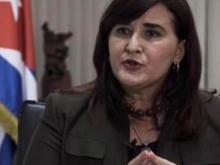
Excluding Cuba from the review process of unilateral coercive measures applied during the Covid-19 pandemic was an opportunistic decision and cold cruelty, warned Johana Tablada, deputy director general for the United States at the Foreign Ministry.
In a publication in her social networks, Tablada recalled that as a result of the devastating effect of those restrictive measures of the United States on public health and the population of those unilaterally "sanctioned" countries that were also affected by Covid-19, the calls to Washington multiplied.