
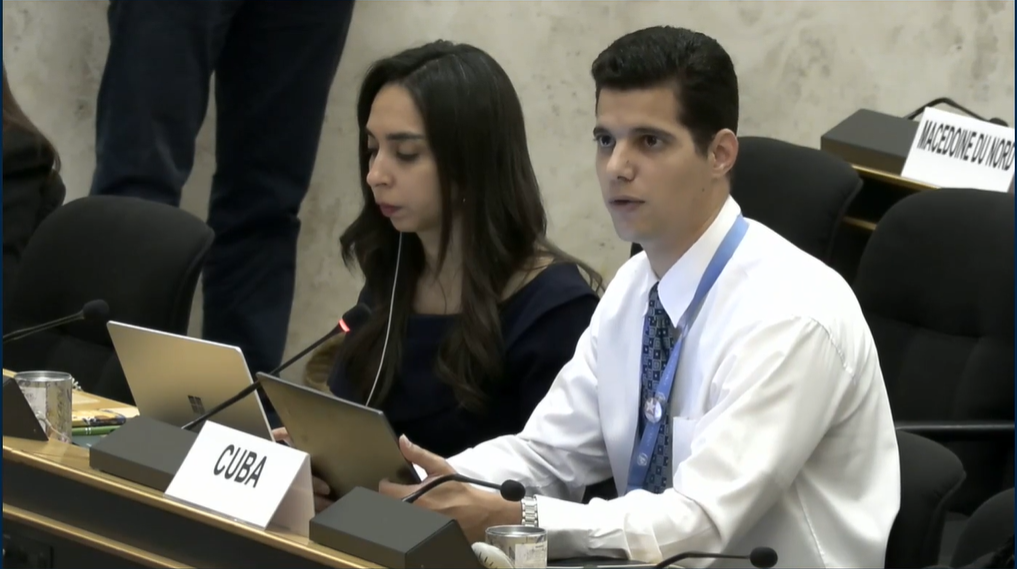
Mr. President,
Many of the World Heritage properties inscribed under the 1972 UNESCO Convention concerning the Protection of the World Cultural and Natural Heritage are located partially or entirely within Indigenous territories.
Indigenous peoples have long been the guardians of these territories.
Advocating for the preservation of these protected sites also means defending the self-determination and dignity of the Indigenous peoples who inhabit them.
However, the establishment and management of World Heritage sites can negatively affect Indigenous peoples when their human rights are not respected or protected.
The absence of collaborative management, of clear schemes for the equitable distribution of the benefits derived from conservation and tourism associated with the exploitation of heritage sites, as well as disregard for Indigenous knowledge systems and ancestral values, undermine the effective control of Indigenous peoples over their lands, territories and resources.
It is therefore essential to establish mechanisms that ensure the leading participation of Indigenous peoples in any initiative aimed at preserving World Heritage properties located within their territories.
In each of the initiatives undertaken, the principle of free, prior and informed consent must be respected.
Cuba proposes for the consideration of the Expert Mechanism a dedicated thematic study on the participation of Indigenous peoples in the management of sites inscribed under the UNESCO Convention concerning the Protection of the World Cultural and Natural Heritage.
We consider that such a study should provide clear guidance to States and other stakeholders involved on good practices that ensure the full and effective participation of Indigenous peoples