Articles

Cuba's President tours economic objectives in Santa Clara

President Miguel Díaz-Canel today toured economic objectives in this city, as a deputy to the National Parliament, to follow up on issues of interest to the local population.

In his first stop, the president talked with Ihosvany Orozco, manager of the micro, small and medium-sized state-owned commercial enterprise Antena S.U.R.L., which manufactures professional and domestic antennas, as well as metal ladders made of polyvinyl chloride (PVC), plastic and aluminum.

Cuban President thanks congratulations for his reelection.

In a message broadcast on Tiwtter, the president expressed his gratitude for the congratulations from colleagues, personalities, representatives of Latin American integration organizations and other people in different latitudes for his reelection, the day before, by the recently installed Parliament.

Díaz-Canel reaffirmed that he will work to maintain the unity of the nation, convinced of the enormous challenges that the post entrusted to him by the National Assembly implies.

Proposal to ratify the leadership of the Parliament of Cuba

The president of the National Nominations Commission, Consuelo Baeza, explained today to the deputies of the Cuban Parliament that, after consulting the legislators, it was proposed to reelect the current leadership of that body.

Baeza referred that the members of the Legislative recognized the trajectory of the current president, Juan Esteban Lazo, who from 2013 to the present led the main processes of the nation, contributed to the improvement of the organs of the People's Power, and has been a deputy for more than 40 years.

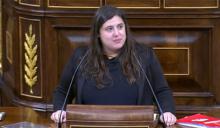
Spanish congresswoman exposes the effects of the blockade against Cuba.

Spanish congresswoman Roser Maestro spoke in Congress about the effects of the U.S. blockade against Cuba in other countries, especially due to the Helms-Burton Act.    

In an interview published today by Cubainformación in Spain, Maestro explained that the Helms-Burton Act, far from being a reparation for U.S. companies affected by the nationalizations in Cuba in the 1960s, is designed to harm those who, from third countries, invested in Cuba in the Caribbean island.

Cuba solidarity network in the U.S. will integrate the May 1st brigade.

The National Network in Solidarity with Cuba (NNOC), a coalition that today includes more than 50 organizations in favor of lifting the U.S. blockade, will be part of the 16th International May 1st Brigade.

As NNOC announced on Twitter, every year they work with the Cuban Institute of Friendship with the Peoples (ICAP) to lead the U.S. delegation in this solidarity group.

The brigades "are an important part of our struggle against the illegal and inhumane U.S. blockade of more than 60 years" against the island, he said in his message.

Pages